
Preparation method of levofloxacin-N-oxide
A levofloxacin and oxide technology is applied in the field of preparation of levofloxacin-N-oxide, which can solve the problems of large amount of hydrogen peroxide, many impurities in the reaction, troublesome post-processing, etc., and achieve the effects of small amount of hydrogen peroxide, simple process, and convenient post-processing
Patent Information
- Authority / Receiving Office
- CN · China
- Patent Type
- Applications(China)
- Current Assignee / Owner
- Publication Date
- 2012-07-11
- Estimated Expiration
- Not applicable · inactive patent
Smart Images
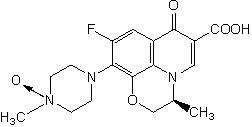
Figure 1 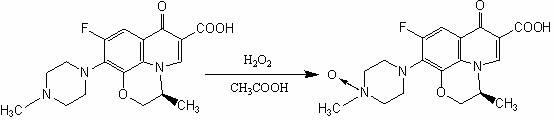
Figure 2
Abstract
Description
technical field
[0001] The invention relates to the field of medicine levofloxacin, in particular to a preparation method of levofloxacin-N-oxide. Background technique
[0002] Fluoroquinolones have achieved great success in clinical anti-infection treatment due to their high-efficiency, broad-spectrum, and low-toxic antibacterial properties. Ofloxacin and levofloxacin developed by Japan's Daiichi Pharmaceutical Company are excellent varieties among them. Among them, levofloxacin was launched in Japan in 1993 as raw materials and tablets, and is now on the market in Britain, the United States and other countries. Levofloxacin is the S enantiomer of racemic ofloxacin, and the antibacterial activity of ofloxacin is mainly attributed to the S enantiomer.
[0003] At present, the quality standards of levofloxacin are recorded in national standards and import standards, neither of which controls known impurities. According to literature reports, M.Lalitha Devi et al. (J Pharma B...
Examples
Embodiment 1
[0020] Add 5 grams of levofloxacin and 50 mL of glacial acetic acid into a 100 mL three-necked flask, and raise the temperature to 60-70 °C to completely dissolve the levofloxacin. Add 0.3g of sodium tungstate, 5mL of hydrogen peroxide (30%), keep warm at 60-70°C for 2 hours, then add 5mL of hydrogen peroxide (30%) and continue to keep warm for 3 hours, and the reaction is completed by TLC. Evaporate under reduced pressure until about one-third of the volume of the solution remains, then add some water, continue to evaporate under reduced pressure until about one-third of the remaining volume, repeat this step 3 times, and then evaporate to dryness. The residue was dissolved by adding 55 mL of ethanol (90%) and heated under reflux, then filtered, and the filtrate was cooled and crystallized in the refrigerator, and filtered and dried the next day to obtain 3.5 g of levofloxacin-N-oxide. m / z: 378.1461 (m+H).
Embodiment 2
[0022] Add 5 grams of levofloxacin and 70 mL of glacial acetic acid into a 100 mL three-necked flask, and raise the temperature to 60-70 °C to completely dissolve the levofloxacin. Add 0.3g of phosphotungstic acid, 5mL of hydrogen peroxide (30%), keep the reaction at 60-70°C for 2 hours, then add 5mL of hydrogen peroxide (30%) and continue the reaction for 3 hours, and the reaction is completed by TLC. Evaporate under reduced pressure until about one-third of the volume of the solution remains, then add some water, continue to evaporate under reduced pressure until about one-third of the remaining volume, repeat this step 3 times, and then evaporate to dryness. The residue was dissolved by adding 55 mL of methanol (90%) and heated under reflux, then filtered, and the filtrate was cooled and crystallized in the refrigerator, and filtered and dried the next day to obtain 3.4 g of levofloxacin-N-oxide. m / z: 378.1461 (m+H).
Embodiment 3
[0024] Add 5 grams of levofloxacin and 70 mL of glacial acetic acid into a 100 mL three-necked flask, and raise the temperature to 60-70 °C to completely dissolve the levofloxacin. Add 0.3g of phosphomolybdic acid, 5mL of hydrogen peroxide (30%), keep the reaction at 60-70°C for 2 hours, then add 5mL of hydrogen peroxide (30%) and continue the reaction for 3 hours, and the reaction is completed by TLC. Evaporate under reduced pressure until about one-third of the volume of the solution remains, then add some water, continue to evaporate under reduced pressure until about one-third of the remaining volume, repeat this step 3 times, and then evaporate to dryness. The residue was dissolved by adding 55 mL of ethanol (90%) and heated under reflux, then filtered, and the filtrate was cooled and crystallized in the refrigerator, and filtered and dried the next day to obtain 3.3 g of levofloxacin-N-oxide. m / z: 378.1461 (m+H).