
hnRNP A2* protein, nucleic acid for coding protein and application thereof
A protein and nucleic acid technology, applied in the field of hnRNP A2* protein, can solve the problems of enhancing G-quadruplex substrate extension, etc., to achieve the effects of enhancing catalytic activity and progress, extending telomeres, and solving cell expansion
Patent Information
- Authority / Receiving Office
- CN · China
- Current Assignee / Owner
- Publication Date
- 2013-01-23
Smart Images
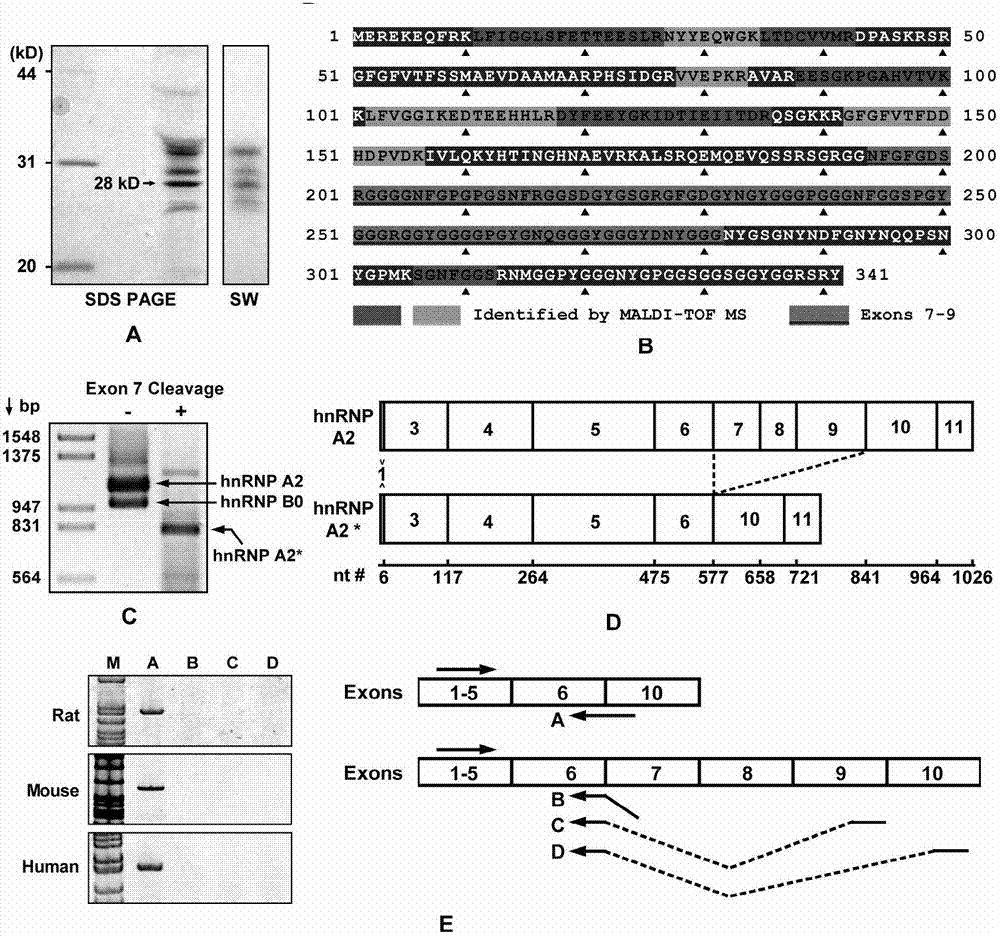
Figure 1 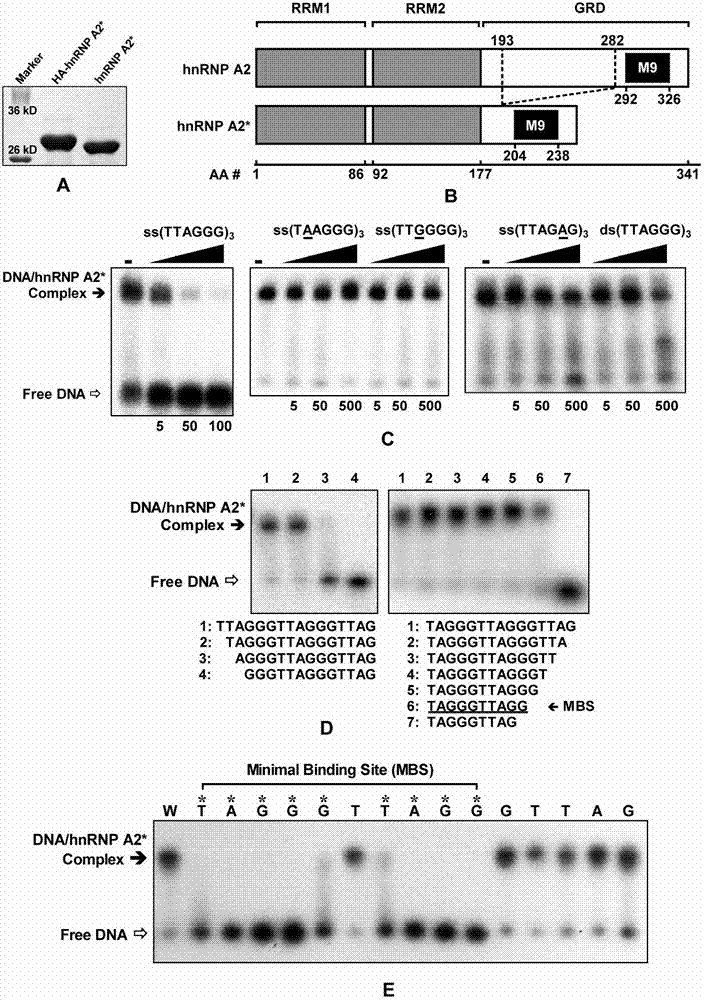
Figure 2 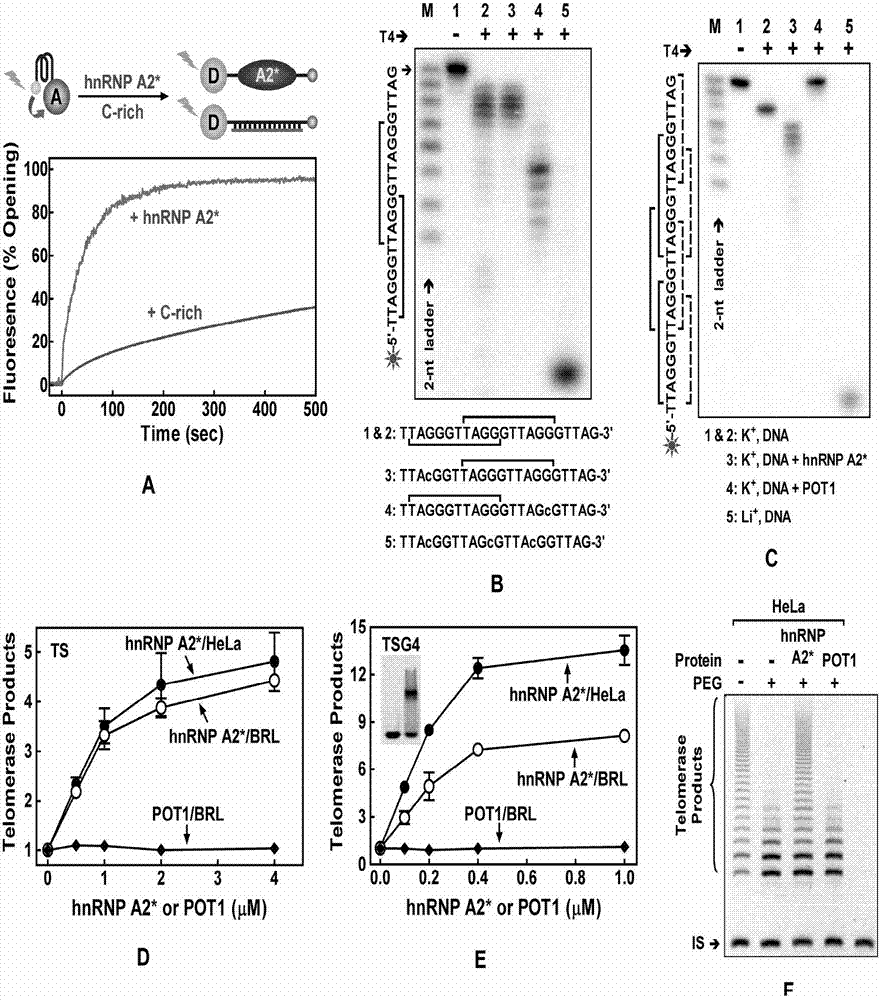
Figure 3
Abstract
Description
technical field
[0001] The invention relates to an hnRNP A2* protein, a nucleic acid encoding the protein and its use, and belongs to the field of biotechnology. Background technique
[0002] The ends of human chromosomes are protected by telomeres consisting of TTAGGG repeat DNA sequences and associated proteins. Incomplete end replication of telomeric DNA leaves a 3' single-stranded overhang outside the double-stranded region and causes telomeric DNA to shorten as cells divide. The addition of telomere repeats by telomerase to the 3' end is the main way to compensate for telomere erosion.
[0003] In budding yeast, telomere elongation is mediated by Cdc13. Cdc13 is a single-stranded telomeric DNA-binding protein that also binds to the telomerase RNA (Tlc1)-binding protein Est1. Thus, Est2, the catalytic subunit of yeast telomerase, is recruited to telomeres through the following interaction: overhang→Cdc13→Est1→Tlc1→Est2. A similar situation also occurs in Tetrahymena,...
Examples
Embodiment Construction
[0035] The principles and features of the present invention are described below, and the examples given are only for explaining the present invention, and are not intended to limit the scope of the present invention.
[0036] The present invention illustrates the research idea of the present invention through the following experiments, reveals the separation and purification process of hnRNP A2* protein, analyzes the principle of hnRNP A2* to untie the DNA quadruplex structure, and so on.