

Co-production method and device for 2, 6-dibromo-4-nitroaniline and bromine
A technology of nitroaniline and p-nitroaniline, which is applied in two fields, can solve the problems of dilute acid and bromine added as raw materials, high raw material costs, etc., and achieve the effects of saving raw material costs, simplifying the production process, and reducing the consumption of raw materials
Patent Information
- Authority / Receiving Office
- CN · China
- Patent Type
- Applications(China)
- Current Assignee / Owner
- Publication Date
- 2013-05-01
Smart Images
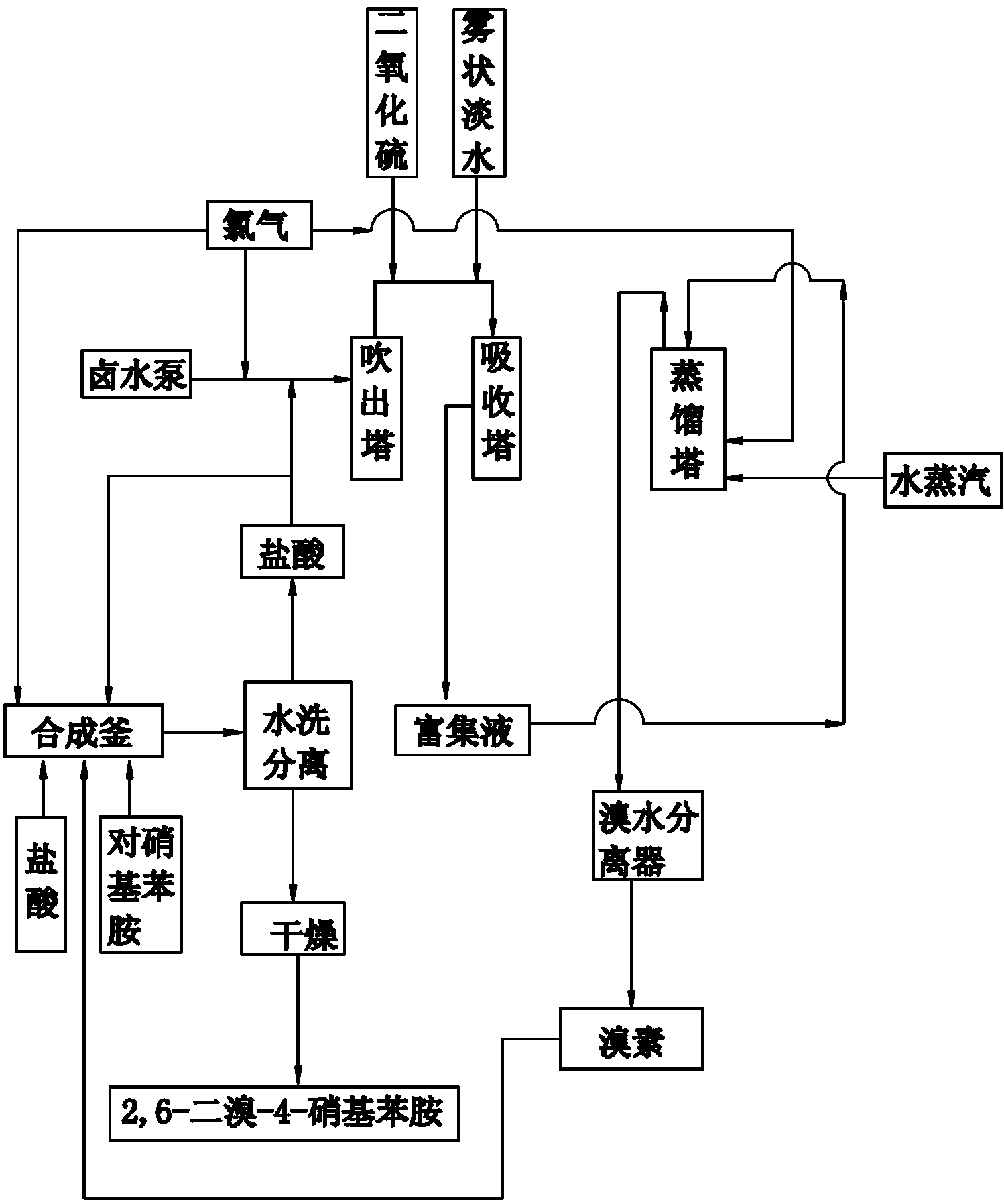
Figure 1 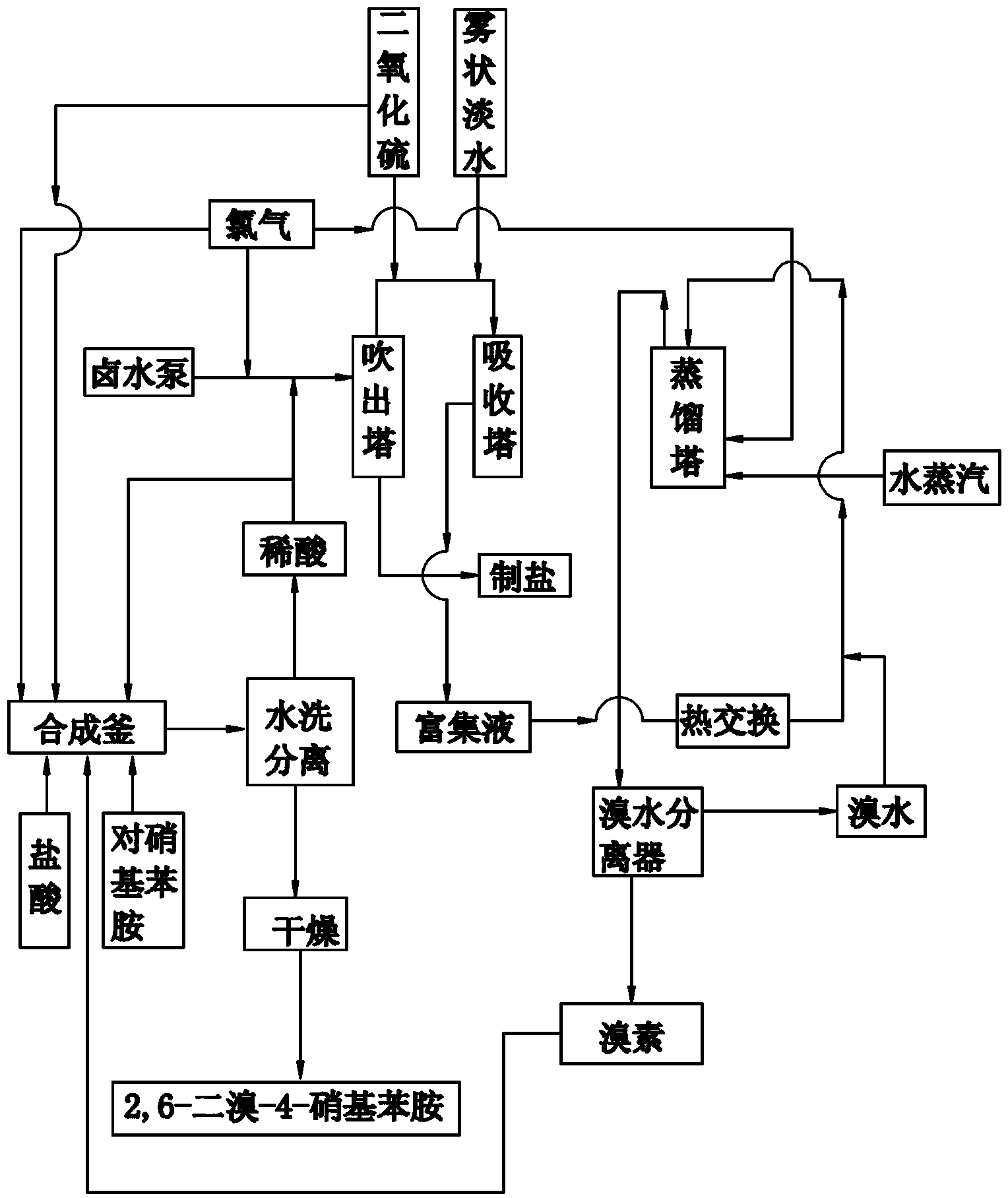
Figure 2 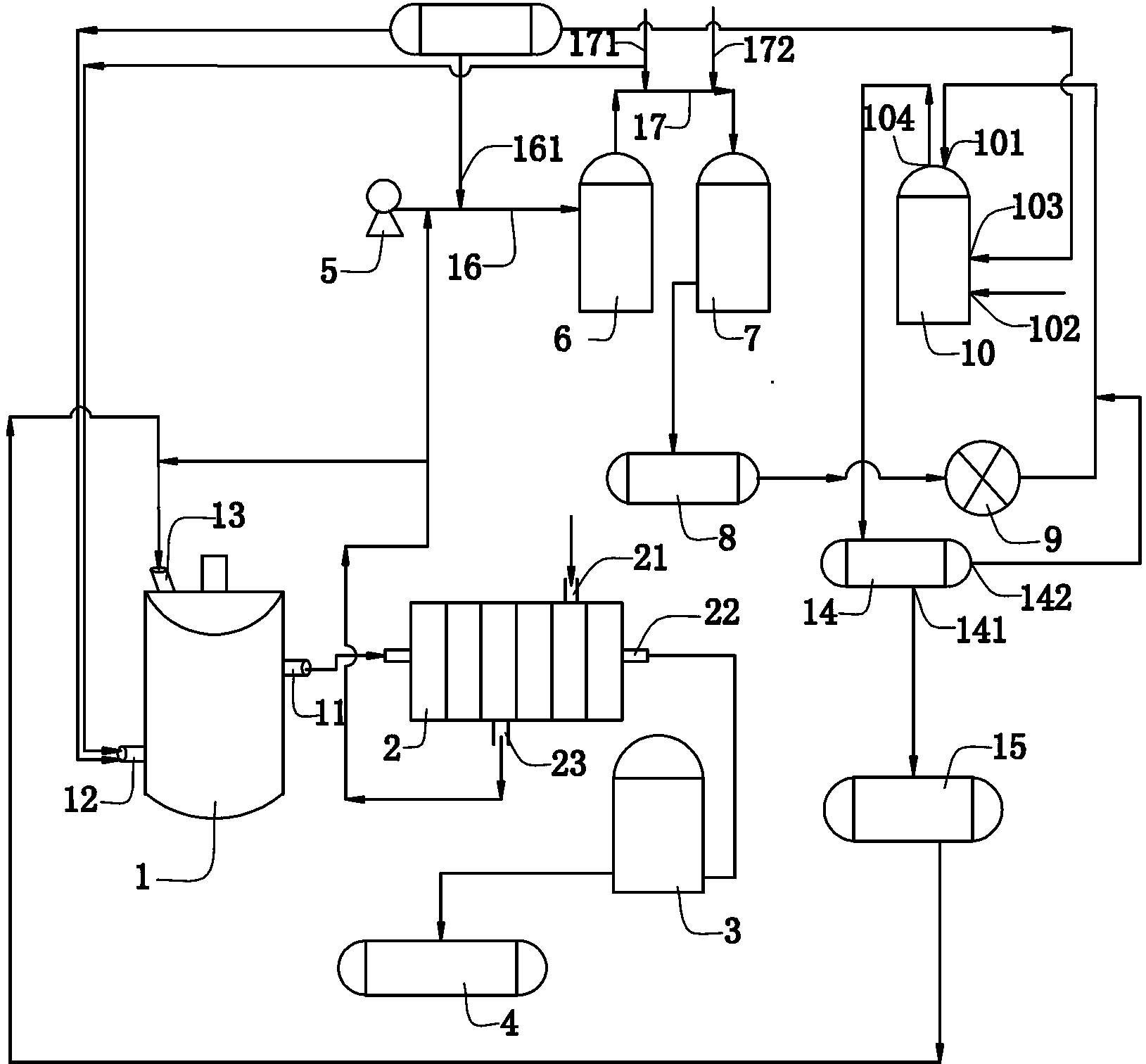
Figure 3
Abstract
Description
technical field
[0001] The invention belongs to the technical field of synthesis of 2,6-dibromo-4-nitroaniline and bromine, and in particular relates to a co-production method and a co-production device of 2,6-dibromo-4-nitroaniline and bromine . Background technique
[0002] Bromine is a brown-red volatile liquid with a strong pungent odor. Its vapor is brown-red, and its solid is yellow-green with metallic luster. It is an important chemical raw material, especially in pharmaceutical, chemical, pesticide, oil fields and other industries. Widely used, mainly used in the preparation of bromide, medicine, fumigant, flame retardant, fire extinguishing agent, fuel intermediate, chemical preparation, refrigerant, photosensitive material, etc., and also used for bleaching and disinfection.
[0003] The natural resources of bromine mainly exist in seawater, underground concentrated brine and salt lake water. Usually, concentrated seawater or brine is used to extract bromine. Duri...
Examples
Embodiment 1
[0035] (1) Take an appropriate amount of 20% hydrochloric acid and add it to the synthesis kettle, weigh p-nitroaniline and add it to the synthesis kettle, add bromine to the synthesis kettle dropwise, the weight ratio of p-nitroaniline and bromine is 1:1.02 , a bromination reaction occurs at 40°C to generate hydrobromic acid and 2,6-dibromo-4-nitroaniline;
[0036] Feed chlorine gas into the synthesis kettle again, the molar ratio of chlorine gas and bromine added dropwise is 1:1, chlorine gas reacts with generated hydrobromic acid to generate bromine, and bromine continues to react with p-nitroaniline to generate 2,6 - Dibromo-4-nitroaniline solid and hydrochloric acid;
[0037] Send the mixture of 2,6-dibromo-4-nitroaniline solid and hydrochloric acid into a plate and frame filter, wash and separate with water, and the separated 2,6-dibromo-4-nitroaniline solid is flashed Dried in a steamer to obtain 2,6-dibromo-4-nitroaniline product;
[0038] (2) Import the hydrochloric...
Embodiment 2
[0043] (1) Take an appropriate amount of 25% hydrochloric acid and add it to the synthesis kettle, weigh p-nitroaniline and add it to the synthesis kettle, add bromine to the synthesis kettle dropwise, the weight ratio of p-nitroaniline and bromine is 1:1.5 , a bromination reaction occurs at 45°C to generate hydrobromic acid and 2,6-dibromo-4-nitroaniline;
[0044] Feed chlorine gas into the synthesis kettle again, the mol ratio of chlorine gas and the bromine added dropwise is 1.5:1, chlorine gas reacts with the generated hydrobromic acid to generate bromine, and bromine continues to react with p-nitroaniline to generate 2,6 - Dibromo-4-nitroaniline solid and hydrochloric acid;
[0045] Send the mixture of 2,6-dibromo-4-nitroaniline solid and hydrochloric acid into a plate and frame filter, wash and separate with water, and the separated 2,6-dibromo-4-nitroaniline solid is flashed Dried in a steamer to obtain 2,6-dibromo-4-nitroaniline product;
[0046] (2) Import the hydro...
Embodiment 3
[0051] (1) Add an appropriate amount of 30% hydrochloric acid to the synthesis kettle, weigh p-nitroaniline and add it to the synthesis kettle, add bromine dropwise to the synthesis kettle, the weight ratio of p-nitroaniline and bromine is 1:2 , a bromination reaction occurs at 50°C to generate hydrobromic acid and 2,6-dibromo-4-nitroaniline;
[0052] Feed chlorine gas into the synthesis kettle again, the molar ratio of chlorine gas and the bromine added dropwise is 2:1, chlorine gas reacts with generated hydrobromic acid to generate bromine, and bromine continues to react with p-nitroaniline to generate 2,6 - Dibromo-4-nitroaniline solid and hydrochloric acid;
[0053] Send the mixture of 2,6-dibromo-4-nitroaniline solid and hydrochloric acid into a plate and frame filter, wash and separate with water, and the separated 2,6-dibromo-4-nitroaniline solid is flashed Dried in a steamer to obtain 2,6-dibromo-4-nitroaniline product;
[0054] (2) Lead the hydrochloric acid generat...