
A method for online compensation of system error of horizon system based on star-sensing
A system error and horizon technology, applied to instruments, measuring devices, etc., can solve problems such as high frequency of injection, low compensation accuracy, and consumption of manpower and material resources, and achieve strong timeliness, improved correction accuracy, and reduced pressure.
Patent Information
- Authority / Receiving Office
- CN · China
- Patent Type
- Patents(China)
- Current Assignee / Owner
- Publication Date
- 2015-11-18
Smart Images
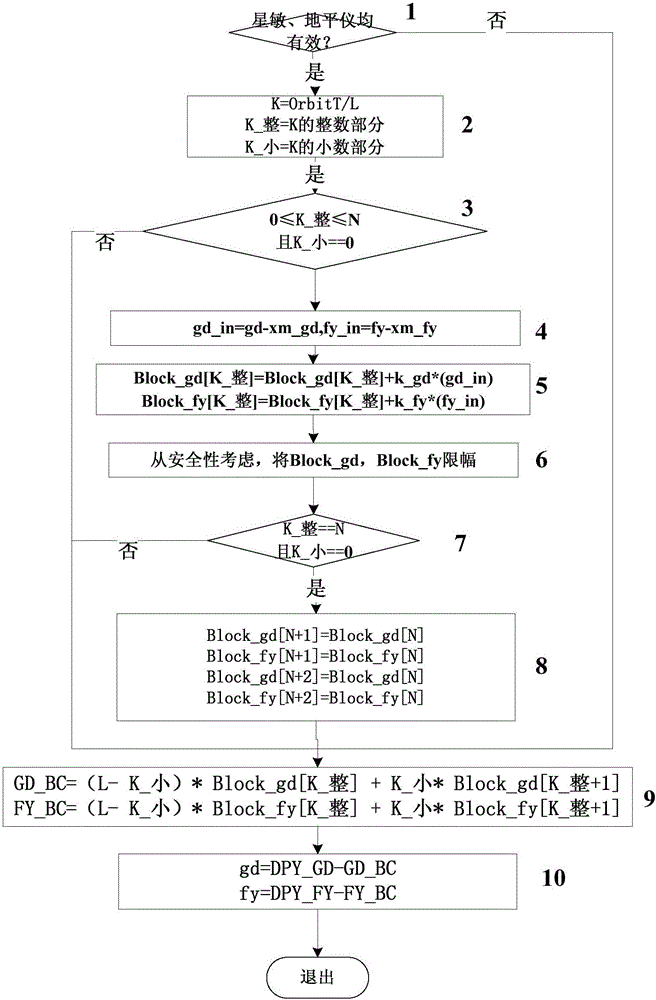
Figure 1 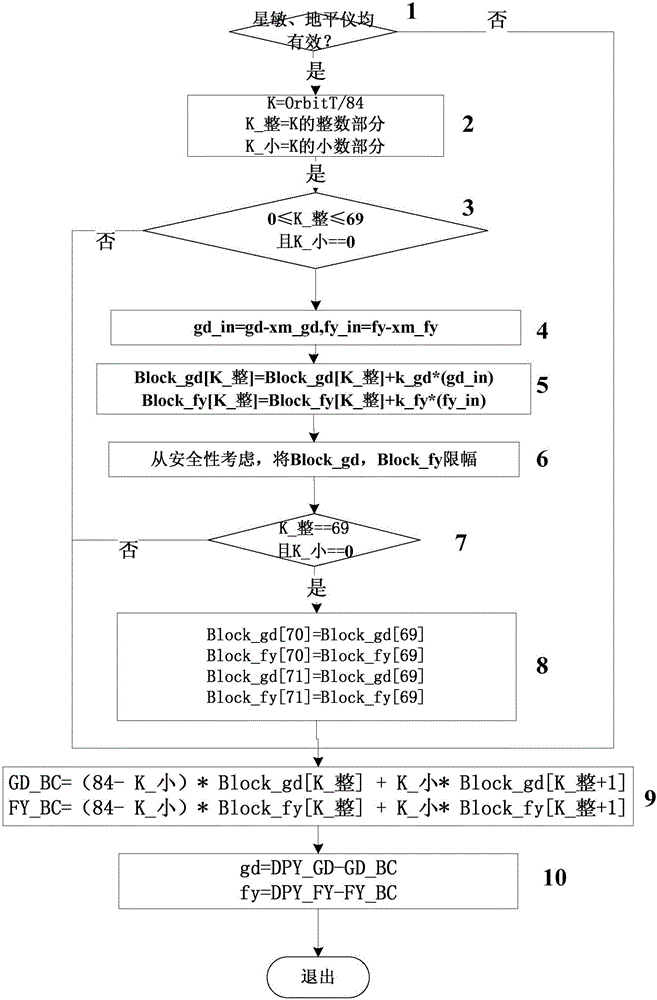
Figure 2
Abstract
Description
technical field
[0001] The invention relates to a method for determining the attitude of a satellite, in particular to a method for on-line compensation of an horizon system error based on star sensitivity. Background technique
[0002] Both the horizon and the star sensor (satellite sensor) are attitude-sensitive devices commonly used in satellites. The attitude calculation accuracy of the horizon is low, but the principle is simple, the flight experience is long, and the use is reliable; Orbital information is required, the ability to resist stray light interference is not strong, and there are certain requirements for satellite angular velocity, but its measurement accuracy is high, and it can also produce three-axis attitude information, so it has generally become the attitude reference of satellites in steady state in recent years.
[0003] The attitude of the horizon is based on the shape of the earth's atmospheric radiation layer, so two major model errors are introdu...
Examples
Embodiment Construction
[0046] Specific embodiments of the present invention will be further described below in conjunction with the accompanying drawings.
[0047] The invention discloses a method for on-line compensation of an horizon system error based on star sensitivity. In the method, when deciding whether to update the compensation table, it is judged whether the orbital argument is in a certain range. Since the orbital argument is a decimal, it cannot It is beneficial to the realization of the algorithm on the satellite. For this reason, the concept of the orbit clock (OrbitT) is introduced, that is, the orbital angle is replaced by the method of counting on the satellite. The system accumulates and integrates in the unit of a takt time t length. When the integration reaches exactly one orbit period, the integral is cleared and the accumulation is restarted to ensure the consistency between the orbital clock and the orbital argument.
[0048] The following two examples are used to describe in...