
Fluorescence detection method of pyridyl quaternary ammonium salt cationic surfactant, and its application
A technology of surfactant and pyridine quaternary ammonium salt, which is applied in fluorescence/phosphorescence, material excitation analysis, etc., can solve the problems of cumbersome operation, long time-consuming, high detection limit, etc., and achieve good spectral performance, wide sources, and high solubility. Effect
Patent Information
- Authority / Receiving Office
- CN · China
- Patent Type
- Applications(China)
- Current Assignee / Owner
- Publication Date
- 2014-03-26
- Estimated Expiration
- Not applicable · inactive patent
Smart Images
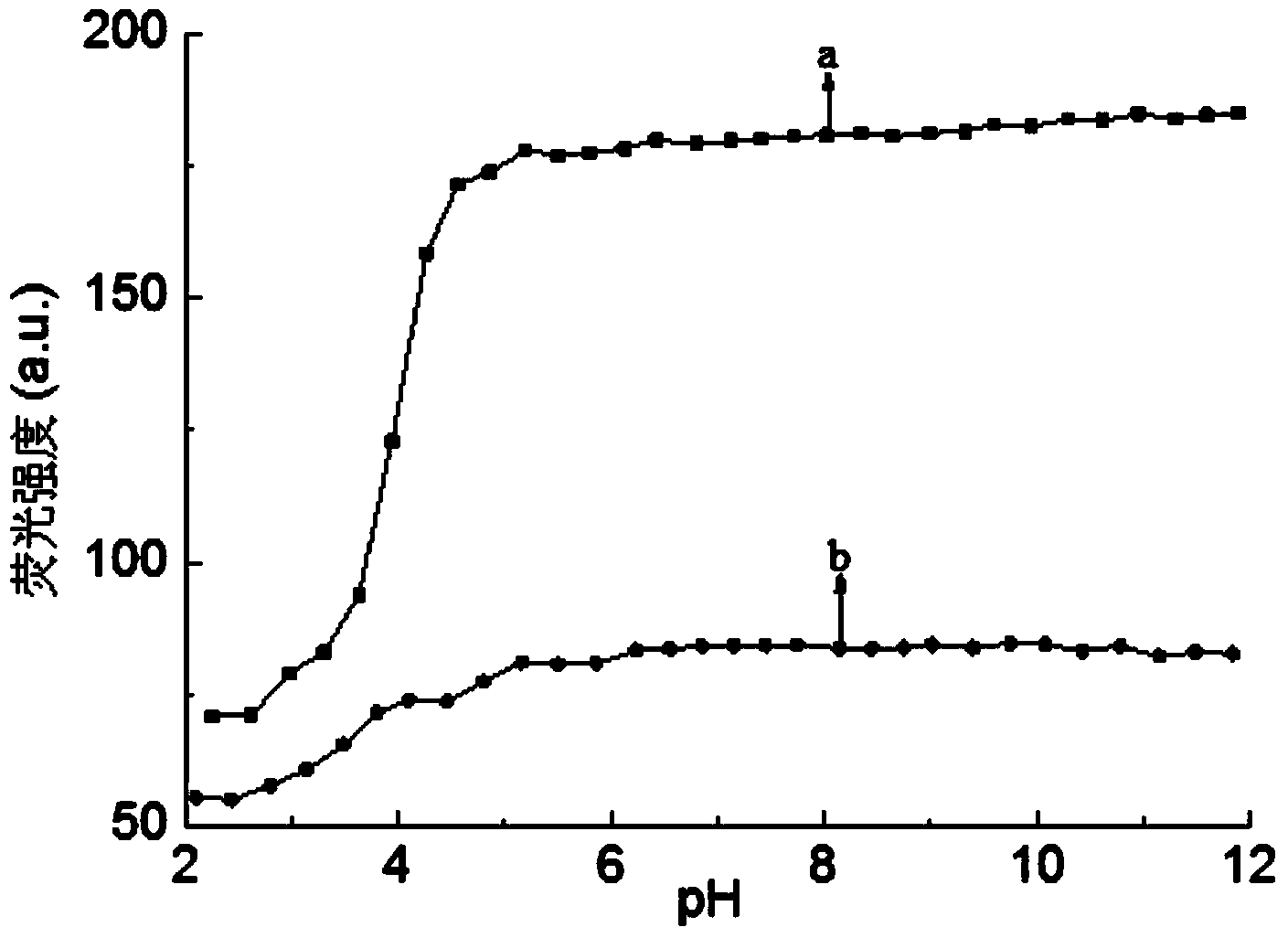
Figure 1 
Figure 2 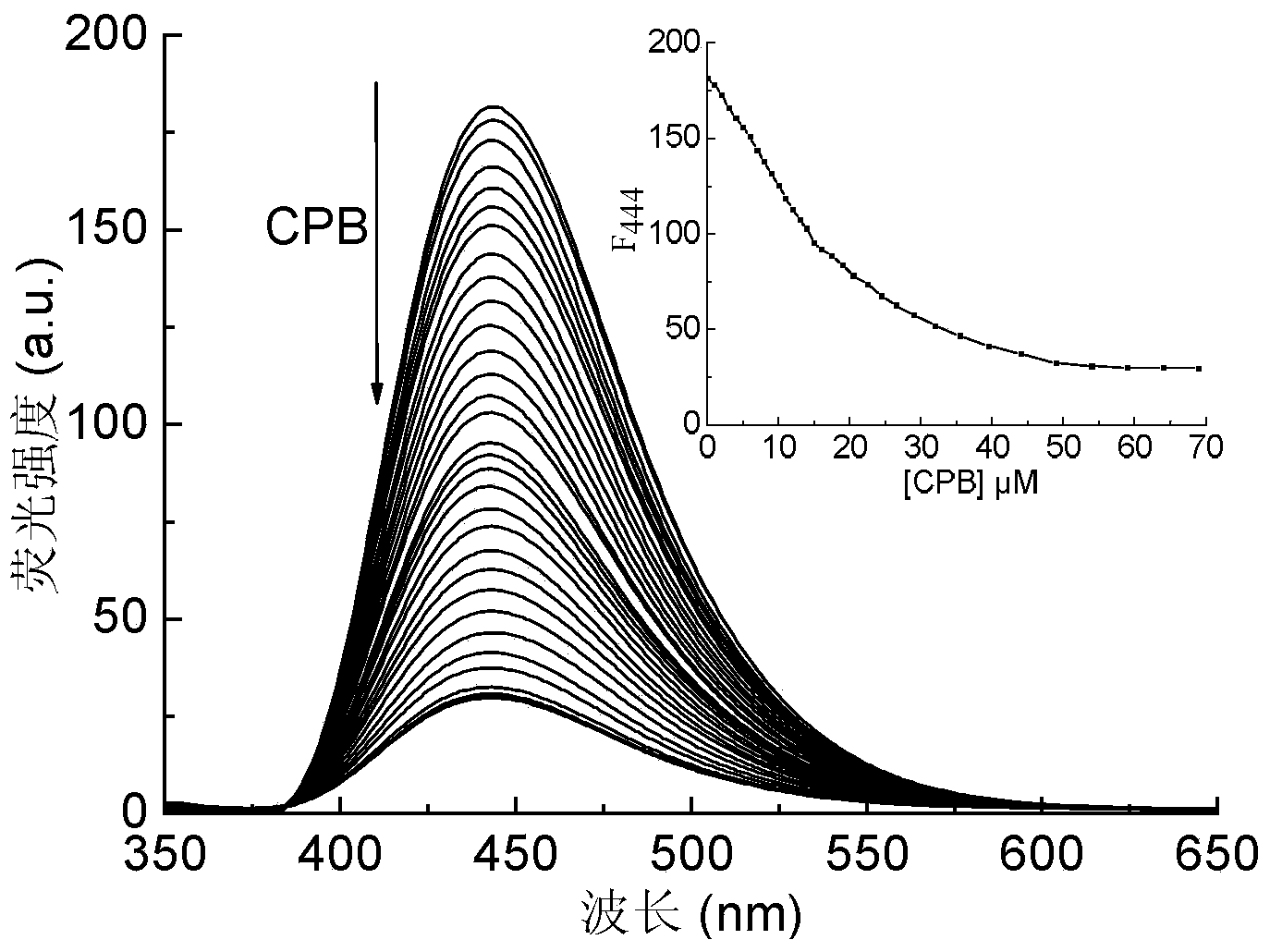
Figure 3
Abstract
Description
technical field
[0001] The invention relates to a fluorescence detection method and application of a pyridinium quaternary ammonium salt cationic surfactant. Background technique
[0002] Quaternary ammonium salt-type cationic surfactants are cationic surfactants with high output and wide application. Among them, the typical and most common type is pyridinium quaternary ammonium salt cationic surfactant, the molecule of alkyl pyridinium quaternary ammonium salt (RPB) The structural formula is as follows:
[0003]
[0004] R=C n h 2n+1 , or C n h 2n+1 NCOCH 2 ,n=8-18;X - = Cl - ,Br - ,I - ; Because of its good water solubility, both acid and alkali resistance and strong bactericidal effect, it is widely used in industrial production and daily products, and will eventually be released into the environment, causing environmental problems. Therefore, establishing a new detection method for pyridinium quaternary ammonium salt cationic surfactant has special significa...
Examples
specific Embodiment approach 1
[0029] Embodiment one: the fluorescence detection method of the pyridinium quaternary ammonium salt cationic surfactant (RPB) of the present embodiment is carried out according to the following steps:
[0030] 1. Configure the detection solution: add the fluorescent dye CXT, non-ionic surfactant and buffer solution into the water, adjust the pH value to pH 5-12 after mixing evenly, and obtain the detection solution; the molar concentration of CXT in the detection solution 1.0×10 -6 ~1.0×10 -3 mol / L; the nonionic surfactant in the detection solution is Brij35, and its molar concentration is 1.0×10 -5 ~1.0×10 -2 mol / L; the buffer solution in the detection solution is Tris-HCl or Hepes, and its molar concentration is 0.1×10 -3 ~2.0×10 -2 mol / L.
[0031] 2. The single selectivity of RPB: Add various common surfactants respectively to the solution of step 1. When the concentration of surfactant is 1 to 6 times of the concentration of CXT, measure its fluorescence intensity (ex...
specific Embodiment approach 2
[0045] Embodiment 2: This embodiment differs from Embodiment 1 in that: after mixing uniformly in Step 1, use HCl solution or NaOH solution to adjust the pH value of the detection solution obtained in Step 1 to pH 8. Others are the same as in the first embodiment.
specific Embodiment approach 3
[0046] Specific embodiment three: the difference between this embodiment and one of the specific embodiments one to two is: the molar concentration of CXT in the detection solution described in step one is 5.0×10 -6 . Others are the same as one of the specific embodiments 1 to 2.