
Synthetic process of 5-bromo-7-azaindole
A technology for the synthesis of azaindole and azaindole, which is applied in the field of synthesis of 5-bromo-7-azaindole, an anticancer drug intermediate, can solve the problems of high cost, high solid waste, and high total cost, and achieve Low cost, simple operation, and short reaction steps
Patent Information
- Authority / Receiving Office
- CN · China
- Current Assignee / Owner
- Publication Date
- 2015-03-04
- Estimated Expiration
- Not applicable · inactive patent
Smart Images
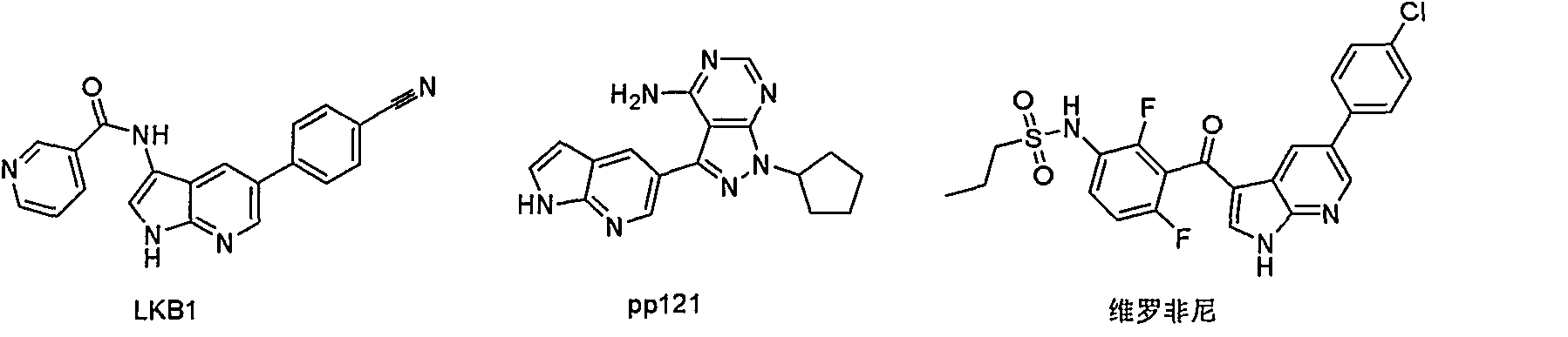
Figure 1 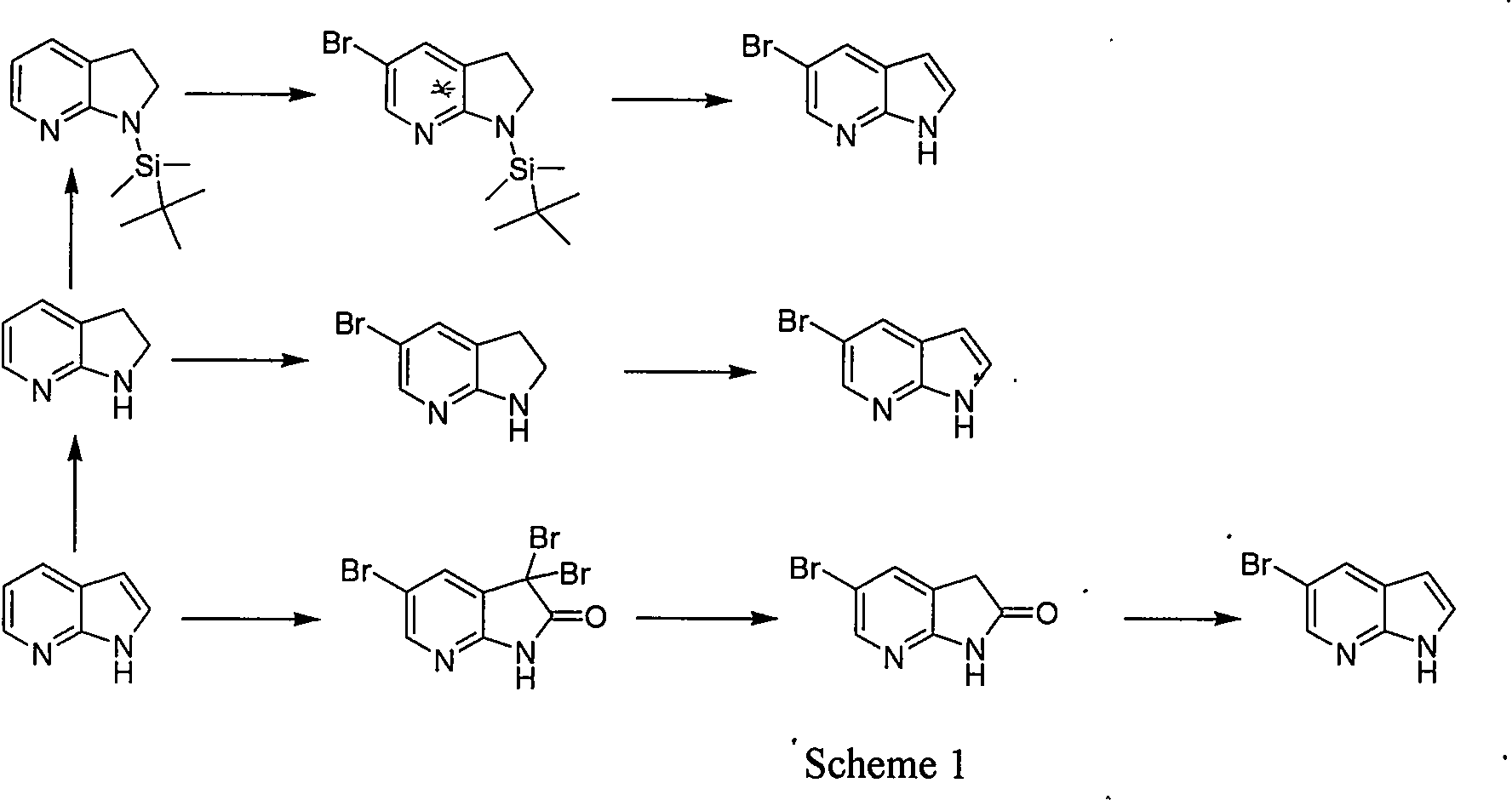
Figure 2 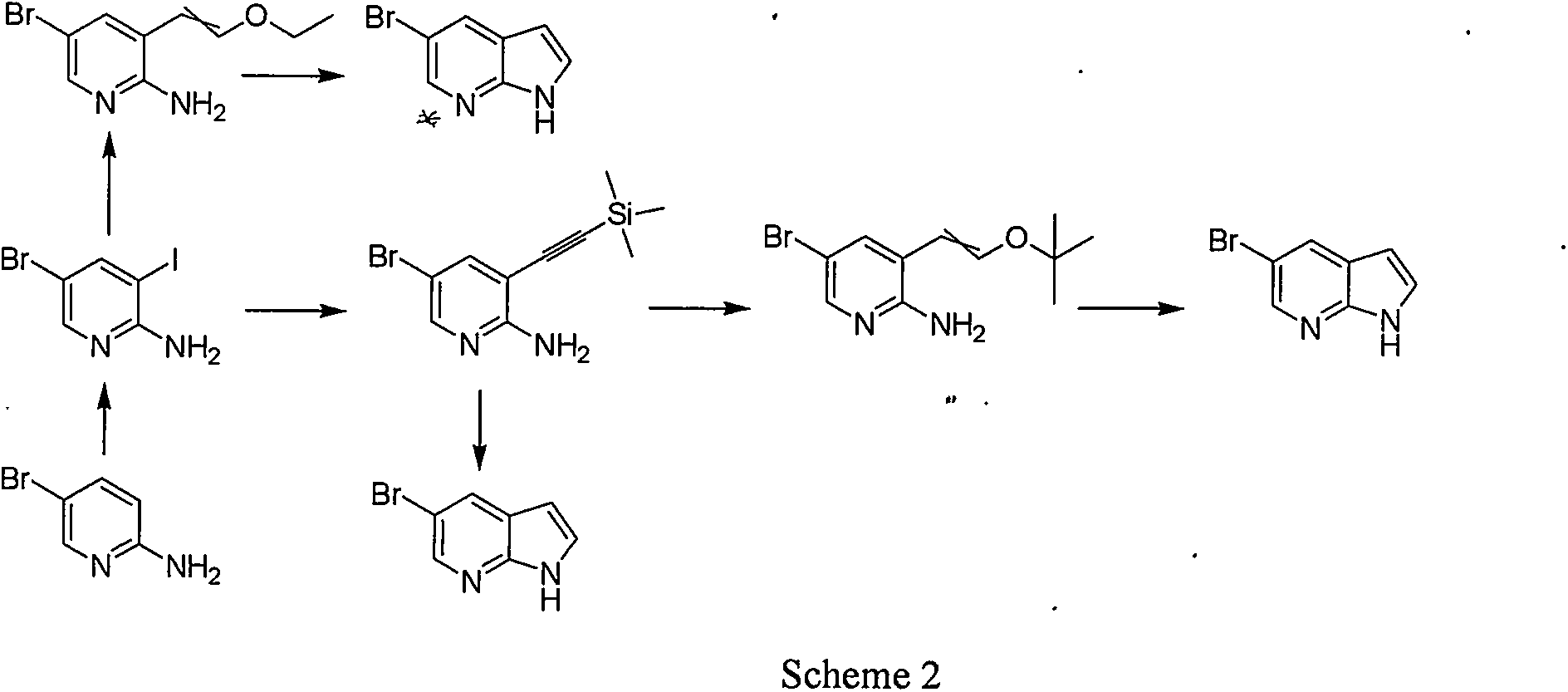
Figure 3
Abstract
Description
technical field
[0001] The invention belongs to the field of pharmaceutical intermediates, in particular to a synthesis process for anticancer drug intermediate 5-bromo-7-azaindole. Background technique
[0002] In recent years, great progress has been made in the research and development of targeted anti-cancer drugs with 7-azaindole as the mother nucleus. 5-bromo-7-azaindole is an important intermediate for the synthesis of such new drugs. 5-bromo- 7-Azaindole can be used to synthesize new drugs such as anticancer drug Vemurafenib (vemurafenib, strong kinase inhibitor), PP121 (cell signaling pathway inhibitor), LKB1 (AAK1 dual inhibitor) (structural formula is as follows). Among them, vemurafenib is a strong kinase inhibitor, which is specially developed to target the BRAFV600 mutation in cancer cells. The US Food and Drug Administration (FDA) approved vemurafenib on August 17, 2011 for patients with unresectable or metastatic BRAFV600E mutant melanoma.
[0003] [00...
Examples
Embodiment 1
[0025] The first step reaction: preparation of intermediate 2
[0026] In an ice-water bath, 2-amino-3-methyl-5-bromopyridine (10.8 g, 57.8 mmol) was sequentially added into the concentrated sulfuric acid solution (60 mL) solution at one time under mechanical stirring, keeping the temperature below 5°C, Add dropwise pre-cooled caro'sacid (a mixed solution of 86.4mL hydrogen peroxide and 179.2mL concentrated sulfuric acid). After the dropwise addition, remove the ice bath, naturally warm to room temperature, and continue stirring overnight. TLC shows that the raw materials react After completion, the reaction solution was carefully poured into a mixture of ice and water, and sodium hydroxide was added to adjust the alkalinity. A large amount of solids precipitated out and filtered. The filter cake was washed with cold water and dried under vacuum to obtain 9.8g of compound 2, HPLC: 98.3%, yield 78%. 1 H-NMR (400MHz, CDCl 3 ): δ8.620(s, 1H), 8.091(s, 1H), 2.320(s, 3H).
[002...