
Anti-nuclear radiation composite flexible material and preparing method thereof
A technology of anti-nuclear radiation and flexible materials, applied in the field of anti-nuclear radiation, can solve the problems of difficult construction and heavy weight, and achieve the effects of good shielding and radiation effects, light weight and low cost
Patent Information
- Authority / Receiving Office
- CN · China
- Patent Type
- Applications(China)
- Current Assignee / Owner
- Publication Date
- 2015-04-29
- Estimated Expiration
- Not applicable · inactive patent
Smart Images
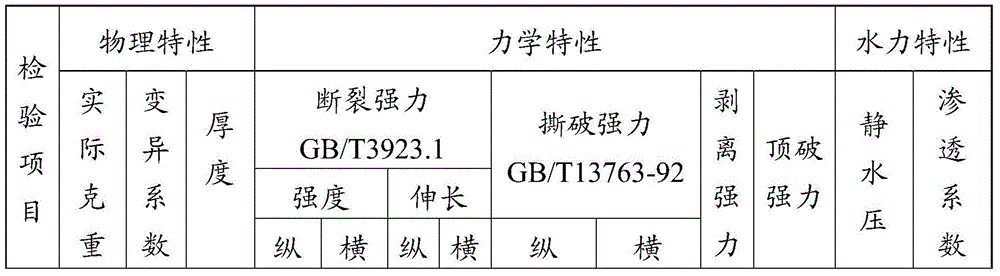
Figure 1 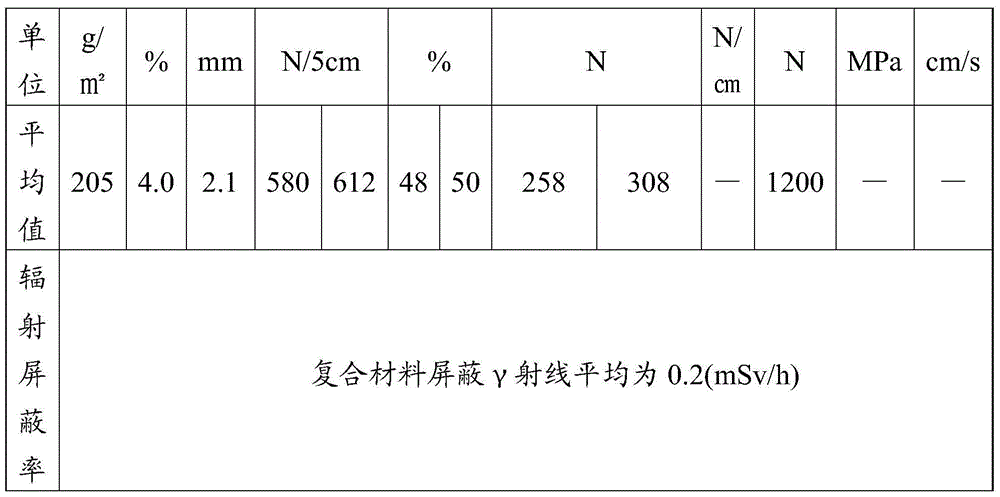
Figure 2 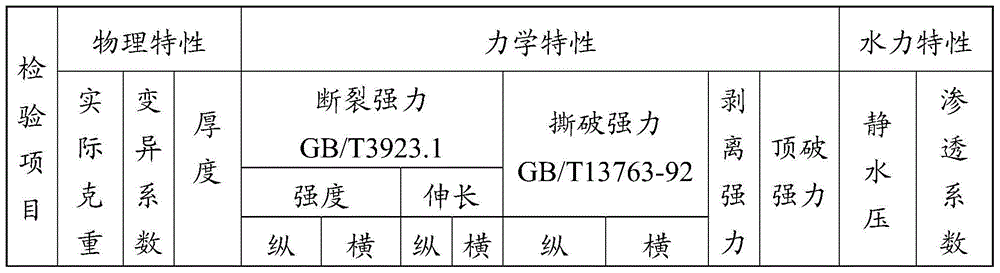
Figure 3
Abstract
Description
technical field
[0001] The invention belongs to the technical field of anti-nuclear radiation, and in particular relates to a composite flexible material for anti-nuclear radiation and a preparation method thereof. Background technique
[0002] Radioactive substances can enter the human body through external exposure or other ways to cause internal exposure and endanger human health. Therefore, it is necessary to control and prevent contamination by radioactive substances. For uranium mine mining, closed treatment of uranium mines, uranium smelters, nuclear power plants, uranium mines, waste residues from metal mines with associated nuclear substances, tailings dams, landfills and other working environments that may produce nuclear radiation , the use of anti-nuclear radiation materials to cover radioactive substances is one of the effective means to reduce nuclear radiation.
[0003] The prior art discloses a variety of materials for shielding nuclear radiation, such as sh...
Examples
preparation example Construction
[0061] The present invention also provides a preparation method of a nuclear radiation-proof composite flexible material, comprising:
[0062] The non-woven fabric is subjected to thermal cross-linking treatment after being immersed in an emulsion including acrylic resin, PE resin, cross-linking agent and water; the non-woven fabric is made of polymer fibers and stainless steel fibers;
[0063] Drying and cold-rolling the non-woven fabric obtained by thermal cross-linking treatment to obtain a nuclear radiation-proof composite flexible material.
[0064] The present invention uses non-woven fabric as the main body material of anti-nuclear radiation composite flexible material, and described non-woven fabric is preferably prepared according to the following method:
[0065] After mixing stainless steel fibers and polymer fibers, they are opened and carded to obtain nascent fiber webs;
[0066] The nascent fiber web is tiled by a cross-lapper to obtain a fluffy fiber web;
[0...
Embodiment 1
[0101] Mix stainless steel fibers with a fineness of 3.0-6.0dtex and a length of 56-65mm and polypropylene fibers with a fineness of 3.0-6.0dtex, a length of 56-65mm and a strength of 70CN / dtex at a ratio of 0.1:1. The fiber after mixing forms nascent fiber web after opening and carding; Said nascent fiber web is flat-laid into 200g / m through poor web-laying machine 2 The fluffy fiber web; the fluffy fiber web is consolidated and compounded by needle punching up and down, and the needle punching density is 300 punches / cm 2 , to obtain a nonwoven fabric with a thickness of 2mm;
[0102] The non-woven fabric is immersed in the emulsion comprising 5.0wt% acrylic resin, 5.0wt% PE resin, 1.0wt% SAden163 crosslinking agent and 89wt% water, so that the amount of sizing is 5.0wt%; The non-woven fabric impregnated with the emulsion is cross-linked and compounded at a temperature of 110±2°C, then dried at a temperature of 130±2°C, and then entered into a cold rolling mill at a temperat...
Embodiment 2
[0108] Mix stainless steel fibers with a fineness of 3.0-6.0dtex and a length of 56-65mm and polypropylene fibers with a fineness of 3.0-6.0dtex, a length of 56-65mm and a strength of 70CN / dtex at a ratio of 0.1:1. The fiber after mixing forms nascent fiber web after opening and carding; Said nascent fiber web is flattened into 500g / m 2 The fluffy fiber web; the fluffy fiber web is consolidated and compounded by needle punching up and down, and the needle punching density is 300 punches / cm 2 , to obtain a nonwoven fabric with a thickness of 4mm;
[0109] The non-woven fabric is immersed in the emulsion comprising 5.0wt% acrylic resin, 5.0wt% PE resin, 1.0wt% SAden163 crosslinking agent and 89wt% water, so that the amount of sizing is 5.0wt%; The non-woven fabric impregnated with the emulsion is cross-linked and compounded at a temperature of 110±2°C, then dried at a temperature of 130±2°C, and then entered into a cold rolling mill at a temperature of 10±0.5°C to be rapidly co...