
Three-dimensional bipyridine functionalized covalent organic frame material synthesis method
A technology of covalent organic framework and three-dimensional bipyridine is applied in the field of synthesis of covalent organic framework materials, which can solve the problems of less three-dimensional materials, and achieve the effect of obvious shape selectivity and good catalytic activity.
Patent Information
- Authority / Receiving Office
- CN · China
- Current Assignee / Owner
- Publication Date
- 2015-07-08
Smart Images
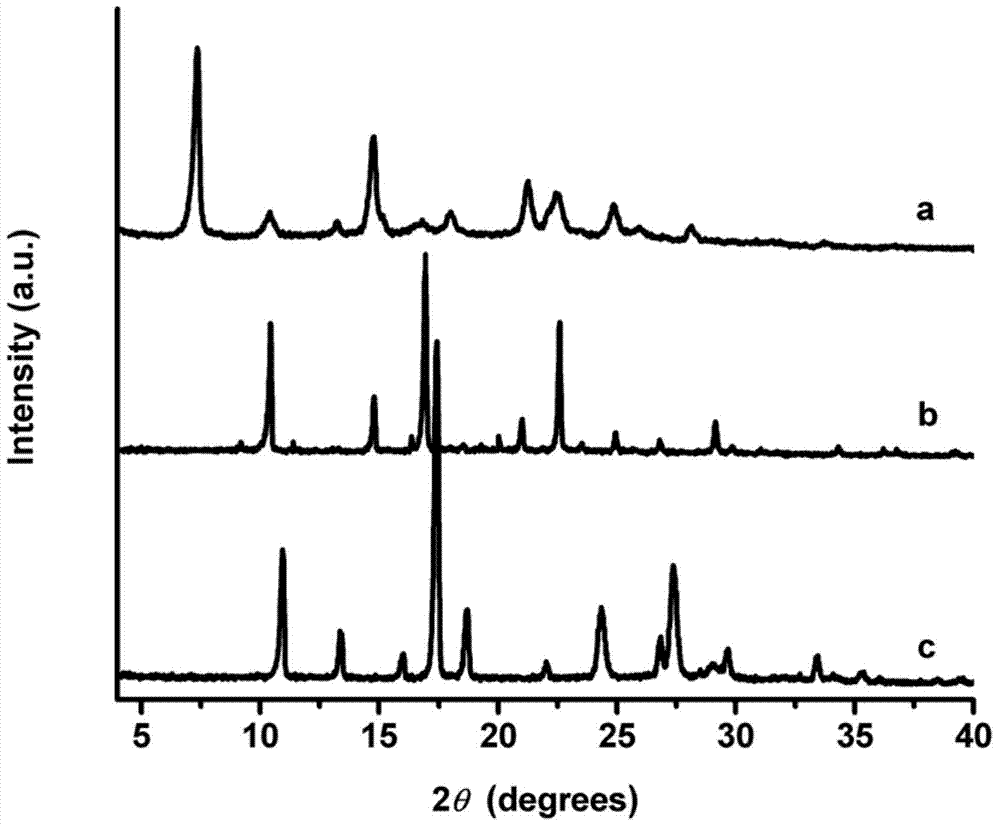
Figure 1 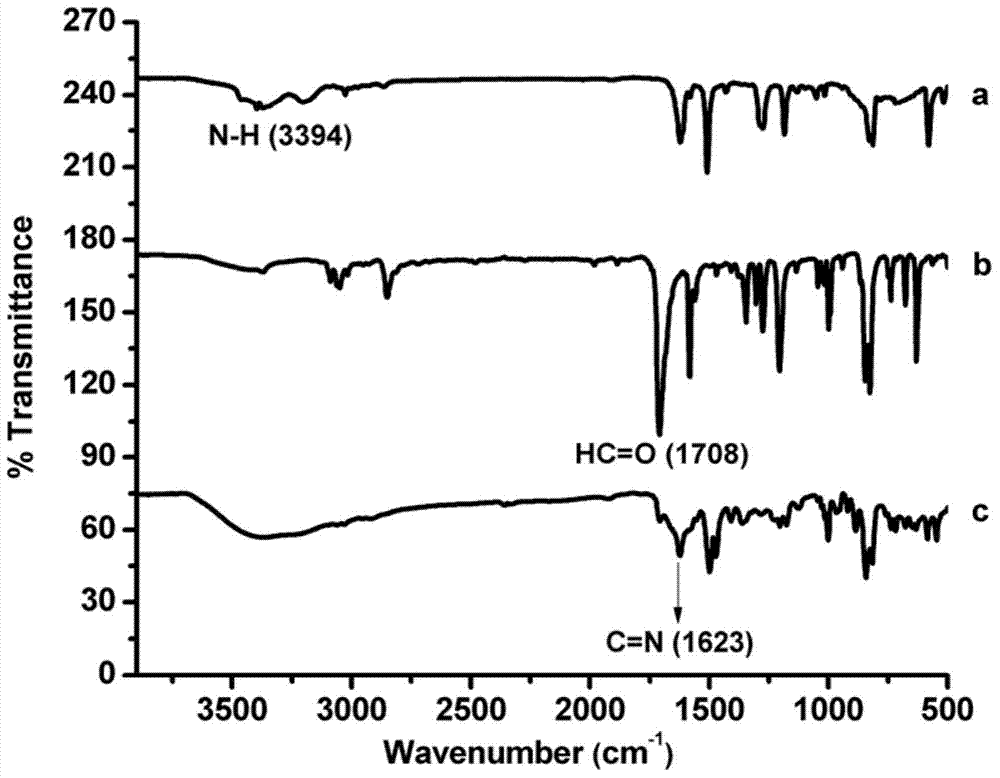
Figure 2 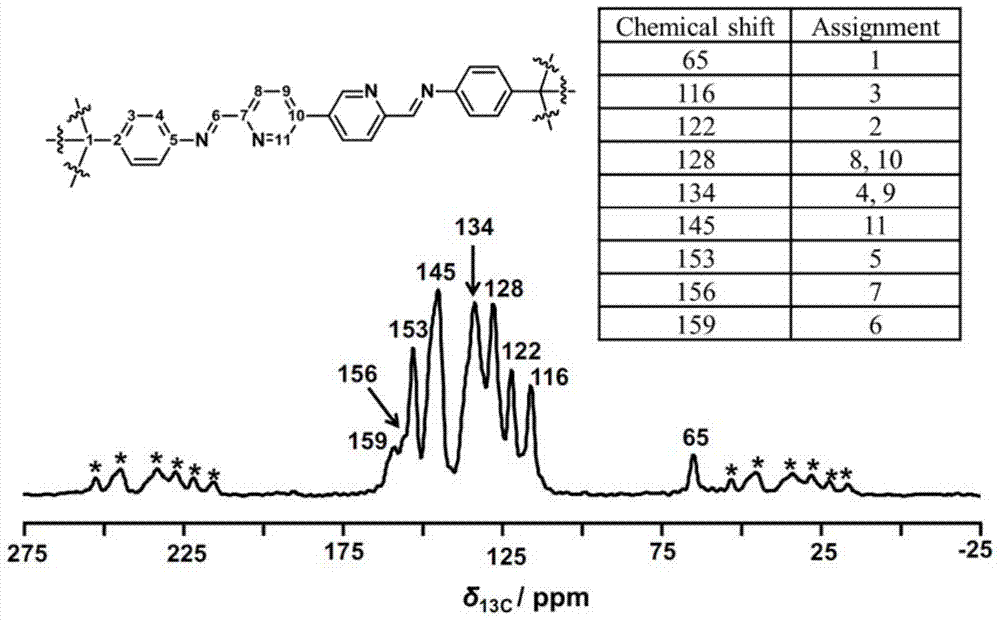
Figure 3
Abstract
Description
technical field
[0001] The invention relates to the synthesis of covalent organic framework materials (COFs), in particular to a synthesis method of three-dimensional bipyridyl functionalized covalent organic framework materials, belonging to the field of organic synthesis. Background technique
[0002] Covalent organic frameworks (COFs) are a new class of crystalline organic porous materials connected by covalent bonds. Structurally, this type of material has a large specific surface area, regular and ordered pores, and relatively low density. Therefore, COFs materials have shown great application potential in gas adsorption and storage, heterogeneous catalysis, organic optoelectronics, fluorescent probes, ion conduction, etc. Compared with inorganic molecular sieve materials, COFs materials have organic precursors that are easy to modify and functionalize, so this type of material has more advantages than molecular sieve materials in terms of functionalization, especially...
Examples
Embodiment 1
[0032] (1) Synthesis of three-dimensional pyridine functionalized covalent organic framework (COF-LZU301):
[0033]
[0034] Tetrakis(4-anilino)methane (17.1 mg, 0.045 mmol) and 6,6'-diformyl-3,3'-bipyridine (19.1 mg, 0.09 mmol) were added into a pressure-resistant glass tube. Then add 0.9 mL of 1,4-dioxane and 0.1 mL of 6M aqueous acetic acid into the glass tube. Connect the glass tube to the vacuum line, freeze it with liquid nitrogen, evacuate to 0mbar, and then seal the tube with flame. The sealed glass tube was crystallized at room temperature for 5 hours, then placed in an oven and heated to 120°C for 3 days. After the reaction, the obtained solid was transferred to a centrifuge tube, centrifuged and washed three times with acetone and tetrahydrofuran, and then heated and dried at 90°C for 12 hours to obtain 131.5 mg of COF-LZU30 with a yield of 83%.
[0035] Such as figure 1 , by comparing the PXRD spectra of COF-LZU301 and the raw materials, it can be found that ...
Embodiment 2
[0048] Synthesis of three-dimensional pyridine functionalized covalent organic framework (COF-LZU301):
[0049]
[0050] Tetrakis(4-anilino)methane (34.2 mg, 0.09 mmol) and 6,6'-diformyl-3,3'-bipyridine (9.6 mg, 0.045 mmol) were added into a pressure-resistant glass tube. Then add 0.5 mL of 1,4-dioxane and 0.1 mL of 9M aqueous acetic acid into the glass tube. Connect the glass tube to the vacuum line, freeze it with liquid nitrogen, evacuate to 0mbar, and then seal the tube with flame. The sealed glass tube was crystallized at room temperature for 5 hours, then placed in an oven and heated to 120°C for 3 days. After the reaction, the obtained solid was transferred to a centrifuge tube, centrifuged and washed three times with acetone and tetrahydrofuran, and then heated and dried at 90°C for 12 hours to obtain COF-LZU301.
Embodiment 3
[0052] Synthesis of three-dimensional pyridine functionalized covalent organic framework (COF-LZU301):
[0053]
[0054] Tetrakis(4-anilino)methane (17.1 mg, 0.045 mmol) and 6,6'-diformyl-3,3'-bipyridine (28.6 mg, 0.135 mmol) were added into a pressure-resistant glass tube. Then, 1.2 mL of 1,4-dioxane and 0.1 mL of 9M aqueous acetic acid were added to the glass tube. Connect the glass tube to the vacuum line, freeze it with liquid nitrogen, evacuate to 0mbar, and then seal the tube with flame. The sealed glass tube was crystallized at room temperature for 5 hours, then placed in an oven and heated to 120°C for 3 days. After the reaction, the obtained solid was transferred to a centrifuge tube, centrifuged and washed three times with acetone and tetrahydrofuran, and then heated and dried at 90°C for 12 hours to obtain COF-LZU301.