
Primers, probes and kits for detecting egfr and/or k-ras gene mutations
A probe and gene technology, applied in the field of devices for detecting gene mutation based on a digital PCR platform, can solve the problems of inability to meet detection needs, false positives, and high cost of reaction reagents
Patent Information
- Authority / Receiving Office
- CN · China
- Patent Type
- Patents(China)
- Current Assignee / Owner
- Publication Date
- 2020-04-21
Smart Images
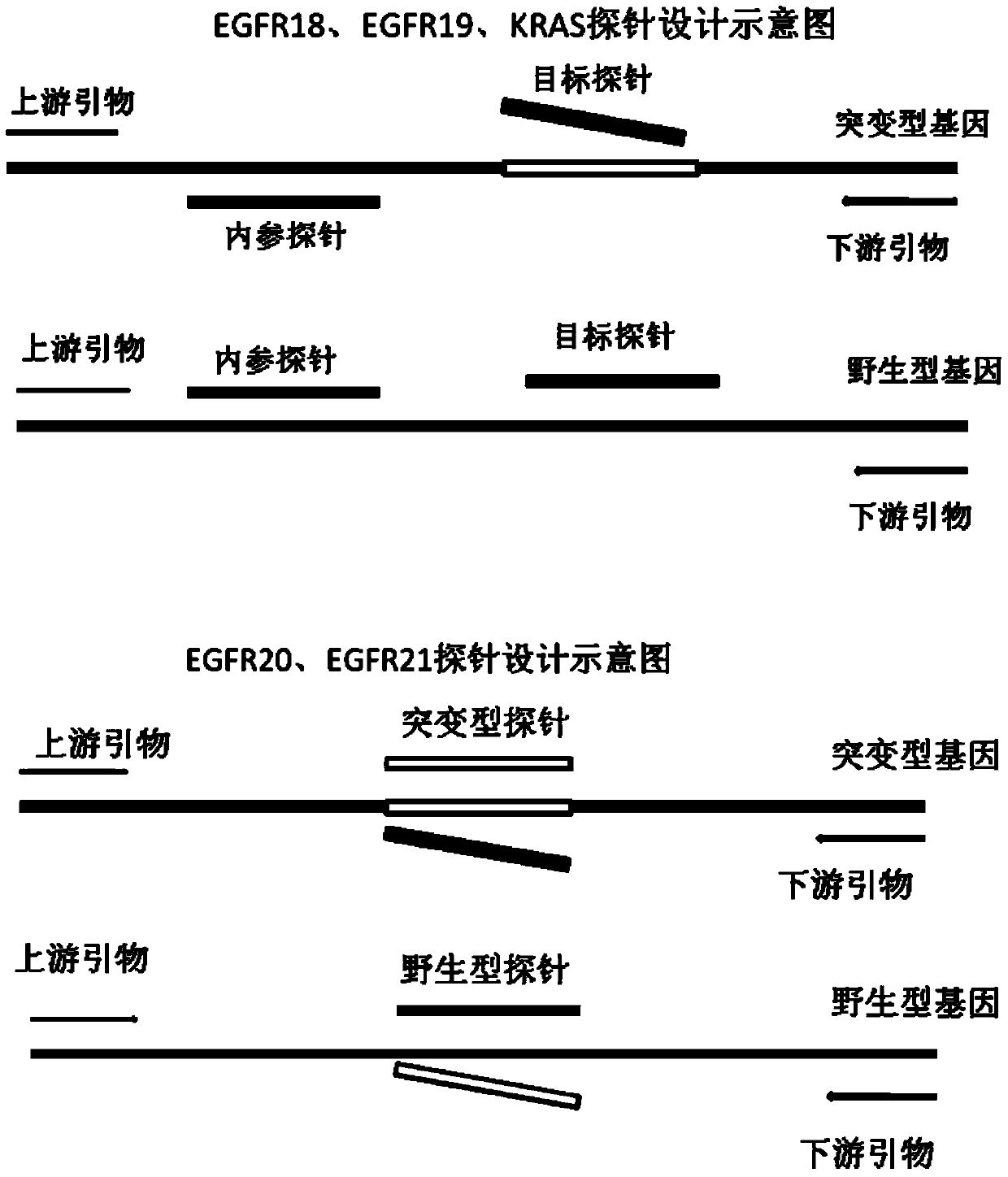
Figure 1 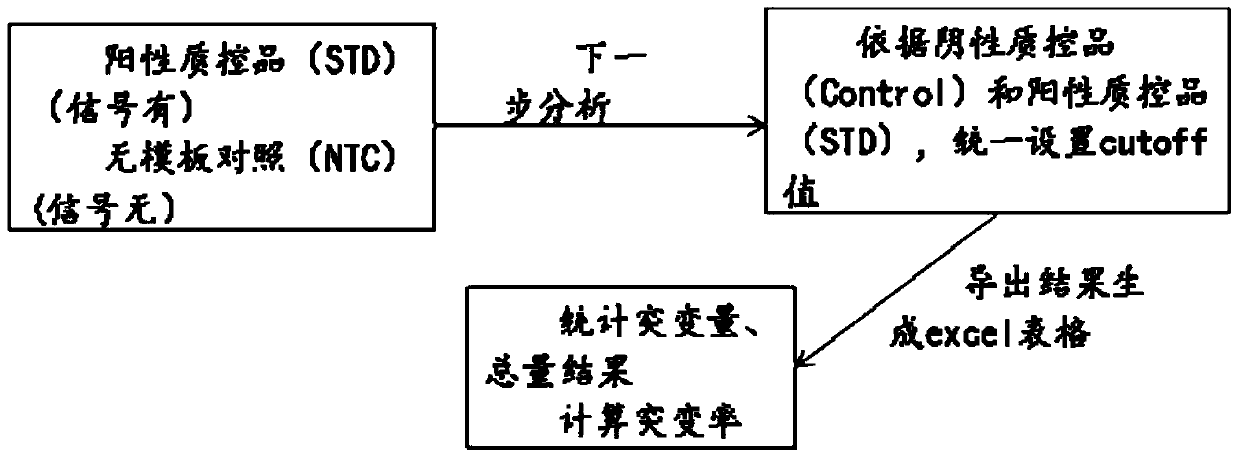
Figure 2 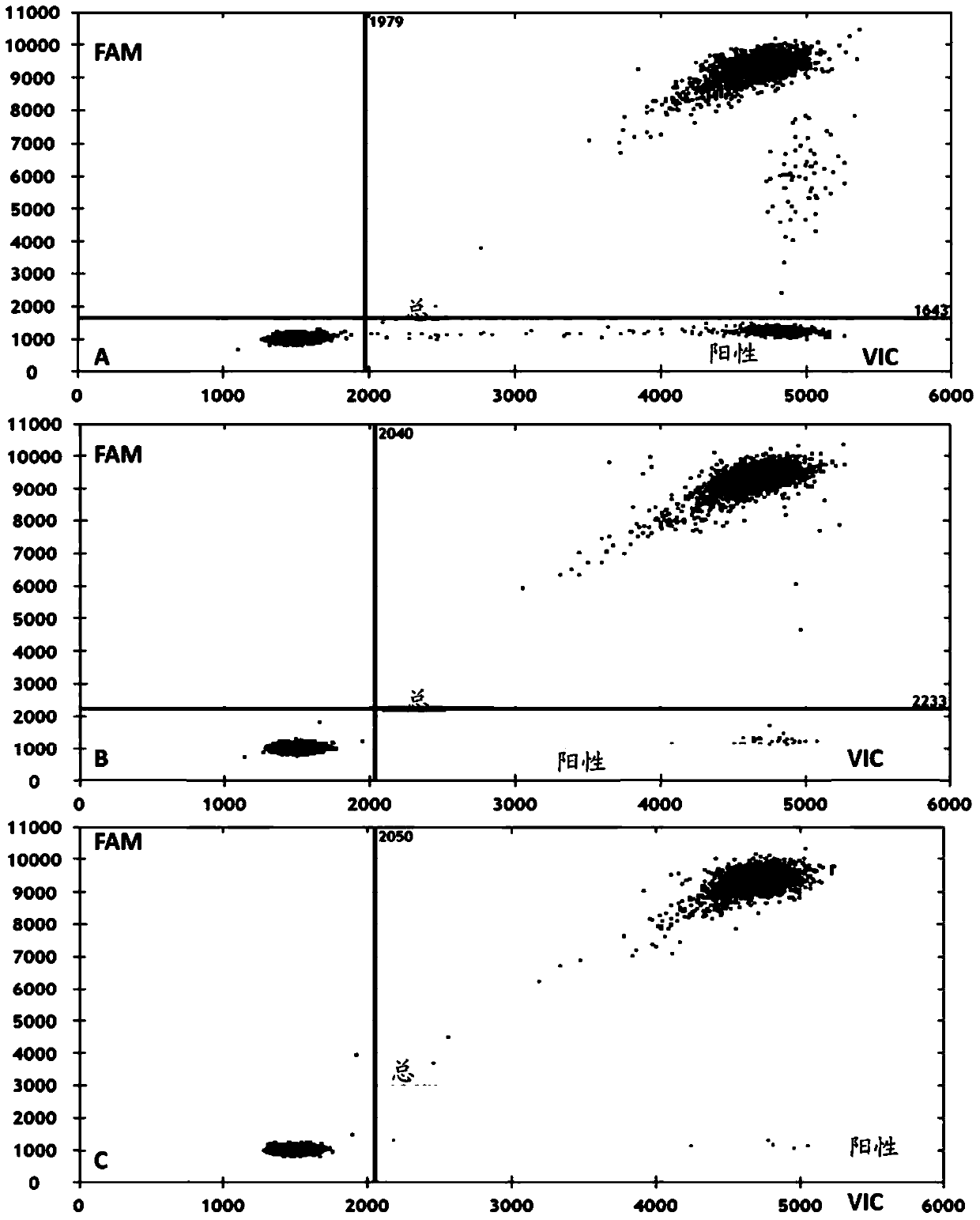
Figure 3
Abstract
Description
technical field
[0001] The present invention relates to the field of gene mutation detection, in particular to primers and probes for detecting mutations in the human epidermal growth factor receptor (EGFR) gene and / or K-ras gene, a kit comprising the primers and probes, and a A device for detecting gene mutations based on a digital PCR platform. Background technique
[0002] According to the estimates of the International Cancer Research Center (IARC), the number of cancer cases will increase at an average annual rate of 3% to 5% in the future. It is estimated that there will be 20 million new cases and 12 million deaths in the world in 2020. In terms of incidence, the incidence of cancer in low- and middle-income countries is much higher than that in developed countries. Therefore, it is emphasized that countries should take necessary precautionary measures. The annual medical expenses for cancer patients in our country are about 80 billion yuan, accounting for about 20%...
Examples
Embodiment 1
[0136] Embodiment 1: Composition and method of use of the kit of the present invention
[0137] The composition of the kit of the present invention is shown in Table 4 above, and its usage method is also described in the summary of the invention, and the detailed steps are shown in the following examples.
Embodiment 2
[0138] Embodiment 2: Simulation sample detection
[0139] (1) Prepare the sample: mix the DNA containing the wild-type EGFR gene with the positive quality control in a certain ratio. The source of DNA can be serum, plasma, peripheral blood, oral mucosa, pleural effusion, body fluid or tissue, etc.
[0140] In this example, samples A, B, and C were obtained by mixing different amounts of the above-mentioned positive plasmids with the same amount of wild-type DNA. Before mixing, the positive plasmids and wild-type DNA were respectively quantified using a digital PCR instrument to obtain a theoretical mutation rate. .
[0141] (2) Melt PCR primers and corresponding TaqMan probes at room temperature.
[0142] (3) Prepare the PCR reaction solution according to the ratio of the kit instructions.
[0143] (4) Add 20 μL of the prepared digital PCR mixture to the 8-lane droplet making plate, and then add 60 μL of droplet making oil to the making plate to prepare PCR micro-reaction d...
Embodiment 3
[0150] Embodiment 3: detection of paraffin-embedded standard substance
[0151] According to the usage method of the above-mentioned embodiment 1, the sample is taken as the standard product Quantitative Multiplex FFPEReference Standard (purchased from Horizon Diagnostics Company). In the instruction manual, it is indicated that 2% of EGFR19c. 35G>A. Test results such as Figure 4 shown. The analysis of the detection results is the same as in Example 1, the mutation rate=1-(Number wild type / Number total molecule)=1-(Number FAM(+)VIC(+) / Number VIC(+)), the specific results are derived, wild The number of type signals and the total number of signals are as follows:
[0152]
[0153] The results of quantitative analysis show that the error is generally 0.3%-2.5%, not more than 5%. With the above method, it is possible to detect c.2235-c.2253 deletion mutations on exon 19 of EGFR, and various types of point mutations c.35, c.34, and c.38 on exon 2 of KRAS gene, and the dete...