
Method for preparing titanium dioxide nano-film on surface of expanded polytetrafluoroethylene
The technology of polytetrafluoroethylene and polytetrafluoroethylene plate is applied in the field of preparing titanium dioxide nano-film on the surface of expanded polytetrafluoroethylene, which can solve the problems of complicated operation process, high cost, weak bonding of tetrafluoroethylene plate, etc. To achieve the effect of simple preparation process, convenient operation, good biocompatibility and light responsiveness
Patent Information
- Authority / Receiving Office
- CN · China
- Patent Type
- Applications(China)
- Current Assignee / Owner
- Publication Date
- 2016-11-23
- Estimated Expiration
- Not applicable · inactive patent
Smart Images
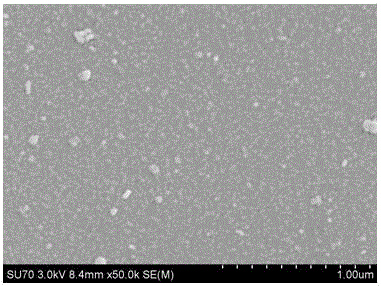
Figure 1
Abstract
Description
technical field
[0001] The invention relates to a method for preparing a titanium dioxide nanometer film on the surface of an organic polymer, in particular to a method for preparing a photoresponsive titanium dioxide nanometer film on the surface of expanded polytetrafluoroethylene. Background technique
[0002] TiO 2 It is a non-toxic inorganic material with excellent chemical stability, strong photocatalytic activity and good biocompatibility. After a period of UV irradiation, TiO 2 The surface can be changed to a superhydrophilic state. It has been found that TiO 2 Materials are widely used in photocatalytic self-cleaning, biological tissue engineering and other fields [YoshiakiTaguchi. et al. Photo-induced properties of non-annealed anatase TiO 2 mesoporous film prepared by anodizing in the hot phosphate / glycerolelectrolyte. Chem. Applied Surface Science 258 (2012) 9810-9815], [K. Cheng,H. P. Wan. et al. RSC Adv., 2015, 5, 88965-88972].
[0003] Expanded polytetra...
Examples
Embodiment 1
[0017] (1) Soak the expanded polytetrafluoroethylene substrate in absolute ethanol, ultrasonically clean it for 20 minutes, then take out the substrate and dry it at 60°C, then soak it in 3mol / L NaOH solution for 10 hours, and dry it naturally;
[0018] (2) Introduce oxygen into the plasma reactor, place the cleaned and dried expanded polytetrafluoroethylene substrate at a position 10cm away from the plasma discharge area, and treat it for 10s;
[0019] (3) Mix tetrabutyl titanate and absolute ethanol at a volume ratio of 1:1 and stir evenly to obtain A solution;
[0020] (4) On the expanded polytetrafluoroethylene substrate treated in step 2), 20ul of solution A was added dropwise, spin-coated at a speed of 7000r / min for 30s, and dried at 60°C to obtain a tetrabutyl titanate film;
[0021] (5) The tetrabutyl titanate film prepared in step 4) was immersed in a hydrothermal tank filled with deionized water, and hydrothermally treated at 140°C for 2 hours to obtain a titanium di...
Embodiment 2
[0024] (1) Soak the expanded polytetrafluoroethylene substrate in absolute ethanol, ultrasonically clean it for 20 minutes, then take out the substrate and dry it at 60°C, then soak it in 1mol / L NaOH solution for 8 hours, and let it dry naturally;
[0025] (2) Introduce oxygen into the plasma reactor, place the cleaned and dried expanded polytetrafluoroethylene substrate at a position 15cm away from the plasma discharge area, and treat it for 20s;
[0026] (3) Mix tetrabutyl titanate and absolute ethanol at a volume ratio of 1:2 and stir evenly to obtain A solution;
[0027] (4) On the expanded polytetrafluoroethylene substrate treated in step 2), 22ul of solution A was added dropwise, spin-coated at a speed of 7000r / min for 32s, and dried at 60°C to obtain a tetrabutyl titanate film;
[0028] (5) The tetrabutyl titanate film prepared in step 4) was immersed in a hydrothermal tank filled with deionized water, and hydrothermally treated at 140°C for 2 hours to obtain a titanium...
Embodiment 3
[0031] (1) Soak the expanded polytetrafluoroethylene substrate in absolute ethanol, ultrasonically clean it for 20 minutes, then take out the substrate and dry it at 60°C, then soak it in 3mol / L NaOH solution for 10 hours, and dry it naturally;
[0032] (2) Introduce oxygen into the plasma reactor, place the cleaned and dried expanded polytetrafluoroethylene substrate at a position 20cm away from the plasma discharge area, and treat it for 30s;
[0033] (3) Mix tetrabutyl titanate and absolute ethanol at a volume ratio of 1:3 and stir evenly to obtain A solution;
[0034] (4) On the expanded polytetrafluoroethylene substrate treated in step 2), 24ul of solution A was added dropwise, spin-coated at a speed of 7000r / min for 34s, and dried at 60°C to obtain a tetrabutyl titanate film;
[0035] (5) The tetrabutyl titanate film prepared in step 4) was immersed in a hydrothermal tank filled with deionized water, and hydrothermally treated at 140°C for 3 hours to obtain a titanium di...