
Preparing method of thermally-driven self-repairing elastomer based on hydrogen-bond interaction
A hydrogen bonding, thermally driven technology, applied in the field of preparation of thermally driven self-healing elastomers based on hydrogen bonding, can solve the problems of low elongation, only one-time repairing ability, low repairing efficiency, etc., and achieve high tensile strength and the effect of elongation at break, excellent self-healing properties
Patent Information
- Authority / Receiving Office
- CN · China
- Patent Type
- Applications(China)
- Current Assignee / Owner
- Publication Date
- 2017-01-04
Smart Images
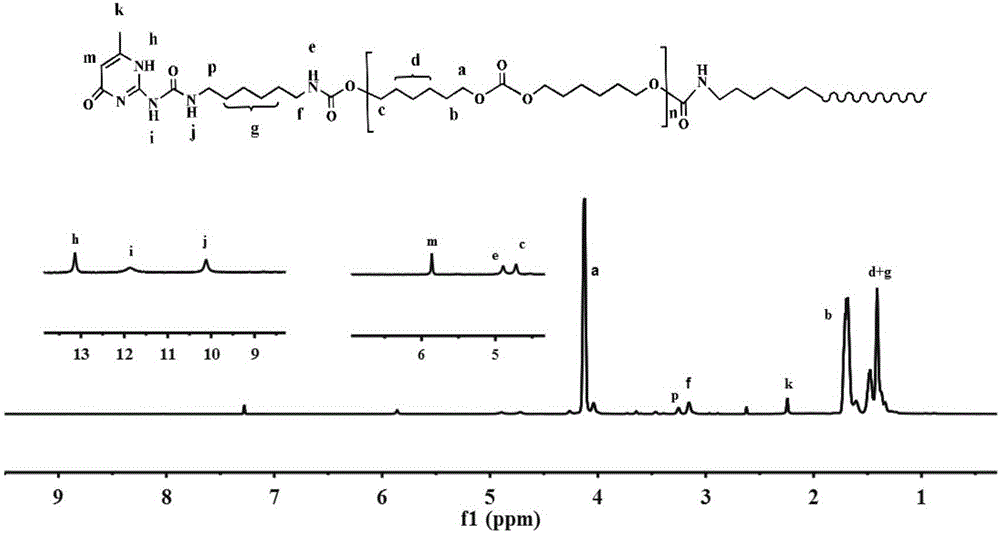
Figure 1 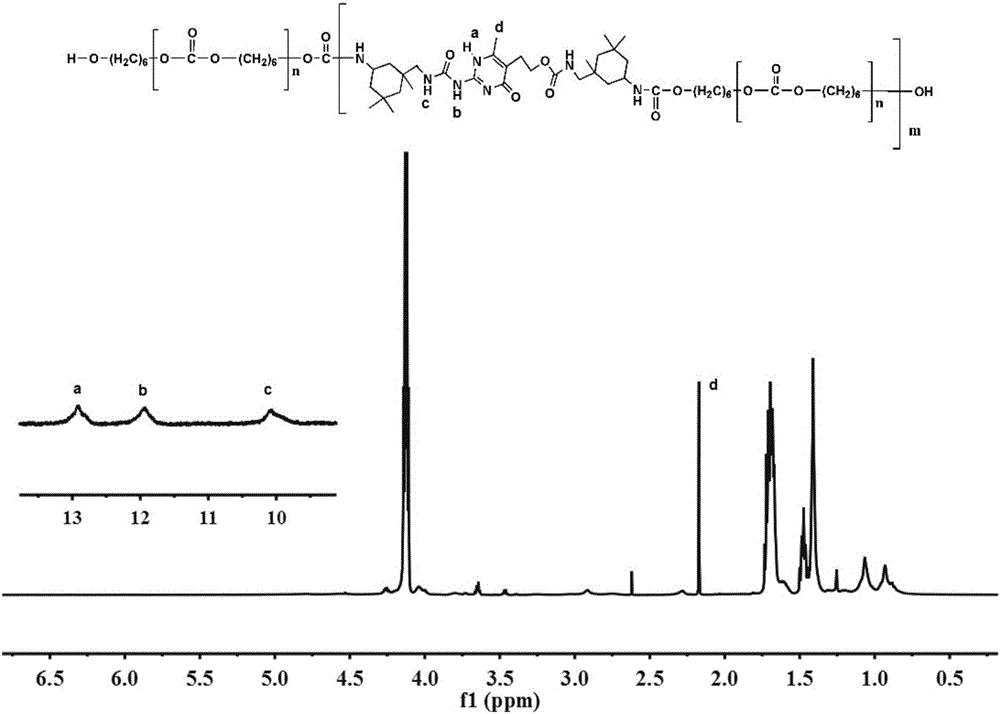
Figure 2 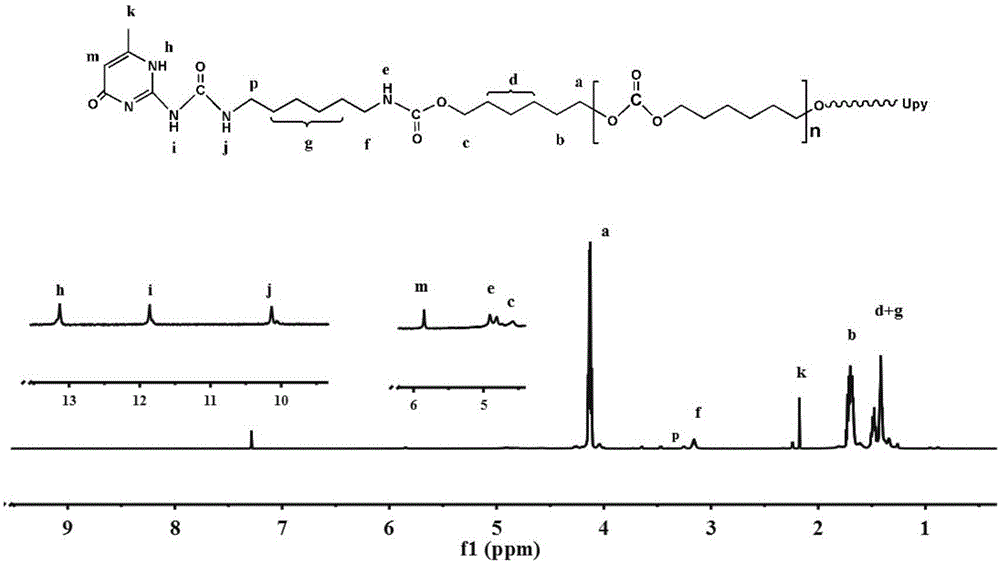
Figure 3
Abstract
Description
technical field
[0001] The invention relates to a preparation method of a hydrogen bond intrinsic type polyurethane elastomer material with self-repair function, in particular to a preparation method of a heat-driven self-repair elastomer based on hydrogen bond action.
[0002] technical background
[0003] When the material is subjected to external mechanical action, it is easy to cause damage to the surface or inside of the material, causing cracks in the material, and seriously affecting the mechanical properties and service life of the material. In order to solve the problem that materials are prone to damage during use, people have introduced the concept of self-repair. As a new type of intelligent material, self-healing materials have important development prospects and application value in some important projects and special fields.
[0004] At present, more studies are made on the use of microcapsule self-healing materials coated with repairing agents. Although this ...
Examples
Embodiment 1
[0038] Take 40 g of vacuum-dried polycarbonate diol (PCDL) with a molecular weight of 2000 and 1 drop of catalyst (dibutyltin dilaurate) in a three-necked flask equipped with a reflux condenser, raise the temperature to 50 ° C under nitrogen protection, and slowly drop Add measured hexamethylene diisocyanate diluted with 10ml of anhydrous toluene, under mechanical stirring until the -NCO absorption peak in the infrared spectrum disappears, then add 150ml of anhydrous toluene and heat up to 100°C; add Upy-NCO (system residual 1.5 times the number of moles of hydroxyl groups), reacted for about 16 hours under mechanical stirring, and stopped the reaction when the hydroxyl proton peak disappeared under the detection of proton nuclear magnetic spectrum. After cooling to room temperature, the polymer solution was added dropwise to 200 ml of n-hexane to obtain a white precipitate, which was washed and dried several times to obtain a transparent elastic solid. Adjust the molar ratios...
Embodiment 2
[0041] Take 40 g of vacuum-dried polycarbonate diol (PCDL) with a molecular weight of 2000 and 1 drop of catalyst (dibutyltin dilaurate) in a three-necked flask equipped with a reflux condenser, raise the temperature to 60 ° C under nitrogen protection, and slowly drop Add NCO-Upy-NCO dissolved in 100ml of anhydrous toluene, and stop the reaction under mechanical stirring until the -NCO absorption peak in the infrared spectrum disappears. Volatilize in a polytetrafluoroethylene tank at room temperature to obtain a transparent elastic film. Adjust the molar ratio of PCDL and NCO-Upy-NCO to be 1.2 respectively to obtain polyurethane elastomer HPU 1.2 -Upy.
[0042] To characterize the elastomer prepared above, figure 2 for HPU 1.2 -Upy's NMR spectrum, the repair efficiency is shown in Table 1, the results show that HPU 1.2 -Upy has a repair efficiency of 71% at 80°C for 2 hours, a repair efficiency of 91% after repair for 4 hours, and even 95% repair efficiency for 6 hours....