
Alkaline anion exchange composite membrane for fuel cell and preparation method thereof
An alkaline anion and fuel cell technology, applied in fuel cells, circuits, electrical components, etc., can solve the problems of poor chemical stability, limit the large-scale application of proton exchange membrane fuel cells, and harsh synthesis conditions, and achieve thermal stability and High mechanical strength, preventing instability and easy decomposition, and easy control of film thickness
Patent Information
- Authority / Receiving Office
- CN · China
- Patent Type
- Patents(China)
- Current Assignee / Owner
- Publication Date
- 2019-11-01
Smart Images
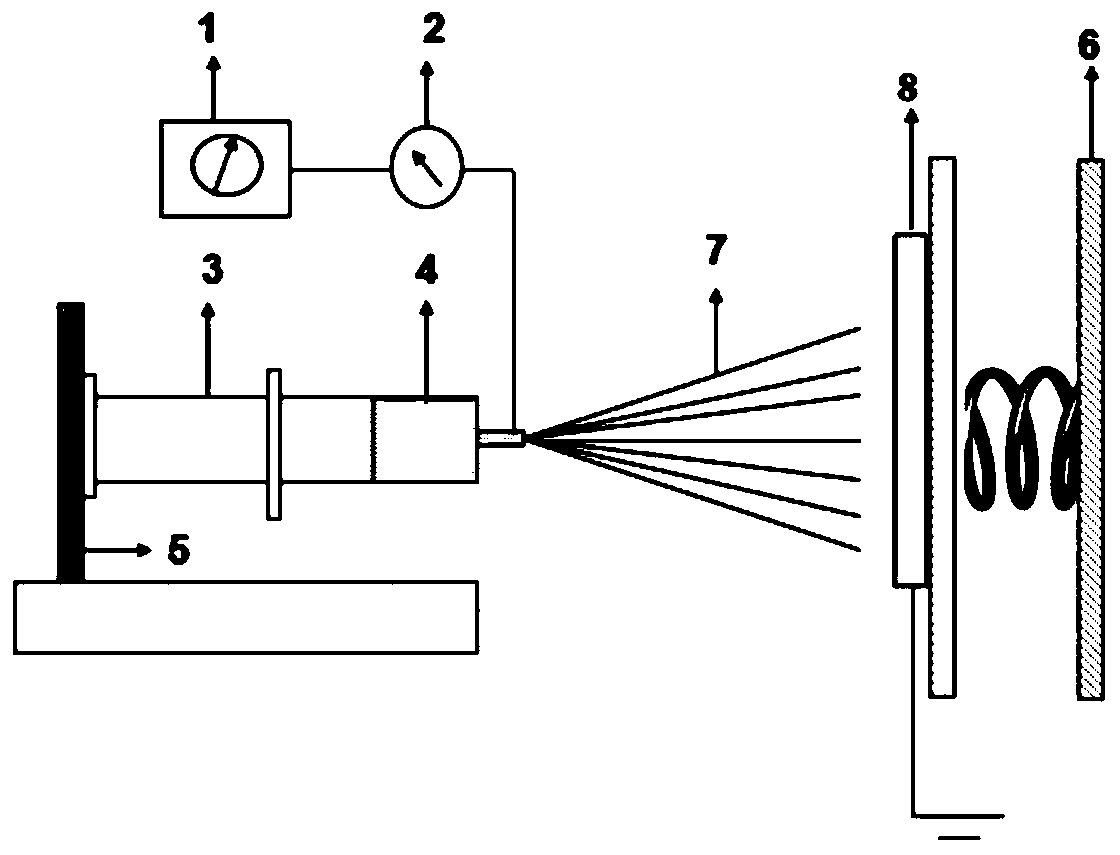
Figure 1 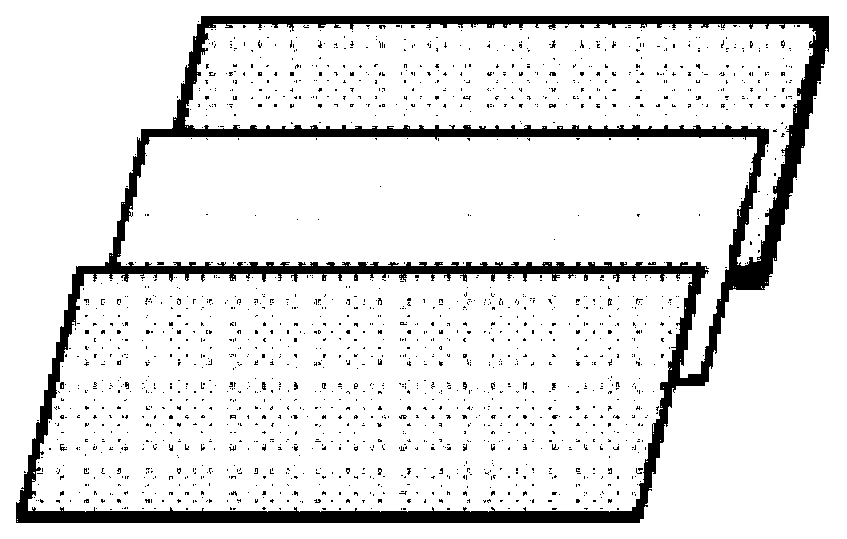
Figure 2 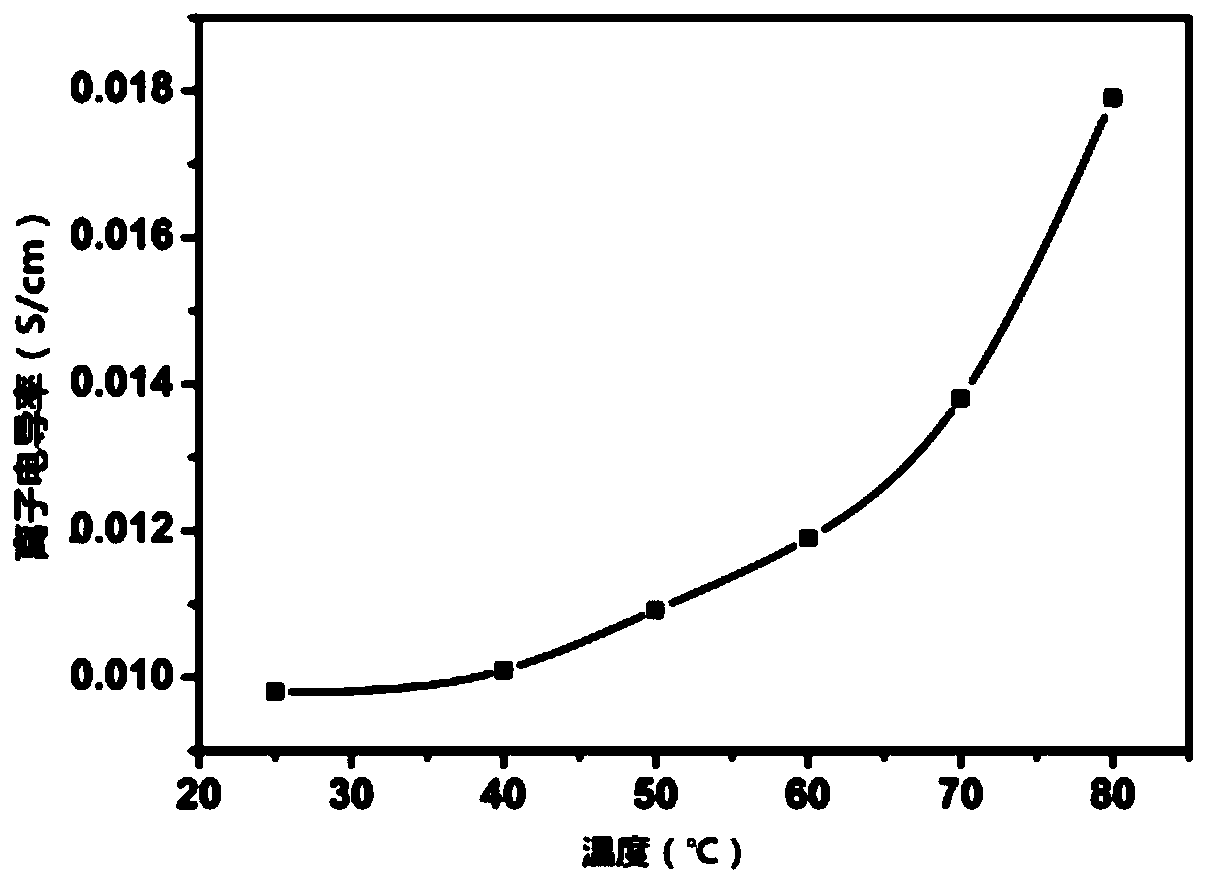
Figure 3
Abstract
Description
technical field
[0001] The invention belongs to the field of alkaline anion exchange membrane materials for fuel cells, in particular to an alkaline anion exchange composite membrane for fuel cells and a preparation method. Background technique
[0002] Fuel cells have the advantages of high efficiency, low noise, no pollution, various fuels, long life, and high flexibility, and have attracted widespread attention at home and abroad. Among all fuel cells, proton exchange membrane fuel cells are the fastest-growing type of fuel cells in recent years because of their high energy conversion efficiency, high specific power, environmental friendliness, and low operating temperature. Common proton exchange membranes are Nafion series membranes, which have good chemical stability, strong proton conduction ability, and excellent mechanical strength, but there are still some problems: the preparation process of the membrane is complicated, the synthesis conditions are harsh, and the ...
Examples
Embodiment 1
[0033] A method for preparing a fuel cell alkaline anion exchange composite membrane, comprising the following steps:
[0034] 1. Preparation of nano-TiO 2 : Add 2g of coarse titanium dioxide powder into 100mL of NaOH solution with a concentration of 10mol / L, stir magnetically for 30min and mix evenly. Then the above-mentioned pretreated titanium dioxide was transferred to a polytetrafluoroethylene-lined stainless steel reactor for hydrothermal reaction at 120° C. for 10 h. Then take out the reaction kettle, soak the reacted titanium dioxide in 0.1mol / L HCl solution for 2 hours, then sonicate for 60 minutes, wash with deionized water until neutral, and obtain nano-TiO 2 .
[0035] 2. TiO2 2 / Preparation of PVA spinning solution: Dissolve PVA powder in deionized water, heat and magnetically stir at 90°C for 2 hours to obtain a PVA stock solution with a mass fraction of 5%, and take nano-TiO 2 Uniformly dispersed into PVA solution to obtain TiO 2 The mass fraction is 1% TiO...
Embodiment 2
[0040] A method for preparing a fuel cell alkaline anion exchange composite membrane, comprising the following steps:
[0041] 1. Preparation of nano-TiO 2 : Add 2g of coarse titanium dioxide powder into 100ml of NaOH solution with a concentration of 10mol / L, and stir magnetically for 30min to mix evenly. Then the above-mentioned pretreated titanium dioxide was transferred to a polytetrafluoroethylene-lined stainless steel reactor, and reacted at 200° C. for 12 hours. Then take out the reactor, soak the reacted titanium dioxide in 0.1mol / L HCl for 2h, then ultrasonicate for 60min, wash with deionized water until neutral, and obtain TiO 2 Nanoparticles.
[0042] 2. TiO2 2 / Preparation of PVA spinning solution: Dissolve PVA powder in deionized water, heat and magnetically stir at 90°C for 2 hours to obtain a PVA stock solution with a mass fraction of 5%, and take nano-TiO 2 Uniformly dispersed into PVA solution to obtain TiO 2 The mass fraction is 1% TiO 2 / PVA spinning so...
Embodiment 3
[0047] A preparation method of an alkaline anion exchange composite membrane material for a fuel cell, comprising the following steps:
[0048] 1. Preparation of nano-TiO 2 : Add 2g of coarse titanium dioxide powder into 100ml of NaOH solution with a concentration of 10mol / L, and stir magnetically for 30min to mix evenly. Then the above-mentioned pretreated titanium dioxide was transferred to a polytetrafluoroethylene-lined stainless steel reactor, and reacted at 180° C. for 15 hours. Then take out the reactor, soak the reacted titanium dioxide in 0.1mol / L HCl for 2h, then ultrasonicate for 60min, wash with deionized water until neutral, and obtain TiO 2 Nanoparticles.
[0049] 2. TiO2 2 / Preparation of PVA electrospinning solution: Dissolve PVA powder in deionized water, heat and magnetically stir at 90° C. for 2 hours to obtain a PVA stock solution with a mass fraction of 10%. Take a certain amount of nano-TiO 2 , uniformly dispersed into the PVA solution to obtain TiO ...