

Non-toxic organic pesticide as well as preparation method and application thereof
An organic pesticide and plant technology, applied in the field of agricultural inorganic pesticides, can solve the problems of residues, unfriendly environment, single performance, etc., and achieve the effects of low cost, improved insecticidal activity and good performance
Patent Information
- Authority / Receiving Office
- CN · China
- Patent Type
- Applications(China)
- Current Assignee / Owner
- Publication Date
- 2017-03-08
- Estimated Expiration
- Not applicable · inactive patent
Smart Images
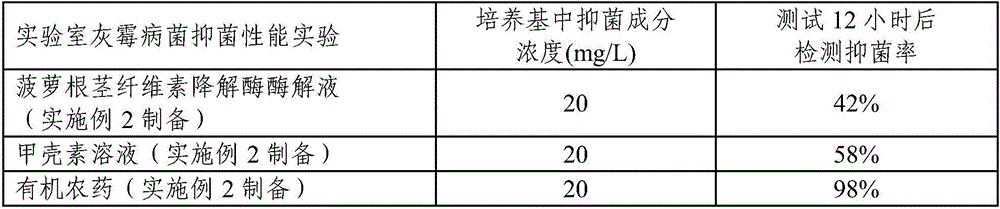
Figure 1 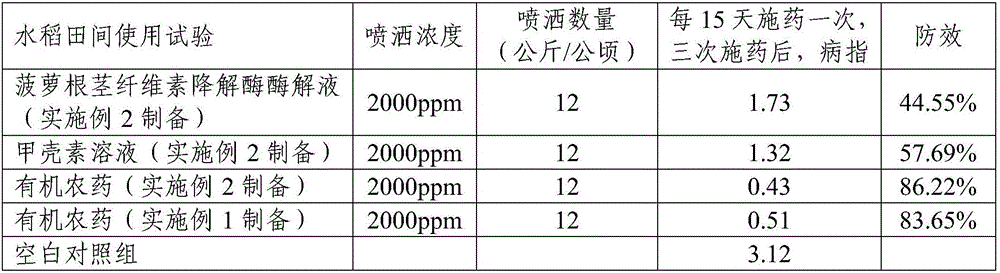
Figure 2
Abstract
Description
technical field
[0001] The invention belongs to the field of inorganic pesticides for agriculture, and in particular relates to a non-toxic organic pesticide and its preparation method and application. Background technique
[0002] With the development of the economy, food safety has become an area of widespread concern in society. How to efficiently produce a large number of agricultural products that meet strict standards under the current conditions has become an urgent topic. The pesticides currently used have problems such as single performance, residues, and environmental unfriendliness. Therefore, there is an urgent need in the market for a pesticide product that is low in cost, easy to use, can efficiently kill diseases, insect pests and germs, and has no pollution and no residue to the environment. Contents of the invention
[0003] The object of the present invention is to provide a non-toxic organic pesticide, aiming at solving the problem of pests and disea...
Examples
Embodiment 1
[0035] Weigh 20 kilograms of pineapple rhizomes, store them at minus 20°C for 36 hours, then break them into powder, add 20 kilograms of water, mix well, add 20 grams of cellulose degrading enzymes, adjust the pH value to 4.0-5.0 with acetic acid, mix at 20 Place it under the condition of ℃ for 60 hours, separate and filter, and take 25 kg of the filtrate to be the cellulose degrading enzyme hydrolyzate (hereinafter referred to as component 1). In addition, 40 kg of chitin was weighed and mixed with 3 kg of acetic acid to form a chitin solution (hereinafter referred to as component 2). Mix component 1 and component 2, add 1 kg of sodium benzoate, 1 kg of sodium citrate, 1 kg of sodium hydroxide, 3 kg of diatomaceous earth, add appropriate amount of water to make up to 100 kg. Finally filtered and bottled. The finished product is a colorless transparent viscous liquid.
[0036] When used 5-7 days earlier than ordinary pesticides, it is diluted 500 times and sprayed on the sur...
Embodiment 2
[0038] Weigh 30 kilograms of pineapple rhizomes, store them at minus 20°C for 24 hours, then break them into powder, add 30 kilograms of water, mix well, add 40 grams of cellulose degrading enzymes, adjust the pH value to 4.0-5.0 with acetic acid, mix at 20 Place it under the condition of ℃ for 72 hours, separate and filter, and take 30 kg of the filtrate to be the cellulose degrading enzyme hydrolyzate (hereinafter referred to as component 1). In addition, 45 kg of chitin was weighed and mixed with 3.5 kg of acetic acid to form a chitin solution (hereinafter referred to as component 2). Mix component 1 and component 2 and add 1.2 kg of sodium benzoate, 2 kg of sodium citrate, 1.5 kg of sodium hydroxide, 4 kg of diatomaceous earth, add appropriate amount of water to make up to 100 kg. Finally filtered and bottled. The finished product is a colorless transparent viscous liquid.
[0039] When used 5-7 days earlier than ordinary pesticides, it is diluted 500 times and sprayed o...
Embodiment 3
[0041] Weigh 40 kilograms of pineapple rhizomes, store them at minus 20°C for 48 hours, then break them into powder, add 40 kilograms of water, mix well, add 45 grams of cellulose degrading enzymes, adjust the pH value to 4.0-5.0 with acetic acid, and mix at 20 Stand at ℃ for 90 hours, separate and filter, and take 35 kg of the filtrate to be the cellulose degrading enzyme hydrolyzate (hereinafter referred to as component 1). In addition, 50 kg of chitin was weighed and mixed with 5 kg of acetic acid to form a chitin solution (hereinafter referred to as component 2). Mix component 1 and component 2 and add 1.5 kg of sodium benzoate, 2 kg of sodium citrate, 2 kg of sodium hydroxide, 2 kg of diatomaceous earth, and add appropriate amount of water to make up to 100 kg. Finally filtered and bottled. The finished product is a colorless transparent viscous liquid.
[0042] When used 5-7 days earlier than ordinary pesticides, it is diluted 500 times and sprayed on the surface and r...