
Method for quantitatively and qualitatively detecting particles in liquid
A particle and liquid technology, applied in the direction of testing moving fluid/granular solid, individual particle analysis, particle and sedimentation analysis, etc., can solve the problems of high cost and expensive
Patent Information
- Authority / Receiving Office
- CN · China
- Patent Type
- Applications(China)
- Current Assignee / Owner
- Publication Date
- 2017-08-29
- Estimated Expiration
- Not applicable · inactive patent
Smart Images
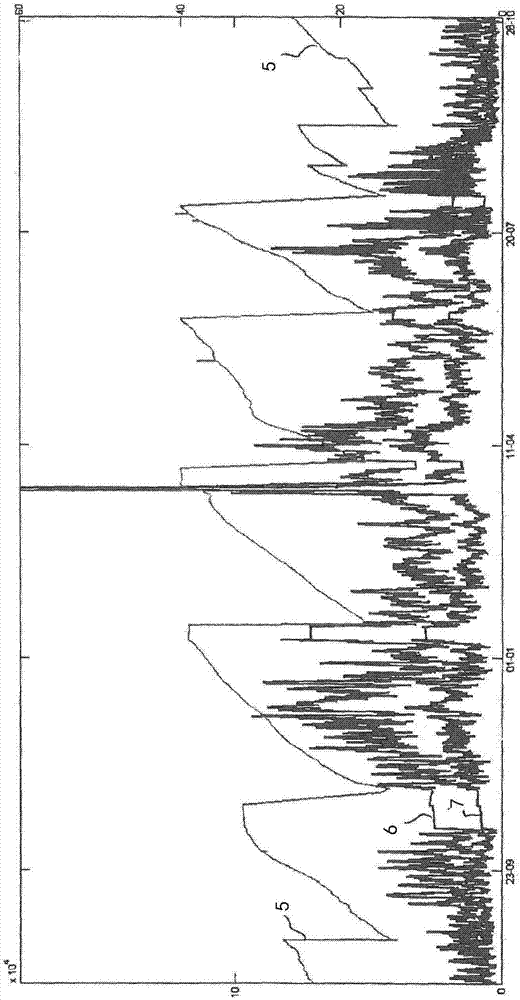
Figure 1 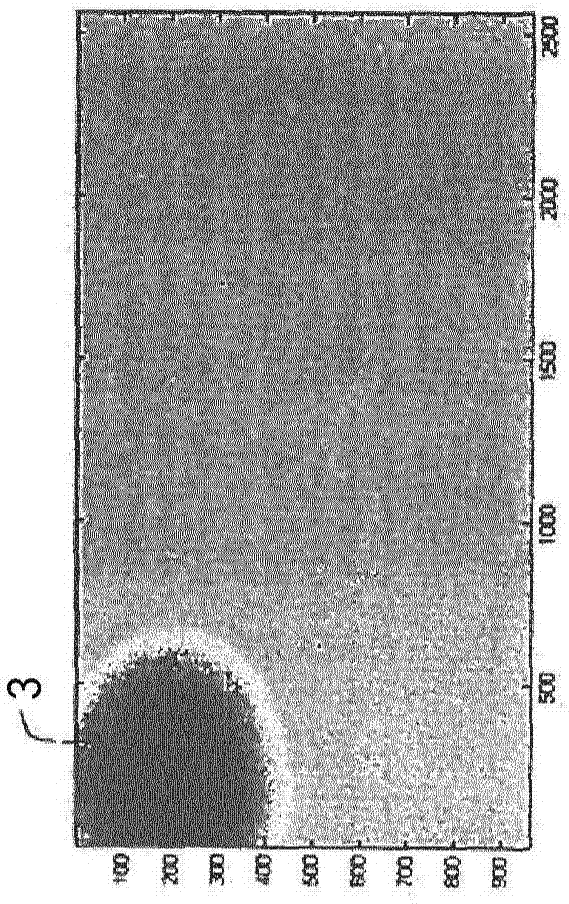
Figure 2 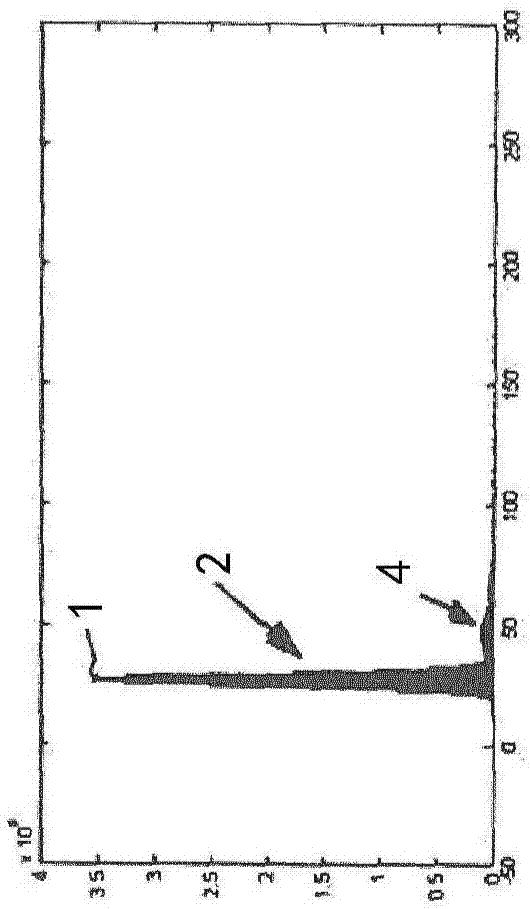
Figure 3
Abstract
Description
technical field
[0001] The invention relates to a method for detecting particles in liquids having the features stated in the preamble of claim 1 . Background technique
[0002] Methods for optically detecting particles in liquids belong to the prior art. In this regard, reference is made to EP2469264A1, WO2010 / 063293A1 and WO2014 / 094790A1, where the detection is carried out by means of an image detection sensor, such as a CCD sensor, which has a matrix of photosensitive cells in which the liquid to be inspected is introduced into an optical arrangement An optical path between the at least one light source and the image detection sensor. Although these devices are intended for the determination of the quantity and mass of particles in liquids in a steady state, they are also used for approximately steady-state continuous checks, for example for regular testing of drinking water. For this purpose, these devices usually have a sample carrier whose liquid can be replaced. Co...
Examples
Embodiment Construction
[0033] Devices known per se are used for detecting the quantity and quality of particles in liquids, in which a sample carrier with a window is arranged between a light source and a CCD sensor. Here, the window can be illuminated either directly (bright field technique) or indirectly (dark field technique), although this is not essential for the method discussed here. according to Figure 2a to Figure 5a The view of is recorded in the dark field technique as it is suitable for examining drinking water, but is shown transformed, in particular to ensure reproduction and optical readability. In fact, particles detected in darkfield techniques appear white against a black or gray background. Not only when bright-field techniques are used, but also when dark-field techniques are used, the value for the background signal is first determined prior to the actual signal evaluation of the sensor. This is done on the basis of a plurality of individual images, but is shown below in each...