
Device for generating femtosecond pulses with high peak power and high average power
A femtosecond pulse and average power technology, which is applied to laser components, electrical components, phonon exciters, etc., can solve the problems of complex temporal and spatial distribution of pulse energy, small spectrum broadening, low light intensity gradient, etc., and achieve beam quality Improvement and optimization, high average power, and the effect of broadening the spectrum
Patent Information
- Authority / Receiving Office
- CN · China
- Patent Type
- Patents(China)
- Current Assignee / Owner
- Publication Date
- 2019-09-20
Smart Images
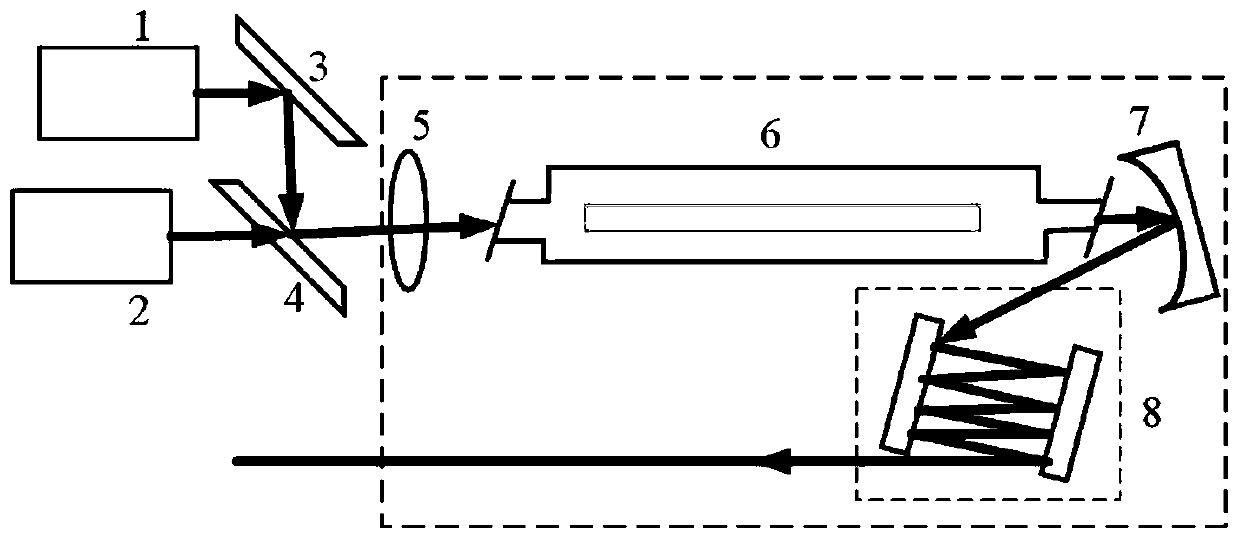
Figure 1 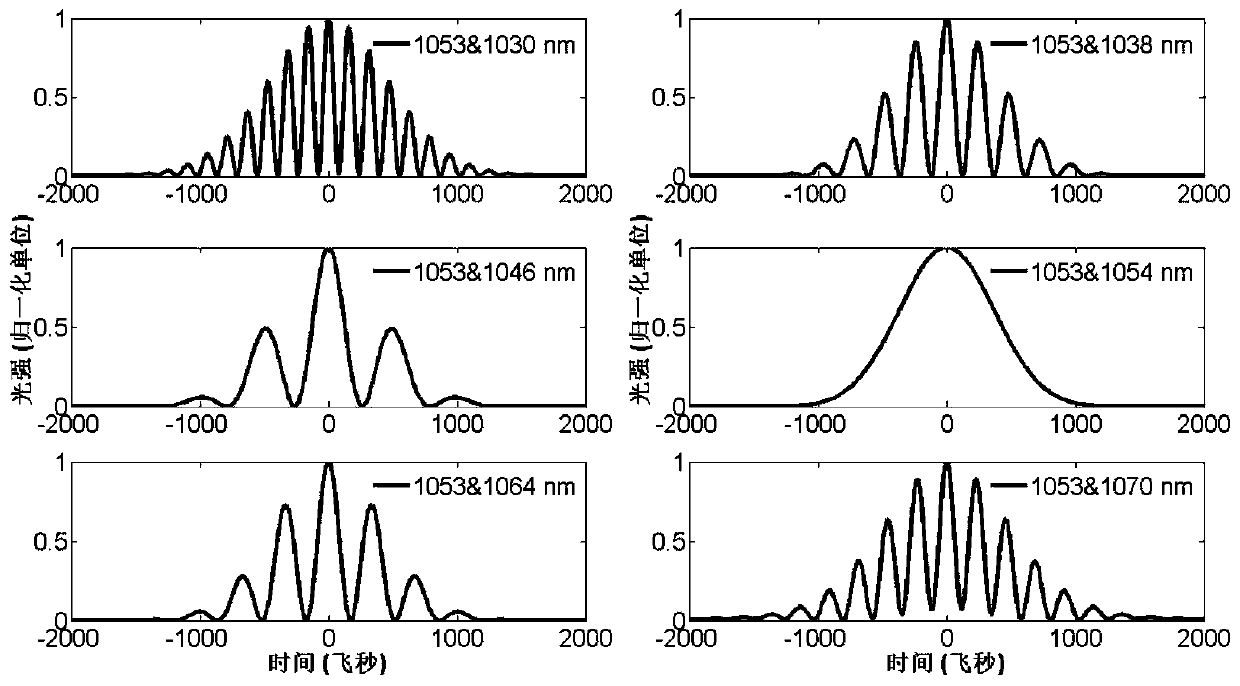
Figure 2 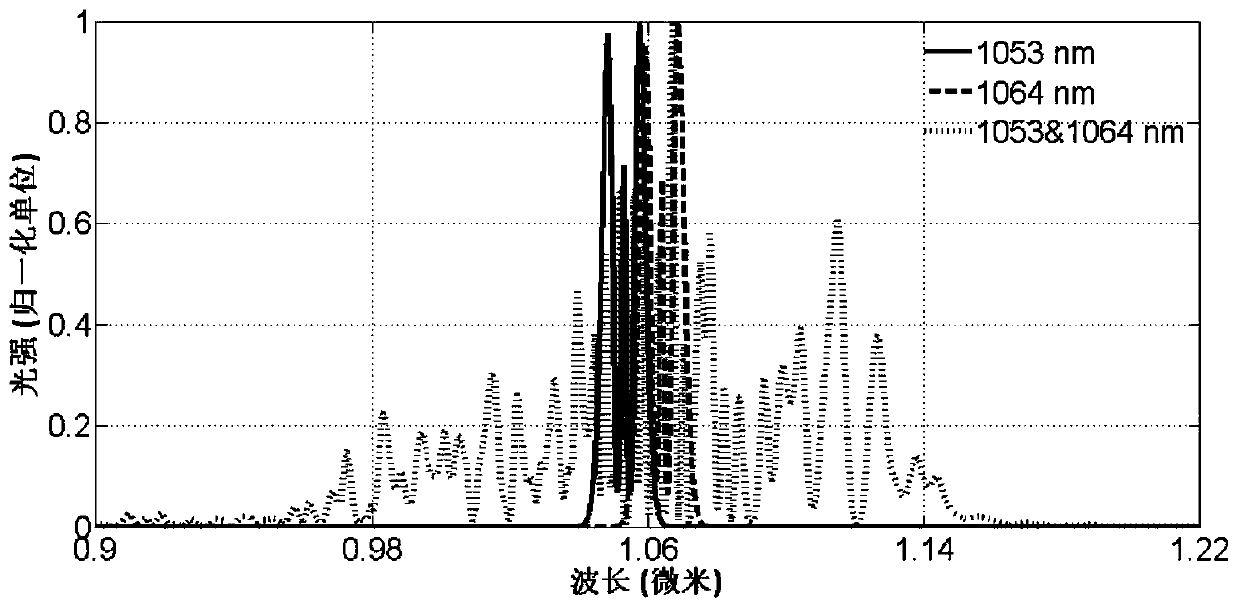
Figure 3
Abstract
Description
technical field
[0001] The invention relates to ultra-intense and ultra-short laser pulses, in particular to a device for generating femtosecond pulses with high peak power and high average power, so as to facilitate the related research of strong field ultrafast physics. Background technique
[0002] Ultrashort and ultraintense laser pulses based on Ti:Sapphire lasers have undergone rapid technological progress and have become powerful tools for many ultrafast scientific researches, such as time-resolved measurements of atomic and molecular systems, high-order harmonic generation, and laser particle acceleration. The main advantage of Ti:Sapphire laser is its wide gain bandwidth, which can generate short pulses less than 30fs. Although the peak power of these optical pulses is sufficient for probing non-perturbative physical processes, the repetition frequency and average power of the generated optical pulses are low due to the high quantum defects of Ti:sapphire lasers. H...
Examples
specific Embodiment
[0033] The center wavelengths of the two laser pulses output by the first ytterbium-doped picosecond laser 1 and the second ytterbium-doped picosecond laser 2 are 1053nm and 1064nm respectively, the energy is 5mJ, and the pulse width is 1ps. The air-filled hollow fiber device 6 The parameters of the air-filled hollow fiber are: 250 μm inner diameter, 1 m length, filled with 5 bar neon gas, and the compensation amount of the chirped mirror group 8 is -560 fs 2 . Such as image 3 As shown, under the same conditions, the input pulse composed of two picosecond pulses, compared with a single 1053nm or 1064nm wavelength input pulse, after passing through the gas-filled hollow fiber, has a higher time-domain intensity gradient due to the intensity envelope modulation , the spectral broadening degree is enlarged by 10 times. For the convenience of comparison, the ordinate in the figure shows the normalized light intensity. After theoretical calculation, the time-domain Fourier tran...