
Preparation method and application of magnetic nanometer catalyst loading nanogold
A magnetic nanometer and magnetic nanoparticle technology, applied in the field of preparation of magnetic nanocatalysts, can solve the problems affecting the stability of nano-gold loading, reusability, weak force, etc., and achieve convenient and fast recovery, mild reaction conditions and high performance. The effect of catalytic efficiency
Patent Information
- Authority / Receiving Office
- CN · China
- Patent Type
- Applications(China)
- Current Assignee / Owner
- Publication Date
- 2018-03-23
- Estimated Expiration
- Not applicable · inactive patent
Smart Images
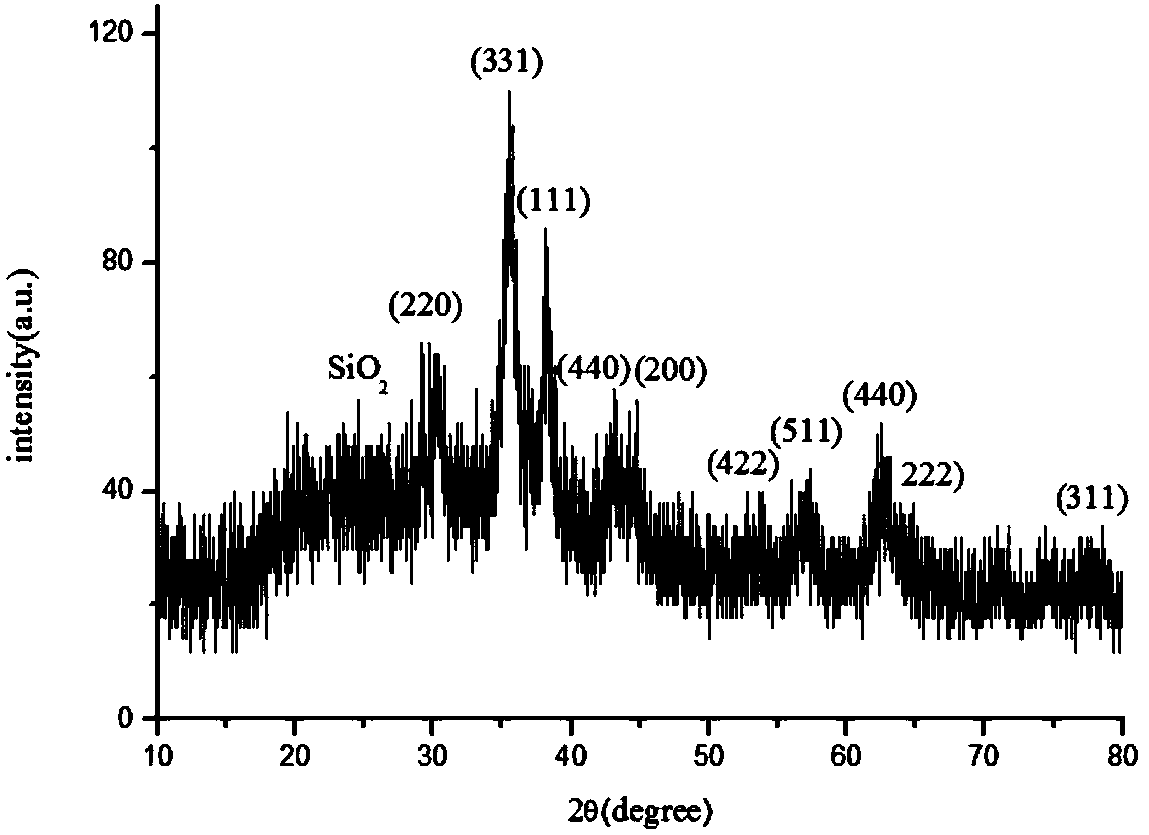
Figure 1 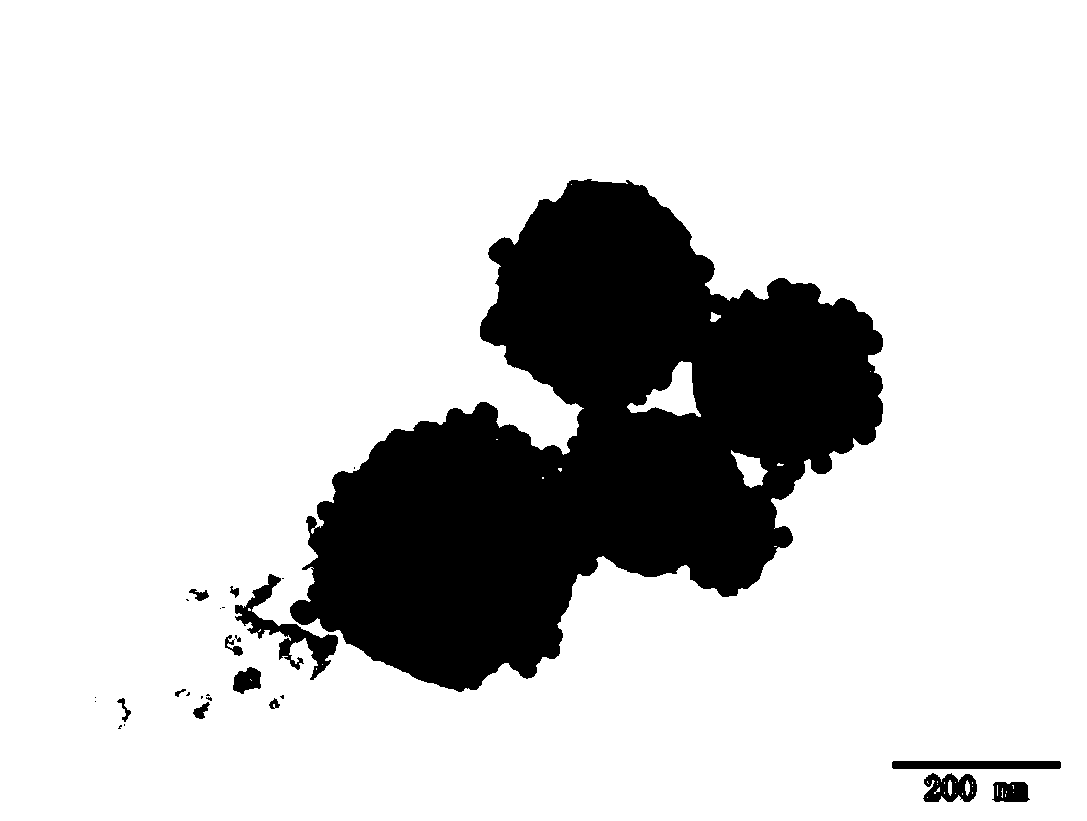
Figure 2 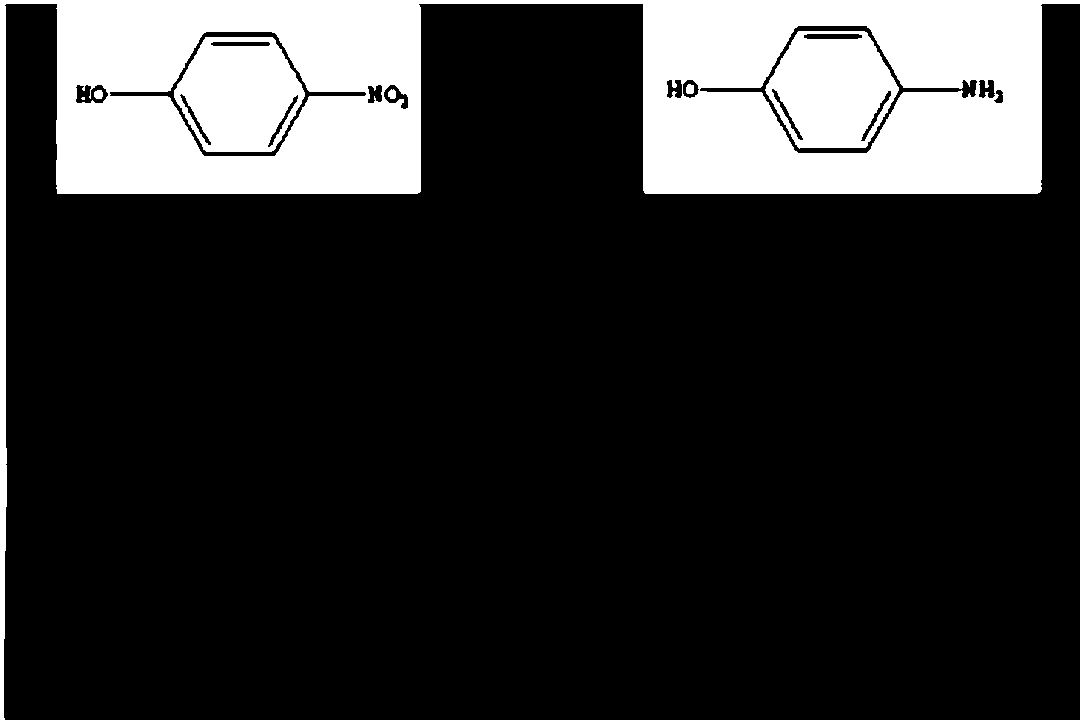
Figure 3
Abstract
Description
technical field
[0001] The invention relates to the technical field of catalysts, in particular to a preparation method and application of a magnetic nano-catalyst loaded with nano-gold. Background technique
[0002] As an important category of nanomaterials, magnetic nanoparticles not only have some macroscopic and microscopic properties of nanomaterials, but also have a series of other exclusive properties such as superparamagnetism, quantum size effect, and apparent magnetism, and are widely used in various fields in practice. . At present, there are many kinds of magnetic nanomaterials, among which the magnetic Fe 3 o 4 Nanoparticles are an important spinel-type ferrite, which has the advantages of simple preparation process, low price, non-toxic, non-polluting, etc., and is attracting more and more attention. Magnetic Fe 3 o 4 Nanoparticles have broad application prospects in the fields of gas-humidity sensing devices, high-density magnetic recording materials, nuc...
Examples
Embodiment 1
[0029] (1) The magnetic nanoparticles are prepared by a hydrothermal method, and then coated with a silicon dioxide layer. Disperse the magnetic nanoparticles in absolute ethanol to obtain a magnetic nanoparticle ethanol dispersion, add ammonia and tetraethyl orthosilicate in turn, wherein the volume ratio of the magnetic nanoparticles ethanol dispersion, ammonia and tetraethyl orthosilicate is 50: 1:0.5, stirred at room temperature for 12 hours to obtain silicon-coated magnetic nanoparticles.
[0030] (2) Disperse the silicon-coated magnetic nanoparticles in ethanol to obtain a silicon-coated magnetic nanoparticle dispersion (0.2 mg / mL). Ammonia water was added thereto and stirred for 15 min, and then 3-mercaptopropyltrimethoxysilane solution was added dropwise to the solution, wherein the volume ratio of the silicon-coated magnetic nanoparticle dispersion, ammonia water, and 3-mercaptopropyltrimethoxysilane was It is 50:0.5:0.25. After stirring at room temperature for 24 h...
Embodiment 2
[0034] (1) The magnetic nanoparticles are prepared by a hydrothermal method, and then coated with a silicon dioxide layer. Disperse the magnetic nanoparticles in absolute ethanol to obtain a magnetic nanoparticle ethanol dispersion, add ammonia and tetraethyl orthosilicate in turn, wherein the volume ratio of the magnetic nanoparticles ethanol dispersion, ammonia and tetraethyl orthosilicate is 50: 1:0.5, stirred at room temperature for 12 hours to obtain silicon-coated magnetic nanoparticles.
[0035](2) Disperse the silicon-coated magnetic nanoparticles in ethanol to obtain a silicon-coated magnetic nanoparticle dispersion (2.5 mg / mL). Ammonia water was added thereto and stirred for 15 min, and then 3-mercaptopropyltriethoxysilane solution was added dropwise to the solution, wherein silicon magnetic nanoparticle dispersion liquid, ammonia water, and 3-mercaptopropyltriethoxysilane were included. The volume ratio is 50:2.5:1.25. After stirring at room temperature for 24 hou...
Embodiment 3
[0039] (1) The magnetic nanoparticles are prepared by a hydrothermal method, and then coated with a silicon dioxide layer. Disperse the magnetic nanoparticles in absolute ethanol to obtain a magnetic nanoparticle ethanol dispersion, add ammonia and tetraethyl orthosilicate in turn, wherein the volume ratio of the magnetic nanoparticles ethanol dispersion, ammonia and tetraethyl orthosilicate is 50: 1:0.5. Stir at room temperature for 12 hours to obtain silicon-coated magnetic nanoparticles.
[0040] (2) Disperse the silicon-coated magnetic nanoparticles in ethanol to obtain a silicon-coated magnetic nanoparticle dispersion (5 mg / mL). Ammonia water was added thereto and stirred for 15 min, and then 3-mercaptopropyltrimethoxysilane solution was added dropwise to the solution, wherein the volume ratio of the silicon-coated magnetic nanoparticle dispersion, ammonia water, and 3-mercaptopropyltrimethoxysilane was It is 50:5:2.5. After stirring at room temperature for 24 hours, t...