
A test platform and measurement method for simulating the adhesive motion of flexible surfaces in microgravity
A technology that simulates microgravity and flexible surfaces, and is used in simulation devices for astronautical conditions, transportation and packaging, and astronautical equipment. The movement is easy to achieve and the movement principle is clear.
Patent Information
- Authority / Receiving Office
- CN · China
- Patent Type
- Patents(China)
- Current Assignee / Owner
- Publication Date
- 2021-02-12
Smart Images
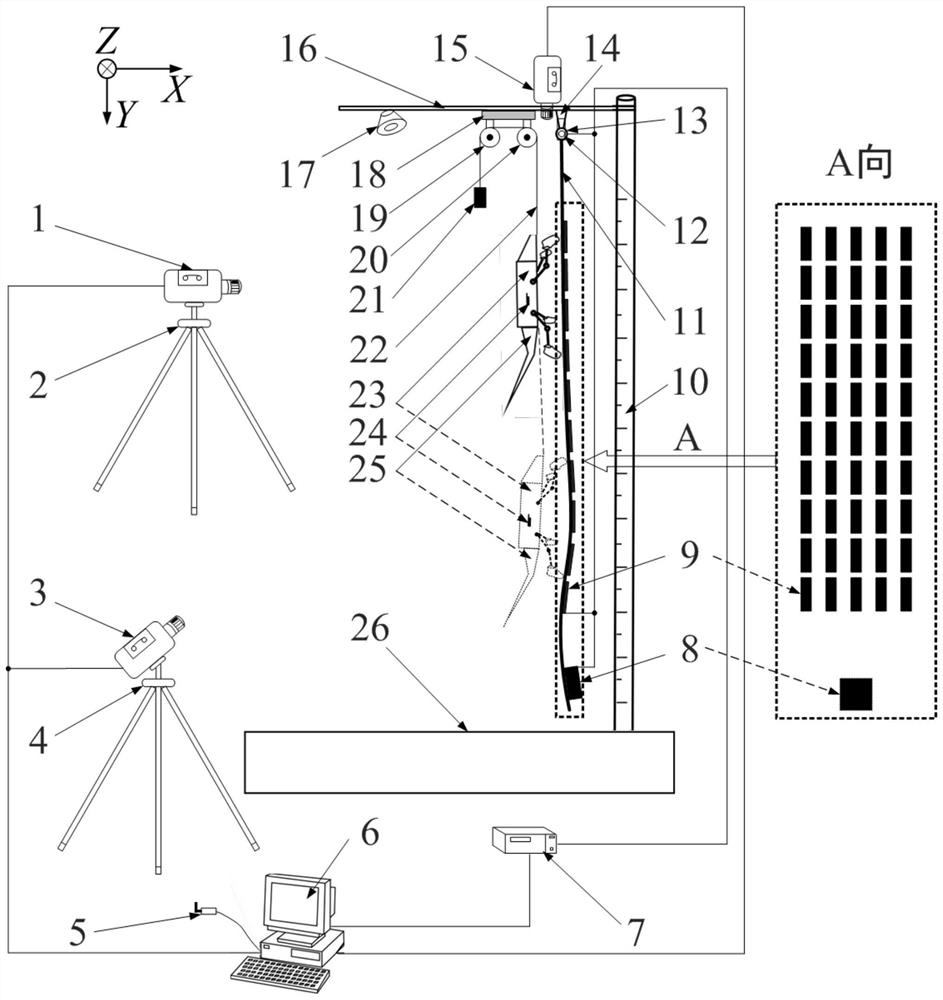
Figure 1 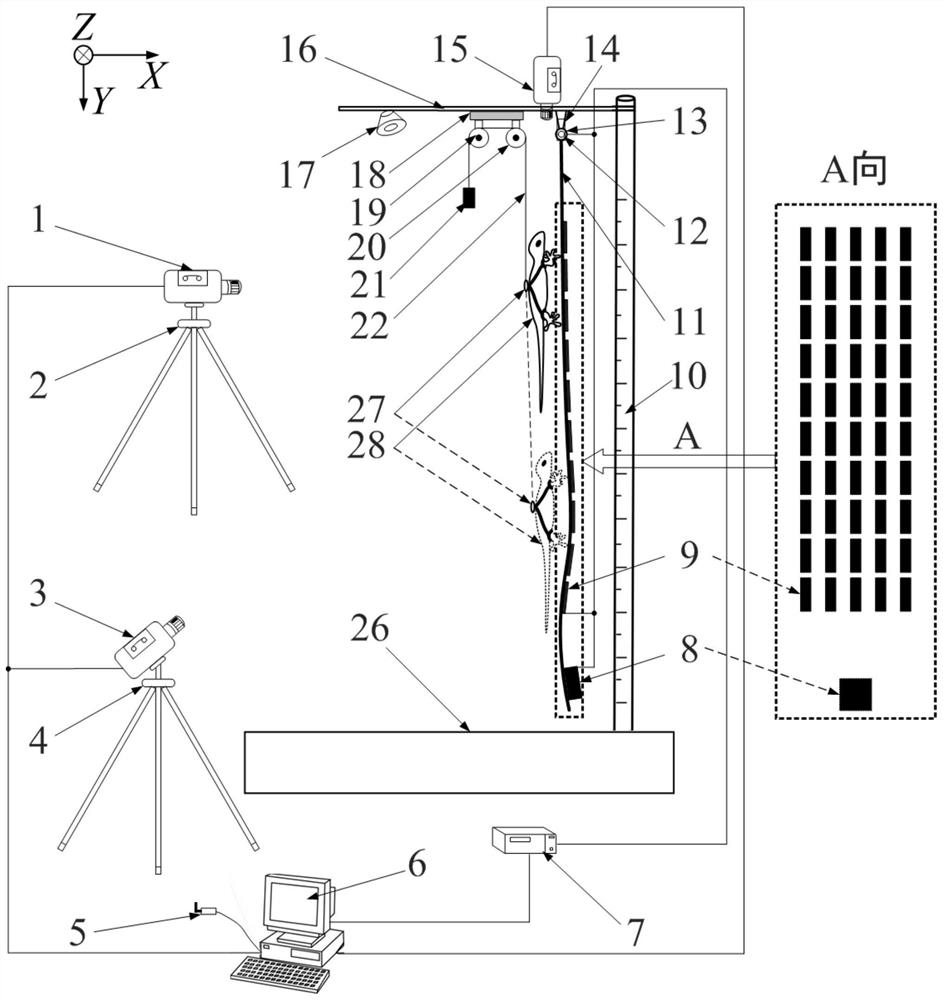
Figure 2
Abstract
Description
technical field
[0001] The invention belongs to the application field of robot technology, and in particular relates to a test platform and a measurement method for simulating the adhesion motion of a flexible surface under microgravity. Background technique
[0002] Since the Soviet Union launched the first artificial satellite in 1956, human life has benefited more and more from the development of aerospace technology. Aerospace technology has profoundly changed human life, represents the country's scientific and technological strength and comprehensive national strength, is related to national economic interests and national defense security, and has also affected the space security concept of countries around the world. Frontier fields of aerospace technology include on-orbit service, deep space exploration, etc., in which on-orbit service refers to the space operation of spacecraft fault repair, life extension, and task performance improvement through the cooperation of...
Examples
Embodiment Construction
[0027] Below in conjunction with accompanying drawing and specific embodiment the present invention is described in further detail:
[0028] combine figure 1, this embodiment is a test platform for simulating the adhesion movement of flexible surfaces under microgravity, including an X-direction high-speed camera 1, an X-direction tripod 2, a Z-direction high-speed camera 3, a Z-direction tripod 4, a wireless communication module 5 for a host computer, Computer control terminal 6, sensor data acquisition system 7, micro-inertial navigation module 8, resistance strain gauge 9, support scale rod 10, flexible surface 11, hinge 12, angle sensor 13, support base 14, Y-direction high-speed camera 15, support Top plate 16, light source 17, X-direction sliding block 18, No. I fixed pulley 19, No. II fixed pulley 20, counterweight 21, string 22, legged robot main body 23, robot wireless communication module 24, tail 25, platform base It consists of 26 seats.
[0029] Such as figure ...