
Synthetic Technology of 3-Nitroquinoline Derivatives
A synthesis process and nitroquinoline technology, applied in directions such as organic chemistry, can solve the problems of complicated post-processing, cumbersome preparation, few synthesis methods, etc., and achieve the effects of simple post-processing, high reaction yield, and low-cost catalyst.
Patent Information
- Authority / Receiving Office
- CN · China
- Patent Type
- Patents(China)
- Current Assignee / Owner
- Publication Date
- 2021-01-05
Smart Images
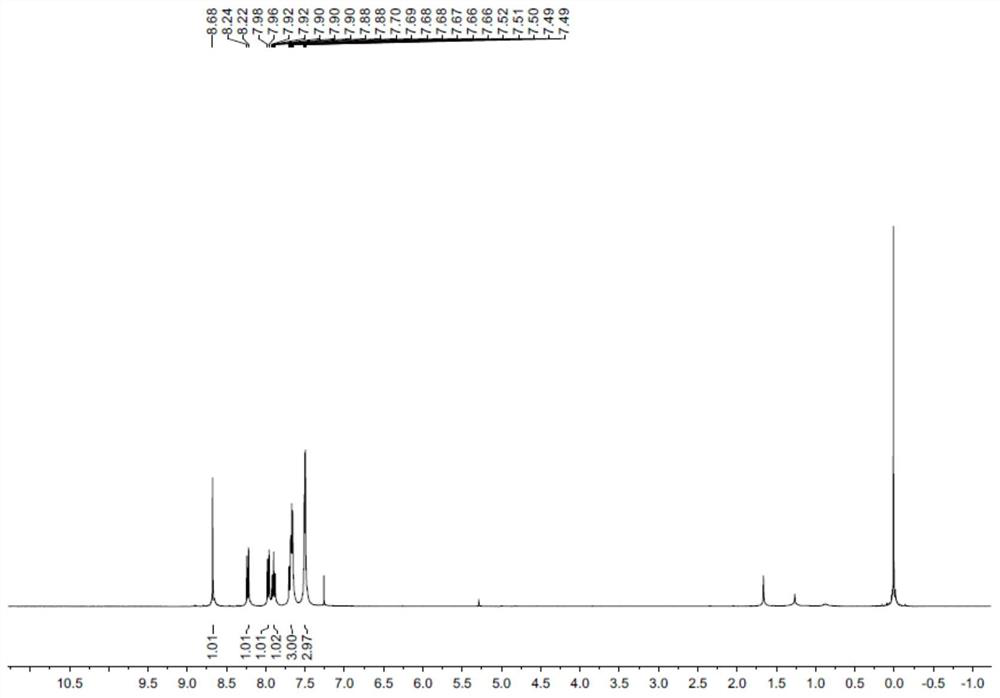
Figure 1 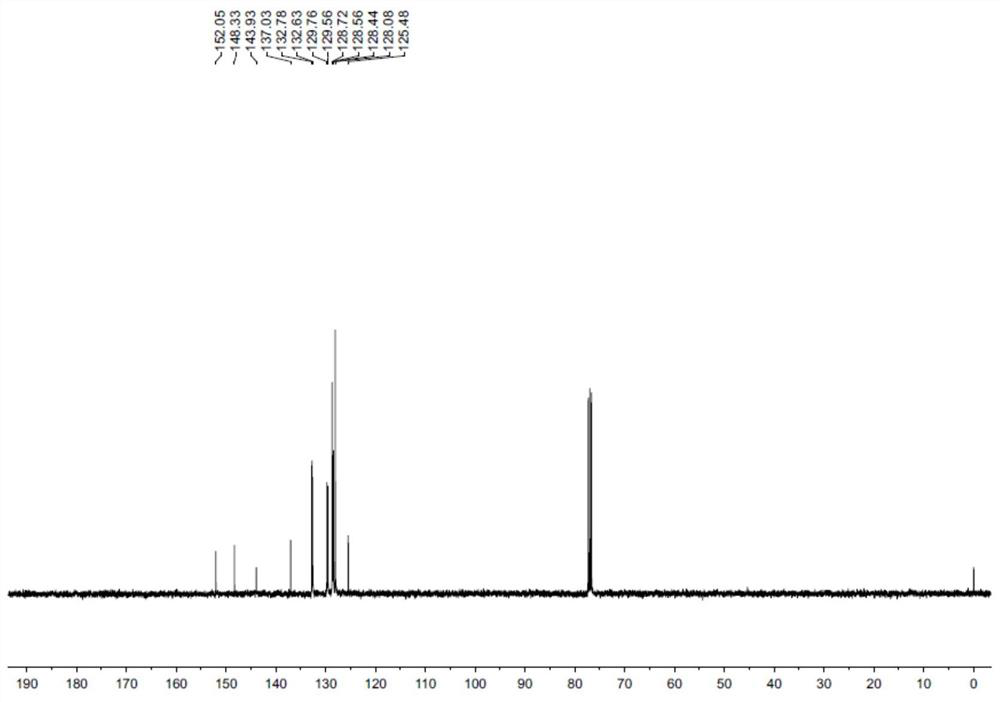
Figure 2 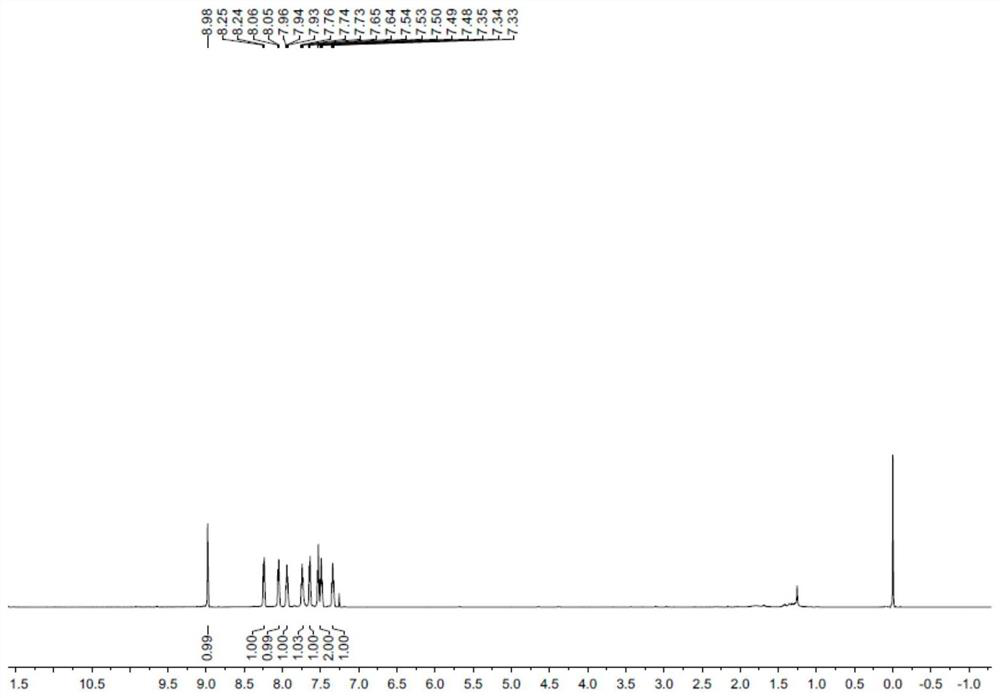
Figure 3
Abstract
Description
technical field
[0001] The invention relates to a method for synthesizing 3-nitroquinoline derivatives, belonging to the technical field of organic and pharmaceutical synthesis.
[0002] technical background
[0003] Quinoline is an important class of nitrogen-containing heterocyclic compounds in organic synthesis. Among them, the quinoline substituted by the nitrogen atom at the 3rd position widely exists in natural products, such as quinoline alkaloids, which have good antimalarial and anticancer activities. In addition, some compounds containing this skeleton also have Anti-cancer, anti-malarial, anti-asthma, anti-diabetic, antibacterial, anti-tumor properties. As the precursors of these compounds, 3-nitroquinoline compounds have the characteristics of stable properties and easy derivatization. They have attracted much attention in organic synthesis and have considerable potential in drug synthesis.
[0004] Yet so far, the synthetic method of 3-nitroquinoline compound i...
Examples
Embodiment 1
[0036] The specific steps are: add nitrostyrene (1mmol), 2-azidobenzaldehyde (1.5mmol), CuI (0.01mmol), DMF (2mL) to a round bottom flask (50mL), and react with magnetic stirring at 110°C After 8 hours, after dissolving with ethyl acetate, the organic layer was washed with saturated brine, dried over anhydrous sodium sulfate, and the solvent was evaporated under reduced pressure to obtain the crude product, which was prepared with ethyl acetate / petroleum ether=1:10 ( V / V) is the eluent and subjected to column separation and purification to obtain the desired product 2-phenyl-3-nitroquinoline as a yellow solid with a yield of 85%.
[0037] like figure 1 and figure 2 , the proton nuclear magnetic spectrum result of gained product is: 1 H NMR (600MHz, DMSO-d 6 ):δ8.60(s,1H),8.20(d,J=8.4Hz,1H),7.90(d,J=8.4Hz,1H),7.86(t,J=7.8Hz,1H),7.63(t ,J=7.2Hz,1H),7.58(d,J=7.8Hz,2H),7.30(d,J=7.8Hz,2H),2.42(s,3H). 13 C NMR (100MHz, CDCl 3 , ppm) δ152.1, 148.3, 143.9, 137.0, 132.8, 132.6, ...
Embodiment 2
[0039] The specific steps are: add nitro-o-bromostyrene (1mmol), 2-azidobenzaldehyde (1.5mmol), CuI (0.01mmol), toluene (2mL) to a round bottom flask (50mL), and magnetically After stirring and reacting for 12 hours, dissolve it with ethyl acetate, wash the organic layer with saturated brine, dry over anhydrous sodium sulfate, evaporate the solvent under reduced pressure to obtain the crude product, and use ethyl acetate / petroleum ether=1 :10 (V / V) is the eluent and carries out column separation and purification to obtain the desired product 2-(2-bromophenyl)-3-nitroquinoline as a yellow solid with a yield of 78%.
[0040] like image 3 and Figure 4 , the proton nuclear magnetic spectrum result of gained product is: 1 H NMR (600MHz, CDCl 3 , ppm) δ8.98(s, 1H), 8.25(d, J=8.4Hz, 1H), 8.06(d, J=7.8Hz, 1H), 7.95(t, J=7.2Hz, 1H), 7.74( t,J=7.2Hz,1H),7.65(d,J=7.8Hz,1H),7.59-7.45(m,2H),7.34(t,J=7.2Hz,1H). 13 C NMR (100MHz, CDCl 3 , ppm) δ152.2, 148.5, 143.0, 139.4, 133.4, 133....
Embodiment 3
[0042] The specific steps are: add nitrostyrene (1mmol), 2-azido-4-fluorobenzaldehyde (1.5mmol), Cu 2 O (0.01mmol), DMSO (2mL), magnetically stirred at 100°C for 15 hours, dissolved in ethyl acetate, washed the organic layer with saturated brine, dried over anhydrous sodium sulfate, and distilled off the solvent under reduced pressure. Get the crude product, the crude product uses ethyl acetate / petroleum ether=1:15 (V / V) as the eluent to carry out column separation and purification to obtain the desired product 2-phenyl-3-nitro-7-fluoroquine phenoline, the product is a yellow solid, and the yield is 72%.
[0043] Such as Figure 5 with Image 6 , the proton nuclear magnetic spectrum result of gained product is: 1 H NMR (600MHz, CDCl 3 ,ppm)δ8.70(s,1H),8.03-7.97(m,1H),7.86(d,J=9.6Hz,1H),7.65(s,2H),7.48-7.51(m,4H). 13 C NMR (150MHz, CDCl 3 , ppm) δ166.0, 164.3, 153.3, 149.6 (d, J = 13.4Hz), 143.5, 136.7, 132.7, 130.8 (d, J = 10.4Hz), 129.8, 128.8, 122.5, 119.3 (d, J = 25.9...