
Calcium and magnesium additive for improving coal slagging performance and application
An additive, calcium and magnesium technology, which is applied in the field of coal chemical industry, can solve the problems of large amount of addition and high economic cost of coal blending, and achieve the effects of improving slagging, avoiding furnace flameout accidents, and reducing boiler slag formation
Patent Information
- Authority / Receiving Office
- CN · China
- Patent Type
- Applications(China)
- Current Assignee / Owner
- Publication Date
- 2018-10-19
Smart Images
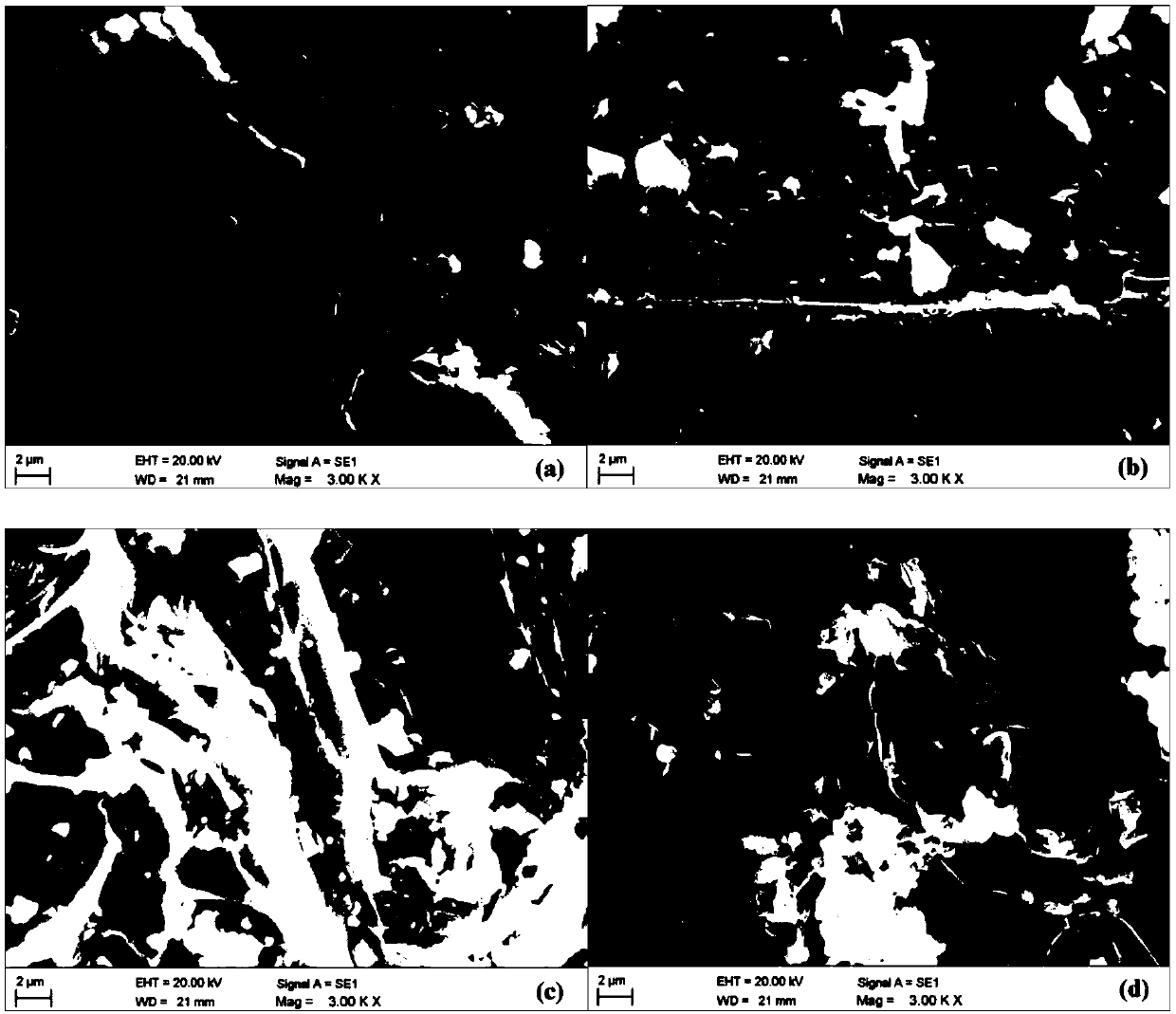
Figure 1 
Figure 2 
Figure 3
Abstract
Description
technical field
[0001] The invention belongs to the technical field of coal chemical industry, and in particular relates to a calcium and magnesium additive for improving coal-fired slagging performance and its application. Background technique
[0002] China is a major country that uses coal as its resource, and it is of great significance to use the existing coal resource cleanly and efficiently. In thermal power plants, the boiler heating surface is prone to serious slagging, contamination and corrosion problems during the burning process of high-sodium coal, which not only reduces the heat transfer efficiency of the boiler, but also affects the safe operation of the boiler, seriously limiting Large-scale use of high-sodium coal.
[0003] The slagging problem of coal ash has an important relationship with the melting property of coal ash, and the ash melting temperature is usually used to characterize the melting characteristics of coal ash. The melting temperature of c...
Examples
Embodiment 1
[0079] Add calcium carbide slag and ethyl maltol magnesium waste slag with different contents and fully ground to the high-sodium coal, wherein calcium hydroxide content in calcium carbide slag is 85%, and magnesium oxide content in ethyl maltol magnesium waste slag is 60% ; Since the activity of CaO is the highest at about 900°C-1000°C, and the activity of MgO reaches the maximum at 700°C, therefore, according to the temperature distribution above the combustion boiler, the nozzles for carbide slag, the nozzles for ethyl maltol magnesium-containing waste residue, and the nozzles for carbide slag and ethyl maltol The different injection temperature of base maltol magnesium-containing waste slag makes the activities of calcium carbide slag and ethyl maltol magnesium-containing waste slag reach the highest.
[0080] Add different contents of calcium carbide slag, and conduct SEM analysis on the coal ash obtained by burning at 1200°C, the results are as follows: figure 1 The data s...