
Preparation method of pH sensitive and photothermal therapeutic probe based on metal organic framework ZIF-8
A metal-organic framework, ZIF-8 technology, applied in the field of nano-biomedical materials, can solve the problems of toxicity, stability, degradation ability, biocompatibility, targeting and insufficient therapeutic effect, and achieve superior drug load and Controlled release ability, good physical and chemical stability, and strong operability
Patent Information
- Authority / Receiving Office
- CN · China
- Current Assignee / Owner
- Publication Date
- 2019-03-29
- Estimated Expiration
- Not applicable · inactive patent
Smart Images
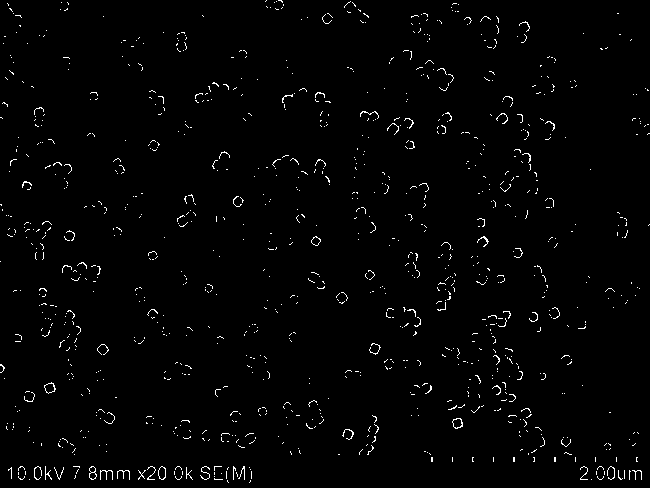
Figure 1
Abstract
Description
technical field
[0001] The invention relates to a preparation method of a metal-organic framework ZIF-8-based pH-sensitive and photothermal therapy probe, which belongs to the field of nano-biomedical materials. Background technique
[0002] The continuous expansion of the types of nano-biomedical materials and the continuous expansion of the scope of application provide new opportunities for the treatment of malignant diseases such as cancer. Metal-organic frameworks (MOFs), usually composed of inorganic metal centers (metal ions or metal clusters) and organic ligands connected to each other through self-assembly, form a class of crystalline porous materials with a periodic network structure. Different from the previous inorganic porous materials, MOFs materials have the advantages of larger specific surface area, better biocompatibility and biodegradability. Therefore, MOFs have become drug delivery carriers for various functional materials.
[0003] Drug carriers can mod...
Examples
Embodiment 1
[0026] A preparation method for pH-sensitive and photothermal therapy probes based on metal-organic framework ZIF-8, wherein ZIF-8 is a basic unit composed of 2-methylimidazole and metal atoms Zn, wherein each Zn atom is associated with four The N atoms on the 2-methylimidazole ring are coordinated to form a tetrahedral-like cluster, and these clusters can be used as nodes to connect the 2-methylimidazole ring to form a hexahedral-like cage structure; through 2- The amount of methylimidazole and zinc acetate can further adjust the particle size and porosity of the MOF structure, and obtain MOF structures with different shapes; at the same time, in the process of synthesizing ZIF-8 MOF, by directly adding IR-780 solution, in the synthesis IR-780 is directly attached in the process, and IR-780 is 11-chloro-1,1'-di-n-propyl-3,3,3',3'-tetramethyl-10,12-trimethyleneindole Three carbon cyanine iodine salts, can obtain target probe, comprise the following steps:
[0027] First, 2.86...
Embodiment 2
[0032] A method for preparing a metal-organic framework ZIF-8-based pH-sensitive and photothermal therapy probe, similar to Example 1, comprising the following steps:
[0033] First, 1 g of 2-methylimidazole powder was weighed and dissolved in 9 ml of methanol, mixed and stirred slowly for 10 minutes at 30 °C to form a 2-methylimidazole solution, which was designated as solution I.
[0034] Next, weigh 25 mg of IR-780 and dissolve it in 1 mL of DMSO. After mixing evenly, take 0.5 mL of IR-780 solution and add it to solution I, mix well at 30 °C and stir slowly for 30 min, and record it as solution II.
[0035] Weigh 10 mg of zinc acetate and dissolve it in 1 ml of methanol, mix thoroughly in a shaker at 37°C for 10 minutes, and record it as Mix III.
[0036] Finally, 1 mL of solution III was added to solution II, and after the reaction was stirred slowly at 30 °C for 30 min, the precipitate was collected by centrifugation at 3500 rpm for 20 min, washed with methanol and then c...
Embodiment 3
[0038] A method for preparing a metal-organic framework ZIF-8-based pH-sensitive and photothermal therapy probe, similar to Example 1, comprising the following steps:
[0039] First, 2.86 g of 2-methylimidazole powder was weighed and dissolved in 9 ml of methanol, mixed and stirred slowly for 10 minutes at 30 °C to form a 2-methylimidazole solution, which was designated as solution I.
[0040] Next, weigh 30 mg of IR-780 and dissolve it in 1 mL of DMSO. After mixing evenly, take 0.5 mL of IR-780 solution and add it to solution I, mix well at 30 °C and stir slowly for 30 min, and record it as solution II.
[0041] Weigh 10 mg of zinc acetate and dissolve it in 1 ml of methanol, mix thoroughly in a shaker at 37°C for 10 minutes, and record it as Mix III.
[0042] Finally, 1 mL of solution III was added to solution II, and after the reaction was stirred slowly at 30 °C for 20 min, the precipitate was collected by centrifugation at 3500 rpm for 20 min, washed with methanol and cen...