
A Reusable Timing Method for Parallel Time-Bound Reasoning in Real-Time Expert Systems
An expert system and system time technology, applied in the direction of reasoning methods, etc., can solve the problems of not being able to adapt to the flexible requirements of timer resources, lack of parallel processing of multiple time limit reasoning, etc., to avoid uncertainty and improve adaptability
Patent Information
- Authority / Receiving Office
- CN · China
- Patent Type
- Patents(China)
- Current Assignee / Owner
- Publication Date
- 2022-04-22
Smart Images
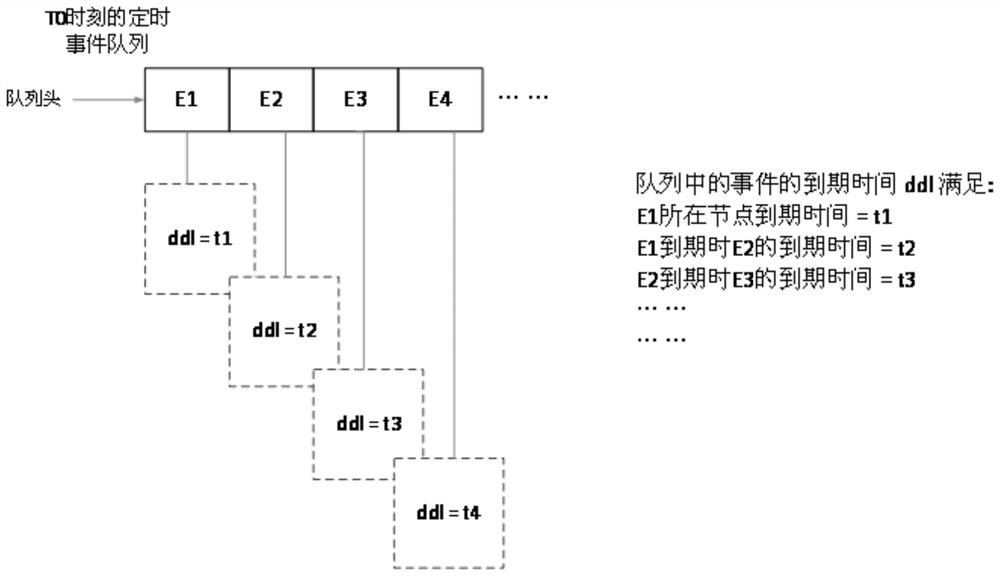
Figure 1 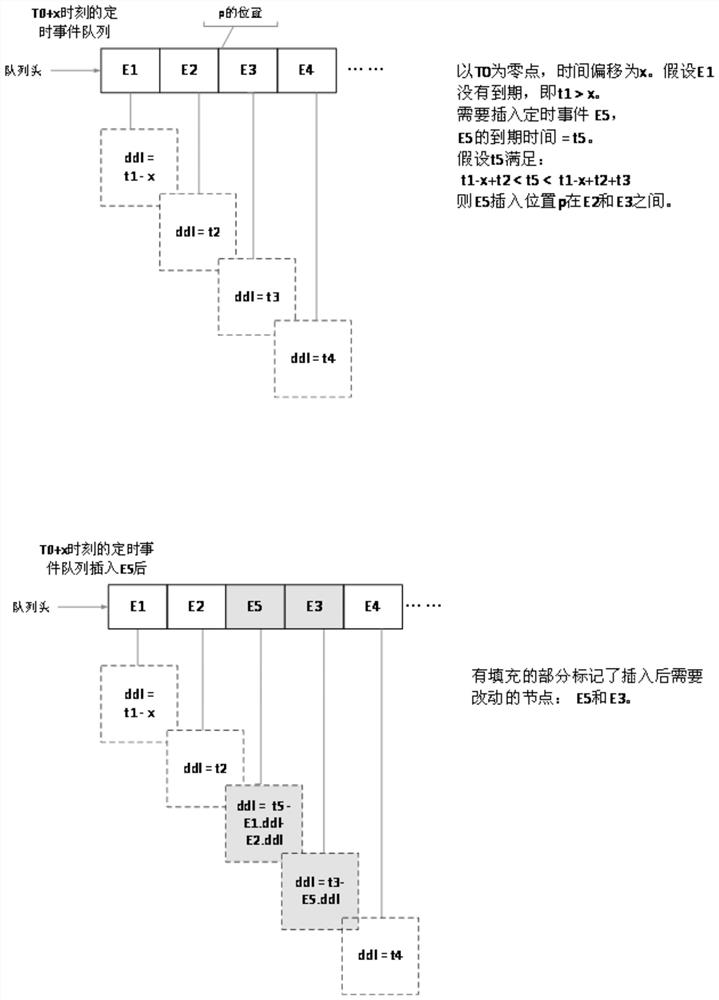
Figure 2 
Figure 3
Abstract
Description
technical field
[0001] The invention relates to a reusable timing method for real-time expert system parallel time-limit reasoning, and the real-time expert system field of data support time-limit reasoning. Background technique
[0002] When a rule-based real-time expert system deals with rules with time-limited features (time-related features), it needs to convert time-limited features into timed events, and the realization of a timed event depends on software timers. Software timers can be provided by the operating system or written by software developers themselves. When in the rule set loaded by the real-time expert system, rules with multiple time-limit features enter the timing state at the same time, the expert system will face the problem of processing multiple timing events at the same time, and the design lacks support for parallel processing of multiple time-limit reasoning, although On some platforms, you can rely on the timing mechanism provided by the operati...
Examples
Embodiment
[0050] (1) Assume that the real-time expert system has processed four timing events E1, E2, E3, E4, and inserted into the timing event queue Q;
[0051] (2) At time T0, the state of the timing event queue Q is as follows figure 1 As shown, the expiration time of E1=t1, the expiration time of E2=t1+t2,
[0052] The expiry time of E3=t1+t2+t3, the expiry time of E4=t1+t2+t3+t4, the timing event queue Q satisfies from the queue head to the queue end, and the expiration time of the timing events is arranged in ascending order; the timing event The expiration time of a node in the queue is the expiration time of zero after the time of the previous node in the queue expires;
[0053] (3) time interval x passes through from T0 moment, E1 does not expire, produces timing event E5, the expiration time=t5 of E5, E5 is inserted in the timing event queue Q, and insertion position is between E2 and E3;
[0054] (4) When inserting, only the expiration time ddl of the node where E3 is loca...