
Nitroreductase responsive hypoxic probe compound, preparation and application thereof
A technology of compound and reductase, which is applied in the application field of hypoxia analysis and imaging, can solve the problems such as inability to obtain reproducible effects, and achieve the effects of high specificity response, small interference, and improved conjugation degree
Patent Information
- Authority / Receiving Office
- CN · China
- Patent Type
- Applications(China)
- Current Assignee / Owner
- Publication Date
- 2020-06-19
Smart Images
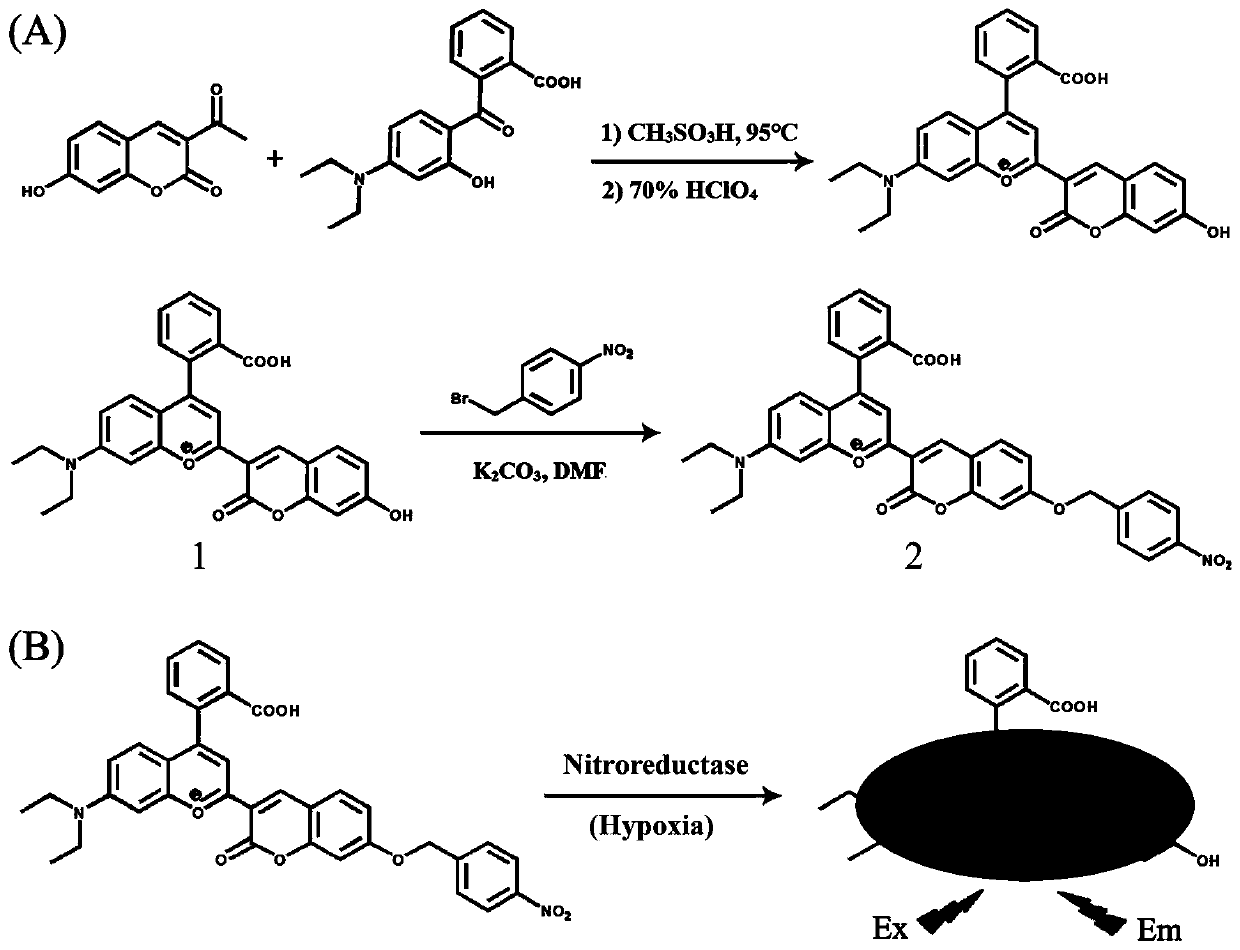
Figure 1 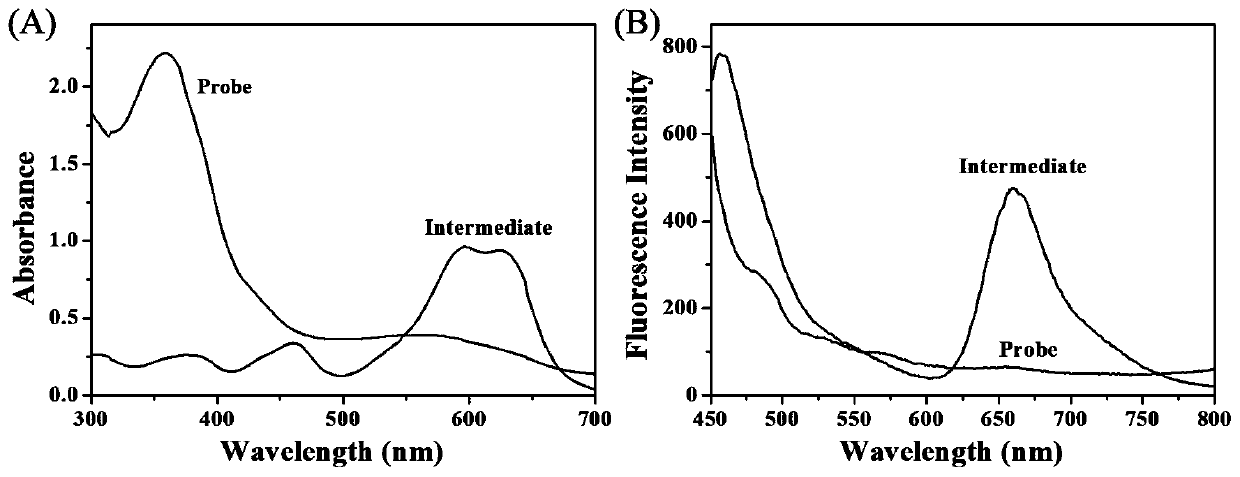
Figure 2 
Figure 3
Abstract
Description
[0001] (1) Technical field
[0002] The invention relates to a preparation method of a fluorescent probe compound capable of responding to nitroreductase and its application in hypoxia analysis and imaging.
[0003] (2) Background technology
[0004] In recent years, people's research on cancer has become more and more in-depth, and it has been found that the tumor microenvironment plays an important role in the occurrence, development and metastasis of tumors. Compared with the tumor cells themselves with obvious individual differences, the tumor microenvironment is relatively stable, less susceptible to environmental factors, less likely to produce drug resistance, and has important research significance. The tumor microenvironment mainly has the characteristics of hypoxia, slightly acidic environment, reducing environment, and up-regulation of the expression of specific biological enzymes. The slightly acidic environment of the tumor is caused by the high metabolism of gluc...
Examples
Embodiment 1
[0036] Embodiment 1: Synthesis method and application of hypoxia probe
[0037] 1, the synthesis of intermediate (synthetic route sees figure 1 ):
[0038] Dissolve 10g of hydroxyl-containing coumarin derivatives and 15.3g of equimolar 4-diethylamino ketoacid in 100mL of sulfonic acid, and stir and react at 95°C for 16 hours. After cooling to room temperature, add 200mL of water, and filter under reduced pressure. The obtained solid mixture was separated and purified by column chromatography with dichloromethane and methanol (100 / 1~3 / 1) as the eluent, and the collected sample was rotary evaporated to remove the solvent and then washed with 150mL ethyl acetate and dichloromethane (1:1) beating treatment, and the solid obtained by suction filtration is dried in vacuum, which is the intermediate (VI). The structure was characterized by proton nuclear magnetic spectrum, and the results are shown in figure 2 . Its absorption and fluorescence spectra are shown in Figure 4 . ...