
Negative electrode material for lithium ion secondary cell, method for producing same, paste for negative electrode, negative electrode sheet, and lithium ion secondary cell
A secondary battery and negative electrode material technology, applied in the field of negative electrode materials, can solve the problem of low cycle characteristics of lithium-ion secondary batteries and achieve the effect of improving battery characteristics
Patent Information
- Authority / Receiving Office
- CN · China
- Patent Type
- Applications(China)
- Current Assignee / Owner
- Publication Date
- 2020-07-14
Smart Images
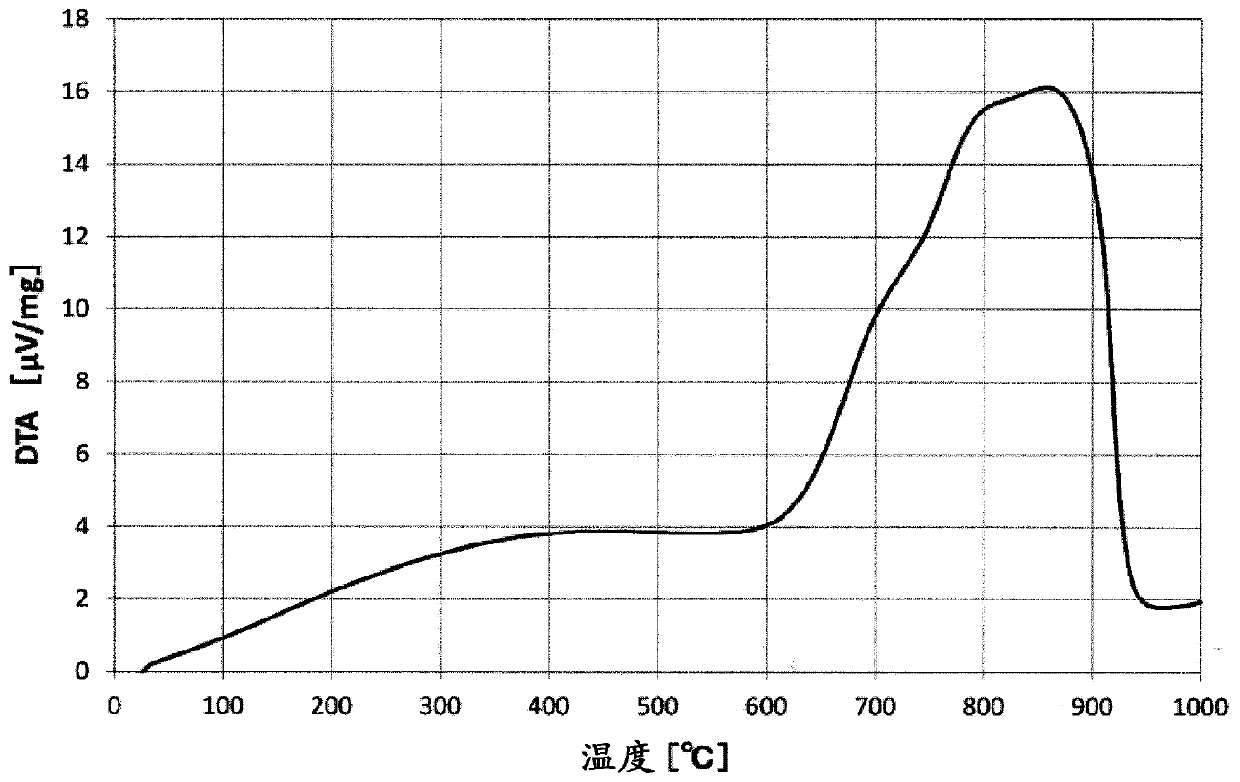
Figure 1 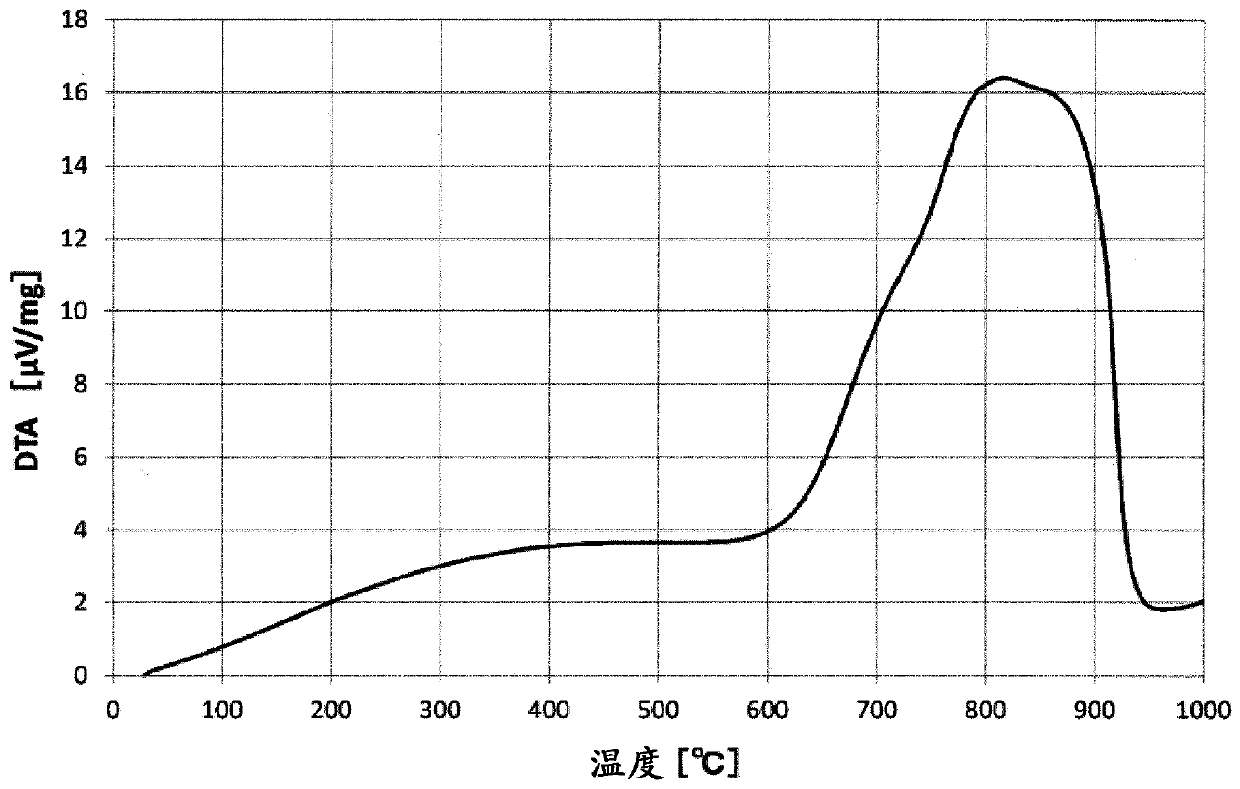
Figure 2 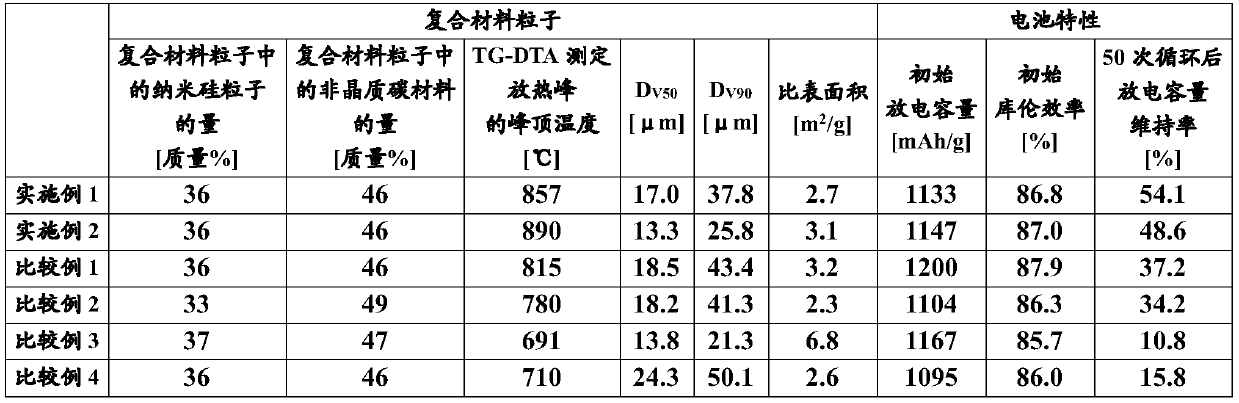
Figure 3
Abstract
Description
technical field
[0001] The present invention relates to a negative electrode material for a lithium ion secondary battery, a manufacturing method thereof, a negative electrode paste using the material, a negative electrode sheet and a lithium ion secondary battery. Background technique
[0002] For batteries (secondary batteries) used in IT equipment such as smartphones and tablets, vacuum cleaners, electric tools, electric bicycles, drones, and automobiles, negative electrode active materials that have both high capacity and high output are required. Silicon (theoretical capacity: 4200 mAh / g), which has a higher theoretical capacity than graphite (theoretical capacity: 372 mAh / g) currently used, has attracted attention as a negative electrode active material.
[0003] However, it is known that the volume of silicon (Si) expands up to about 3 to 4 times with the insertion of lithium, self-destructs and peels off from the electrode, and thus lithium ion secondary batteries us...
Examples
Embodiment 1
[0134] 4.4 kg of nano-silicon-containing particles 1 and 3.8 kg of graphite particles were weighed, charged into Cyclomix CLX-50 (manufactured by Hosokawa Micron Co., Ltd.), and mixed at a peripheral speed of 24 m / sec for 10 minutes.
[0135] The mixed powder was filled in a bowl made of alumina, and the temperature was raised to 1050° C. at 150° C. / hour under nitrogen gas flow, maintained for 1 hour, and then cooled to room temperature at 150° C. / hour. The heat-treated product was recovered from an alumina bowl, and then pulverized with a Bantam mill (manufactured by Hosokawa Micron Co., Ltd., mesh 0.5 mm) to obtain a composite material A.
[0136] Next, 2.4 kg of composite material A and 5.0 kg of nano-silicon-containing particles 1 were weighed, put into Cyclomix CLX-50 (manufactured by Hosokawa Micron Co., Ltd.), and mixed for 10 minutes at a peripheral speed of 24 m / s to form Mix powder.
[0137] The mixed powder was put into a bowl made of alumina, and the temperature w...
Embodiment 2
[0140] Weigh 22.2g of particles containing nano-silicon 1 and 19.0g of graphite particles, drop into a rotary cutting mill, flow nitrogen, keep an inert atmosphere and mix at 25000rpm (peripheral speed 150m / s) under high-speed stirring for 1 minute.
[0141] The mixed powder was filled in a bowl made of alumina, and the temperature was raised to 1050° C. at 150° C. / hour under nitrogen flow, kept for 1 hour, and then cooled to room temperature at 150° C. / hour. The heat-treated product was recovered from an alumina bowl, and then pulverized with a Bantam mill (manufactured by Hosokawa Micron Co., Ltd., mesh 0.5 mm) to obtain a composite material B.
[0142] Next, weigh 11.9g of composite material B and 25.0g of nano-silicon-containing particles 1, drop into a rotary cutting mill, flow nitrogen, maintain an inert atmosphere and stir and mix at a high speed of 25000rpm (peripheral speed 150m / sec).
[0143] The mixed powder was filled in a bowl made of alumina, and the temperature ...