
Window glass structure, manufacturing method thereof and vehicle comprising window glass structure
A window glass and vehicle technology, applied in the field of vehicles, can solve the problems of heavy weight, broken glass, loss of personnel and property, etc., and achieve the effect of reducing weight and improving durability
Patent Information
- Authority / Receiving Office
- CN · China
- Current Assignee / Owner
- Publication Date
- 2021-02-23
Smart Images
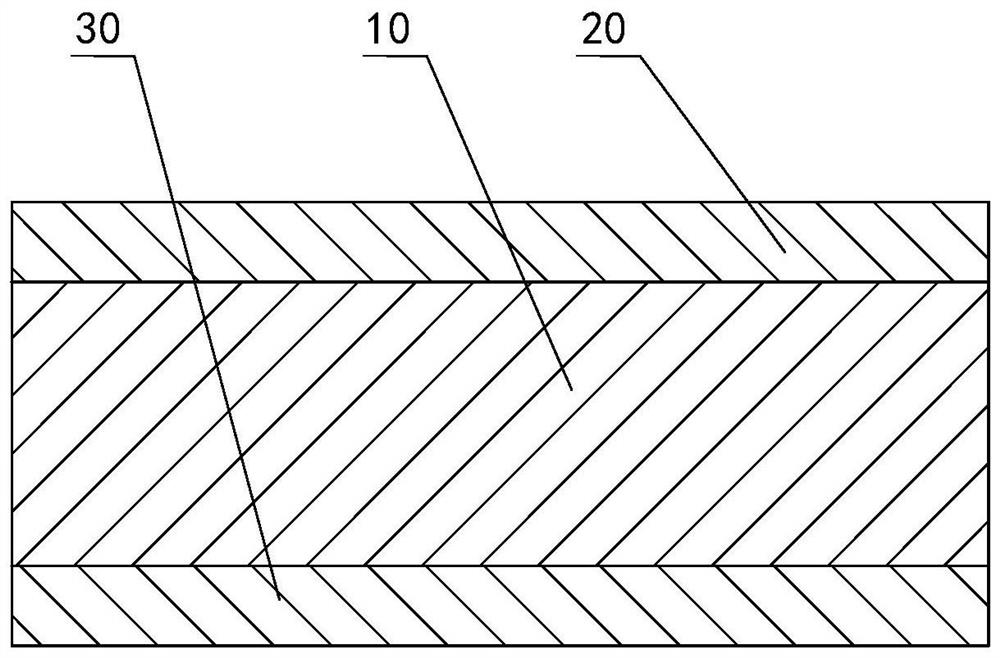
Figure 1 
Figure 2
Abstract
Description
technical field
[0001] The present application relates to the field of vehicles, in particular to a window glass structure for a vehicle, a manufacturing method thereof, and a vehicle including the window glass structure. Background technique
[0002] The window glass of the vehicle not only provides the functions of blocking dust, protection, heat insulation, and sound insulation for the passengers in the vehicle, but also provides the function of light transmission, so that the passengers can observe the scenery outside the vehicle. At present, the window glass structures of vehicles are different, but their main components are ordinary pure glass, and most of them are laminated with one or more organic material films, such as PE films, to provide color change, noise reduction, and heat absorption. Or various additional functions such as increasing brightness.
[0003] The main component of ordinary pure glass is silicon dioxide, which has a relatively high density. Ther...
Examples
Embodiment Construction
[0025] The window glass of the present application can be used for, but not limited to, side windows of vehicles, front windshields, rear windshields, sunroofs and the like.
[0026] figure 1 is a schematic cross-sectional view of the window glass structure of the present application. The glazing structure of the present application basically includes a base layer 10 defining opposite first and second sides and first and second glass sheet layers 20 and 30 located on the first and second sides of the base layer 10, respectively.
[0027] The base layer 10 is made of transparent polymer material. In one embodiment, base layer 10 may be formed from a plastic material. In another embodiment, the base layer 10 can be formed of organic materials, and the organic materials that can be used to form the base layer 10 include, but are not limited to, polymethyl methacrylate (PMMA), polystyrene (PS), polycarbonate ( PC), styrene acrylonitrile (AS and SAN), styrene-methyl methacrylate...