
A method for dynamic management of multi-dimensional resources in uav heterogeneous network
A heterogeneous network and dynamic management technology, applied in the direction of biological neural network model, neural architecture, combustion engine, etc., can solve the problem of reducing network performance or fairness among users, not suitable for UAV heterogeneous network scenarios, and difficult to meet delay sensitivity Issues such as business transmission requirements to achieve the effect of improving accuracy and generalization, realizing local performance and global performance, and efficient management
Patent Information
- Authority / Receiving Office
- CN · China
- Patent Type
- Patents(China)
- Current Assignee / Owner
- Publication Date
- 2022-07-08
Smart Images
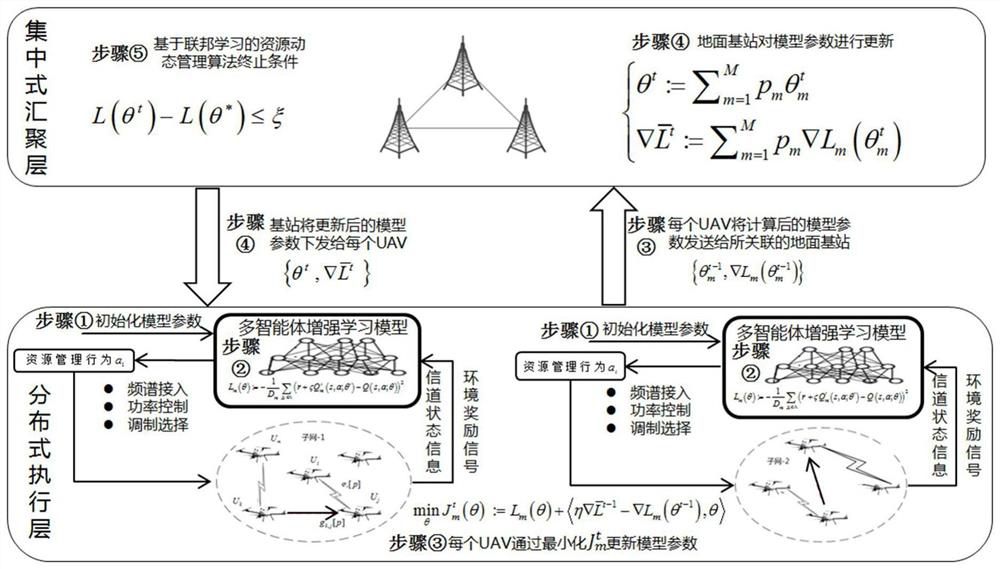
Figure 1 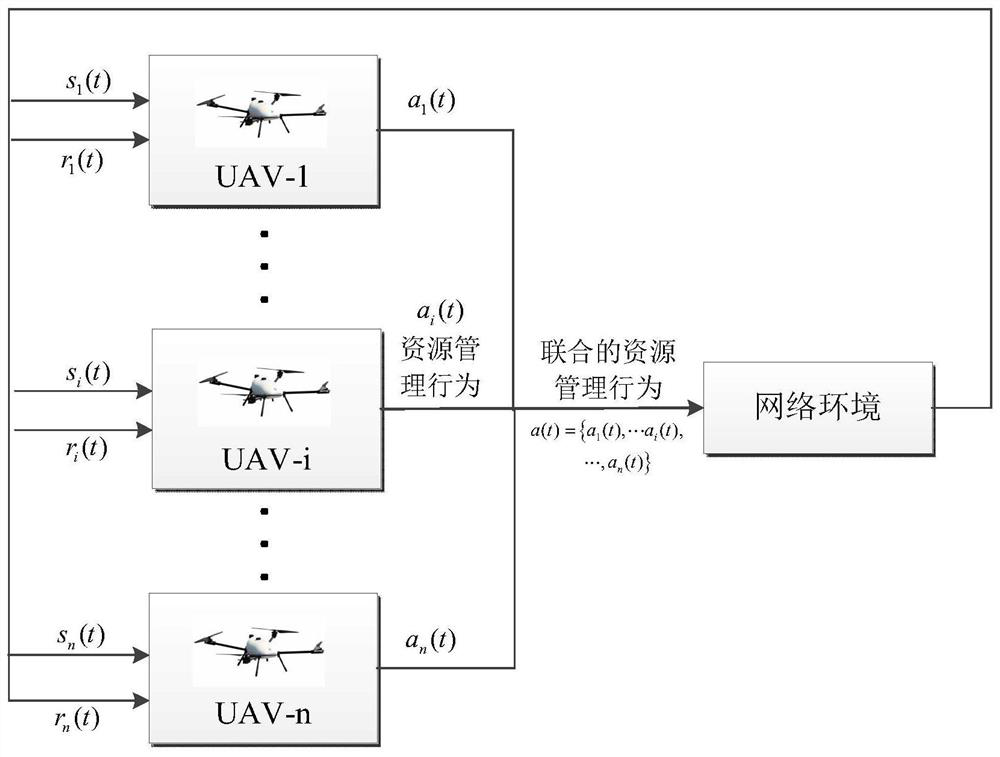
Figure 2 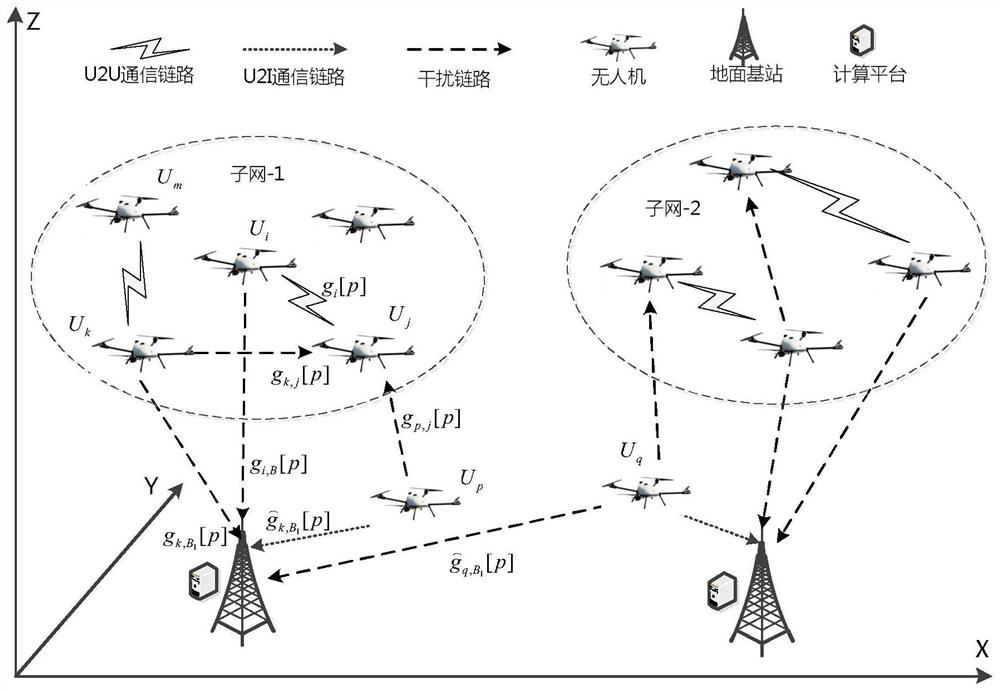
Figure 3
Abstract
Description
technical field
[0001] The invention relates to a method for dynamic management of multi-dimensional resources of a heterogeneous network of unmanned aerial vehicles. Background technique
[0002] With the rapid development of UAV autonomy and communication technology, UAV (Unmanned Aerial Vehicle, UAV) networking is more and more widely used in diverse civil, commercial and military scenarios, such as environmental monitoring, border surveillance , target tracking, emergency rescue, precision strike and other applications. For the rapid deployment and wide coverage of UAVs, the UAV heterogeneous network combines the advantages of the 5G cellular network and the point-to-point communication network, that is, the U2I (UAV-to-Infrastructure) transmission mode with the ground infrastructure as the relay can be used. Moreover, the UAV within the line-of-sight range can be flexibly transmitted in a U2U (UAV-to-UAV) mode in a link-through mode. In view of the highly dynamic and ...
Examples
Embodiment Construction
[0019] see figure 1 . According to the present invention, in a given unmanned aerial vehicle UAV heterogeneous network scenario, a centralized convergence layer learning model of ground base stations and a distributed execution layer learning model of UAV agents are used to form a federated learning architecture for executing resource management strategies; In the centralized aggregation layer learning model, the centralized aggregation layer builds a multi-agent reinforcement learning model based on the UAV heterogeneous network scenario and is responsible for initializing the model parameters; in the UAV agent distributed execution layer learning model, the distributed execution layer uses multi-agent The body reinforcement learning model adjusts the local network strategy. After sensing the local network state by adding an intelligent body module, each UAV obtains an approximate solution of the learning model parameters by minimizing the agent loss function, and designs res...