

Method for catalytically degrading waste polyester material by using zinc catalyst
A waste polyester and zinc catalyst technology, applied in the field of polyester degradation, can solve the problems of low material universality and low catalytic efficiency, and achieve the effect of simple production process, high catalytic efficiency and less by-products
Patent Information
- Authority / Receiving Office
- CN · China
- Patent Type
- Applications(China)
- Current Assignee / Owner
- Publication Date
- 2021-07-27
Smart Images
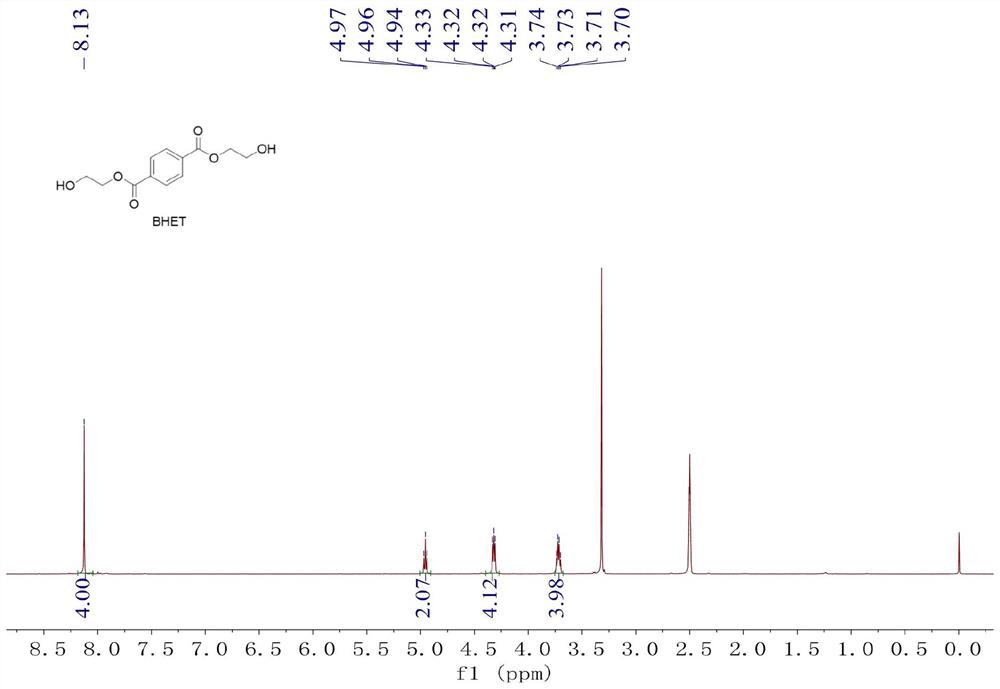
Figure 1 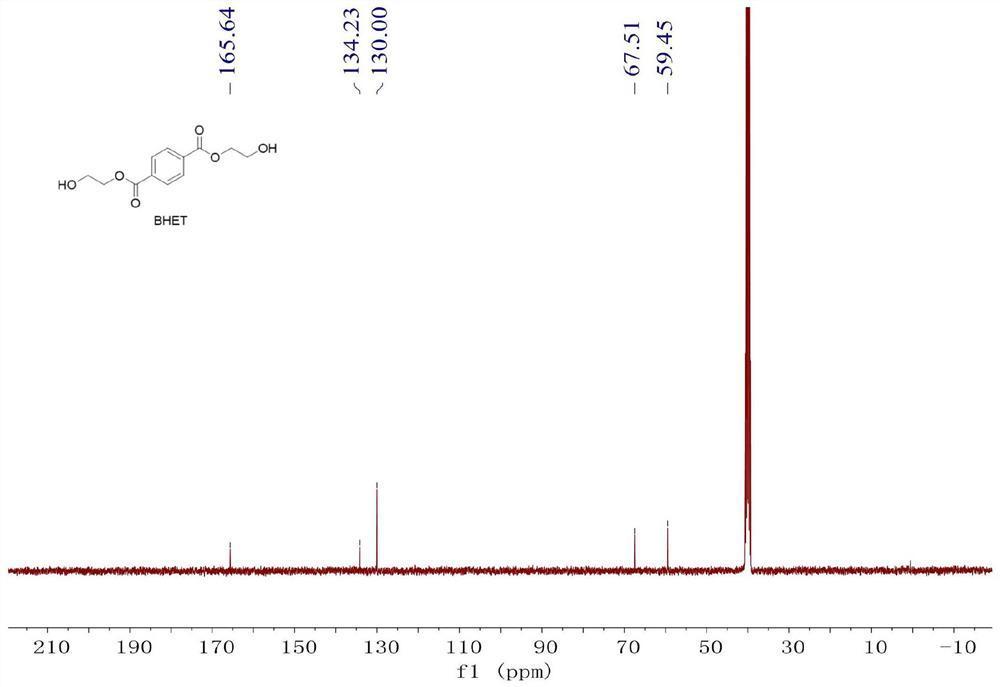
Figure 2 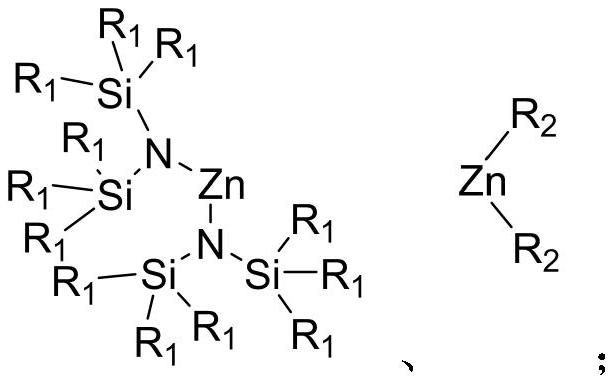
Figure 3
Abstract
Description
technical field
[0001] The invention belongs to the technical field of polyester degradation; in particular, it relates to a method for catalytically degrading waste polyester materials with a zinc catalyst. Background technique
[0002] Polyester plastics (such as PC polycarbonate, PET polyethylene terephthalate, etc.) are widely used in packaging, electronic appliances, mechanical equipment, etc. because of their excellent transparency, mechanical properties, and mechanical properties. each field. However, the large-scale use of polyester plastics has also led to the generation of millions of tons of waste polyester plastics while providing convenience to people. With the continuous enhancement of people's awareness of environmental protection and the demand for sustainable development, the post-processing of waste polyester has become one of the environmental problems that need to be solved urgently.
[0003] There are mainly the following ways to recycle waste polyeste...
Examples
Embodiment 1
[0027] Embodiment 1: the reaction process of PET waste degradation in the present embodiment is as follows:
[0028]
[0029] Specifically, it is achieved through the following steps:
[0030] Step 1: Clean the discarded PET packaging box with deionized water, dry it fully in an oven at 60°C, and cut it into square pieces with a side length of about 5 mm (5±0.5 mm) to obtain polymer pieces.
[0031] Step 2: Get a 5mL Schlenk bottle, vacuumize and replace the argon, then place it in the glove box, add 50mg (5mol% relative to the polymer unit) of Zn[N(SiMe 3 ) 2 ] 2 Catalyst, add 2mL of ethylene glycol, and then add 500mg of polymer fragments, stir and react at 180°C for 2 hours, the polymer fragments dissolve, nuclear magnetic monitoring polymer depolymerization is complete, and a crude product is obtained.
[0032] Step 3: Cool the crude product to room temperature, add 100 mL of deionized water, stir for 30 minutes, and then filter.
[0033] Step 4. Then take the trans...
Embodiment 2
[0034] Embodiment 2: the reaction process of PET waste degradation in the present embodiment is as follows:
[0035]
[0036] Specifically, it is achieved through the following steps:
[0037] Step 1: Clean the discarded PET packaging box with deionized water, dry it fully in an oven at 60° C., and cut it into square pieces with a side length of about 5 mm (5±0.2 mm) to obtain polymer pieces.
[0038] Step 2: Get a 5mL Schlenk bottle, vacuumize and replace the argon, then place it in the glove box, add 20mg (2mol% relative to the polymer unit) of Zn[N(SiMe 3 ) 2 ] 2 Catalyst, add 2mL of ethylene glycol, and then add 500mg of polymer fragments. After stirring and reacting at 180°C for 5 hours, the polymer fragments dissolve, and the depolymerization of the polymer is monitored by NMR to obtain a crude product.
[0039] Step 3: Cool the crude product to room temperature, add 100 mL of deionized water, stir for 30 minutes, and then filter.
[0040] Step 4. Then take the tr...
Embodiment 3
[0041] Embodiment 3: the reaction process of PET waste degradation in the present embodiment is as follows:
[0042]
[0043] Specifically, it is achieved through the following steps:
[0044] Step 1. Clean the discarded PET mineral water bottle with deionized water, dry it fully in an oven at 60° C., and cut it into square fragments with a side length of about 5 mm (5±0.1 mm) to obtain polymer fragments.
[0045] Step 2: Get a 5mL Schlenk bottle, vacuumize and replace the argon, then place it in the glove box, add 50mg (5mol% relative to the polymer unit) of Zn[N(SiMe 3 ) 2 ] 2 Catalyst, add 2mL of ethylene glycol, and then add 500mg of polymer fragments, stir and react at 180°C for 2 hours, the polymer fragments dissolve, nuclear magnetic monitoring polymer depolymerization is complete, and a crude product is obtained.
[0046] Step 3: Cool the crude product to room temperature, add 100 mL of deionized water, stir for 30 minutes, and then filter.
[0047]Step 4. Then ...