
Reservoir tail hydro-fluctuation belt wetland restoration method based on forest habitat
A restoration method and technology of water-fluctuating zones, applied in chemical instruments and methods, botanical equipment and methods, river regulation, etc., can solve problems of poor water resistance, disappearance of vegetation in water-fluctuating zones, and plant growth in water-fluctuating zones To achieve the effect of improving spatial heterogeneity, increasing the plantable area, and maintaining biodiversity
Patent Information
- Authority / Receiving Office
- CN · China
- Patent Type
- Applications(China)
- Current Assignee / Owner
- Publication Date
- 2021-11-09
Smart Images
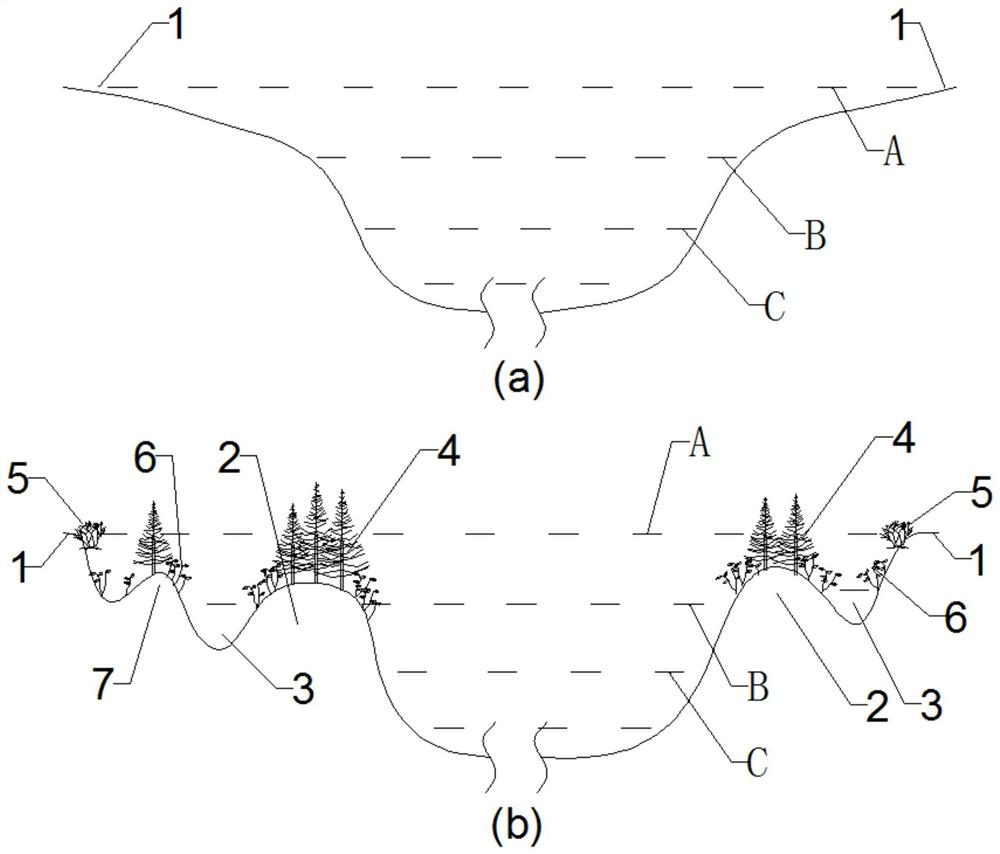
Figure 1 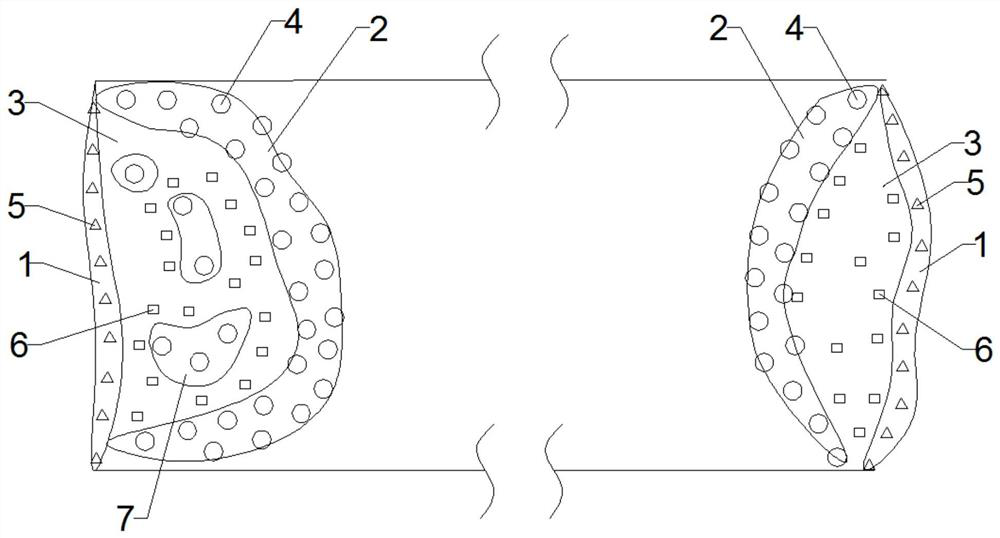
Figure 2 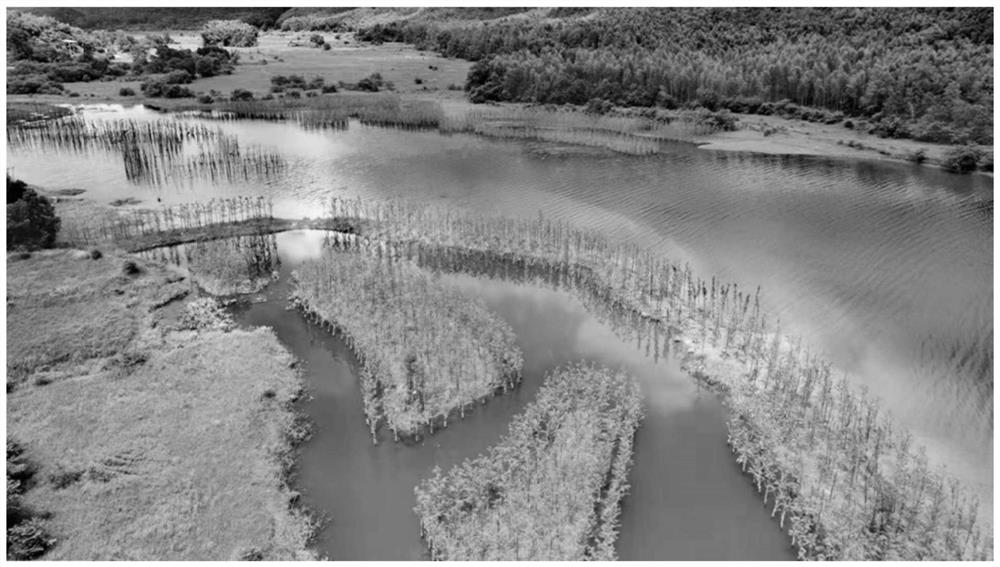
Figure 3
Abstract
Description
technical field
[0001] The invention relates to the technical field of ecological management, in particular to a wetland restoration method based on the Linze habitat. Background technique
[0002] With the development of economy and society, the ability to transform the natural environment has been continuously enhanced. While transforming the environment, it is also affecting the stability of the ecosystem. Reservoir construction has multiple economic benefits such as irrigation, flood control and drought relief, shipping, power generation, and breeding, but the construction of reservoirs also brings immeasurable losses to the original ecosystem. For example, the increase of water level will cause the change of biological habitat, thereby changing the ecosystem, which will cause devastating damage to some endangered species.
[0003] Poyang Lake is the largest freshwater lake in China and the most important wetland system in the country. The scientific protection of Poyan...
Examples
Embodiment 1
[0042] For the hydrofluctuation zone at the tail of the reservoir with a slope of ≤30° on both sides, a wetland restoration method for the hydrofluctuation zone at the tail of the reservoir based on the forest habitat includes the following steps:
[0043] S1, select the pond fir which is resistant to flooding as a large tree 4, and require the height after planting to be 40-60 cm above the highest water level after the highest water level is submerged, and the diameter is 5 cm-10 cm;
[0044] S2. Planting: choose glandular willow and japonica as small trees 5, and plant them in a staggered ratio of 1:1 in a place near the pond 3 along the river bank, with a planting distance of 4m×4m; directly plant Pond fir under the small trees 5 And the pond firs at both ends move closer to the riparian zone 1, and the planting spacing is 5m×5m.
Embodiment 2
[0046] A wetland restoration method based on the Linze habitat, comprising the following steps:
[0047] S1. Soil preparation: carry out topographic reconstruction and plasticity on the side of the water-fluctuation zone at the end of the reservoir with a slope of 30°≤slope≤60°, and obtain several ponds 3 and several soil mounds near the bank zone 1 at the edge of the water-fluctuation zone by digging ditches and piling up soil 2. The soil mound 2 and the pond 3 along the riparian zone 1 are arranged to form a saucer-shaped lake, and a number of small soil mounds 7 are arranged inside the saucer-shaped lake, and the silt excavated from the water bottom is piled on the soil mound 2 and the small soil Heap 7 is used for fertilization; the other side of the sink-fluctuation zone with a slope ≤ 30° does not prepare the soil;
[0048] S2, select Zhongshan fir and Chinese pine which are resistant to flooding as large arbors 4, and require the height after planting to be 50-80 cm abo...
Embodiment 3
[0051] For the water-fluctuating zone at the tail of the reservoir with slopes of 30° to 60° on both sides, a wetland restoration method based on the Linze habitat includes the following steps:
[0052] S1. Land preparation: carry out topographic reconstruction and plasticity on the water-fluctuating zone at the end of the reservoir, and obtain several ponds 3 and some soil mounds 2 near the edge of the water-fluctuating zone along the bank zone 1 by digging ditches and piling up soil. The riparian zone 1 is arranged around the pond 3 to form a dish-shaped lake shape, and some small-scale soil mounds 7 are arranged in the inside of the dish-shaped lake on the left side of the direction shown in the figure, and the right side is not provided. Heap 7 for fertilizer;
[0053] S2, select the Zhongshan fir that is resistant to flooding as a large tree 4, and require that the height after planting be that the top of the tree can exceed the maximum water level by 20-50 cm after the h...