

Adsorption material, preparation method thereof, dye wastewater treatment method and application of adsorption material and dye wastewater treatment method
A technology for adsorbing material and dye wastewater
Patent Information
- Authority / Receiving Office
- CN · China
- Patent Type
- Applications(China)
- Current Assignee / Owner
- Publication Date
- 2022-05-13
Smart Images
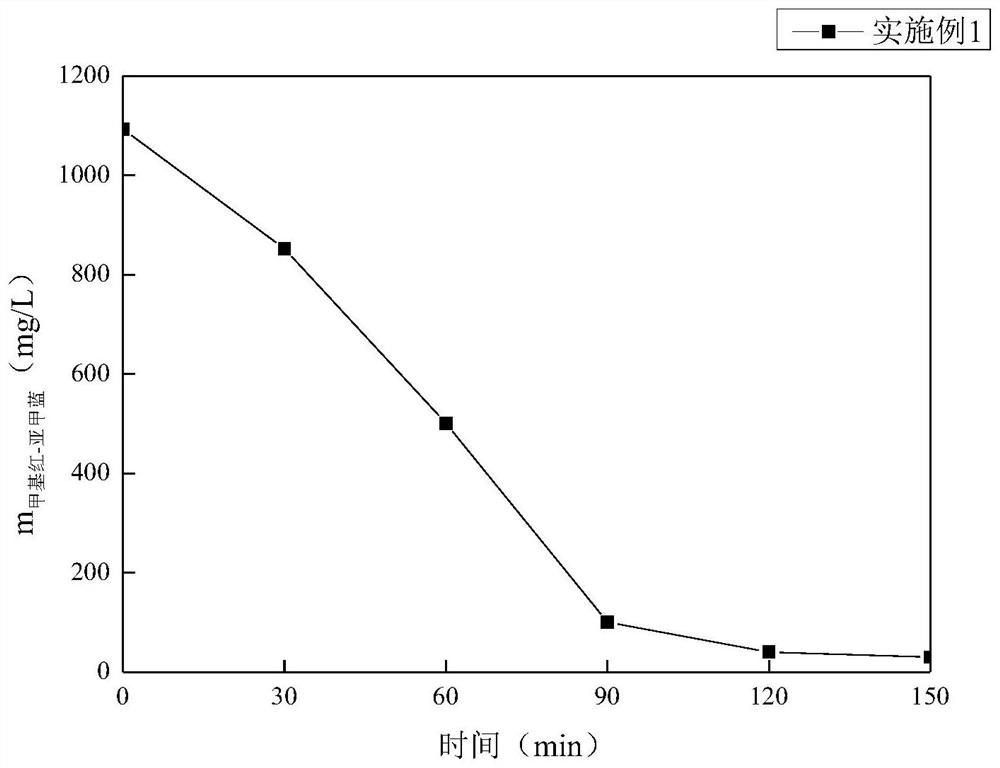
Figure 1 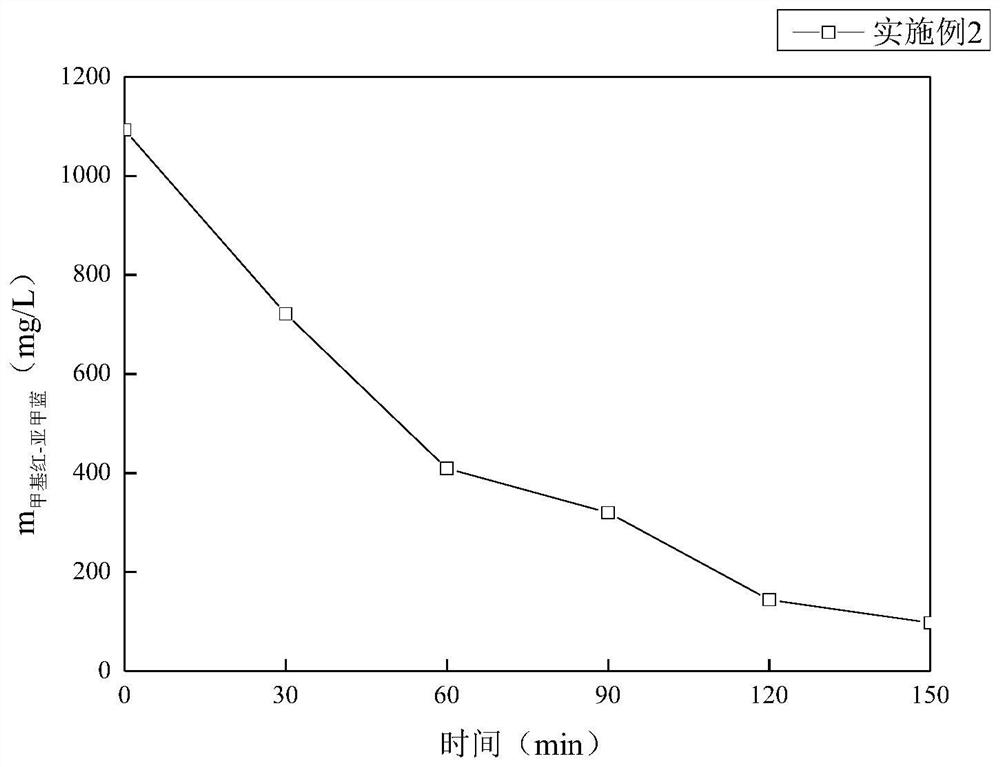
Figure 2 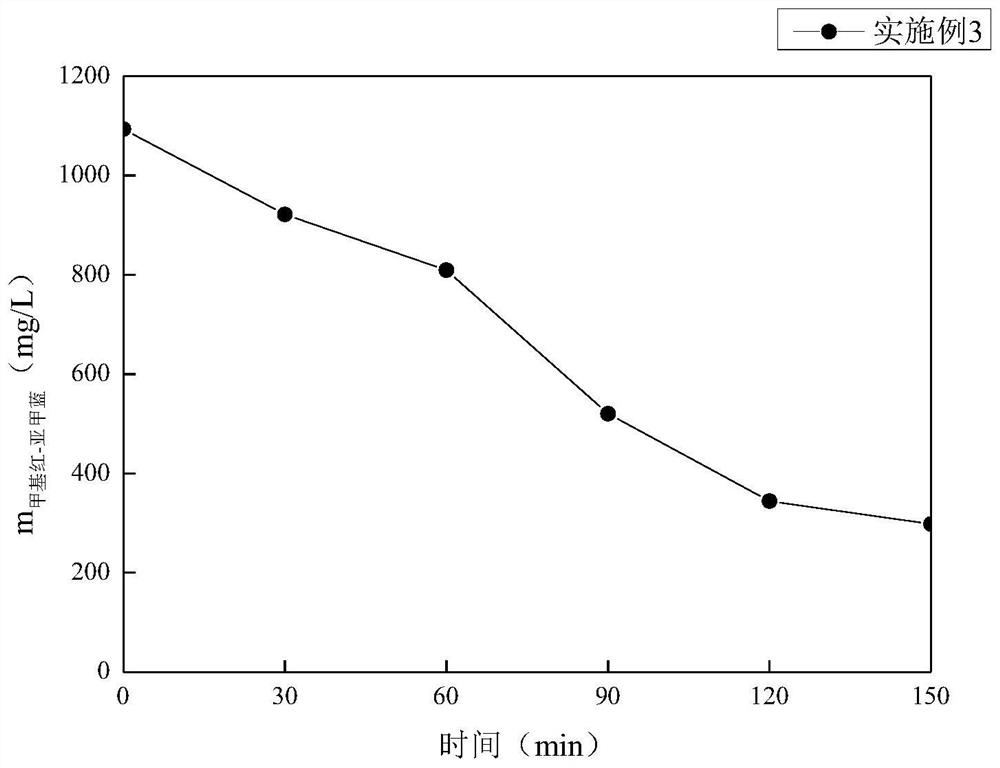
Figure 3
Abstract
Description
technical field
[0001] The invention relates to the technical field of adsorption separation, in particular to an adsorption material and a preparation method thereof, a treatment method of dye wastewater and their application. Background technique
[0002] With the rapid development of the textile industry, the types and quantities of dye wastewater discharged into the water body are increasing, and it has become one of the key pollution sources of the water environment. Dye wastewater has the characteristics of high water chroma, complex organic components, strong acidity and alkalinity, high salt content, and low degree of microbial degradation. It has always been a major problem in the treatment of worker wastewater. For example, methyl red is an anionic organic dye commonly used in industry, and is widely used in fields such as textiles, printing, printing and dyeing, and plastics. Methyl red is an anionic azo dye, and the wastewater containing azo dye accounts for mor...
Examples
Embodiment approach
[0047] According to a particularly preferred embodiment of the present invention, the adsorption material is prepared according to the following method:
[0048] Preparation of impregnating solution: prepare an aqueous solution ( mn 2+ , Sn 2+ 、Ni 2+ , Sb 3+ 、Co 2 + The mass ratio is 3-6:3-6:2-3:2-3:1, wherein the concentration of non-ionic polyacrylamide is 25-30mg / L, metal cation (Mn 2+ , Sn 2+ 、Ni 2+ , Sb 3+ 、Co 2+ ) total concentration of 25-30mg / L.
[0049] Adsorption material preparation: The alumina honeycomb ceramics with a diameter of 2-3cm and a height of 1-2cm are impregnated in the above-mentioned impregnation solution by excessive impregnation. The volume ratio of alumina honeycomb ceramics to the impregnation solution is about 1: 8-12. Immersion time 1-3h, temperature 25-35 ℃. Hang the impregnated alumina honeycomb ceramics to dry in the air to remove excess solution, then put it into an oven, and dry it at 80-85° C. for 20-24 hours. Obtain adsorben...
Embodiment 1
[0059] Adsorbent material A1 was prepared as follows:
[0060] Preparation of impregnation solution: prepare an aqueous solution (Mn 2+ , Sn 2+ 、Ni 2+ , Sb 3+ 、Co 2+ The mass ratio is 3:3:2:2:1), wherein, the concentration of non-ionic polyacrylamide is 30mg / L, metal cation (Mn 2+ , Sn 2+ 、Ni 2 + , Sb 3+ 、Co 2+ ) The total concentration is 30mg / L.
[0061] Adsorption material preparation: The alumina honeycomb ceramics with a diameter of 2.5±0.5cm and a height of 1.5±0.5cm are impregnated in the impregnation solution mentioned above by means of excessive impregnation. The volume ratio of the alumina honeycomb ceramics to the impregnation solution is about 1:10. Immersion time 2h, temperature 30 ℃. Hang the impregnated alumina honeycomb ceramics to dry in the air to remove excess solution, then put it into an oven, and dry it at 80°C for 24h. Adsorbent material A1 is obtained.
Embodiment 2
[0063] Adsorbent material A2 was prepared as follows:
[0064] Preparation of impregnation solution: prepare an aqueous solution (Mn 2+ , Sn 2+ 、Ni 2+ , Sb 3+ 、Co 2+ The mass ratio is 4:4:2:2:1), wherein, the concentration of non-ionic polyacrylamide is 10mg / L, metal cation (Mn 2+ , Sn 2+ 、Ni 2 + , Sb 3+ 、Co 2+ ) The total concentration is 20mg / L.
[0065] Adsorption material preparation: The alumina honeycomb ceramics with a diameter of 2.5±0.5cm and a height of 1.5±0.5cm are impregnated in the impregnation solution mentioned above by means of excessive impregnation. The volume ratio of the alumina honeycomb ceramics to the impregnation solution is about 1:10. Immersion time 2h, temperature 30 ℃. Hang the impregnated alumina honeycomb ceramics to dry in the air to remove excess solution, then put it into an oven, and dry it at 80°C for 24h. Adsorbent material A2 is obtained.