
Energy tower of multi-energy-form output for stepwise recovering waste heat of a gas engine
a gas engine and energy tower technology, applied in steam engine plants, machines/engines, mechanical equipment, etc., can solve the problems of single waste heat recovery method not fully utilizing the waste heat of the gas engine, and the waste heat recovery method can only be efficiently recycled, so as to improve the comprehensive energy utilization efficiency of the system and improve the quality and function.
Patent Information
- Authority / Receiving Office
- US · United States
- Patent Type
- Patents(United States)
- Current Assignee / Owner
- Publication Date
- 2019-04-02
Smart Images
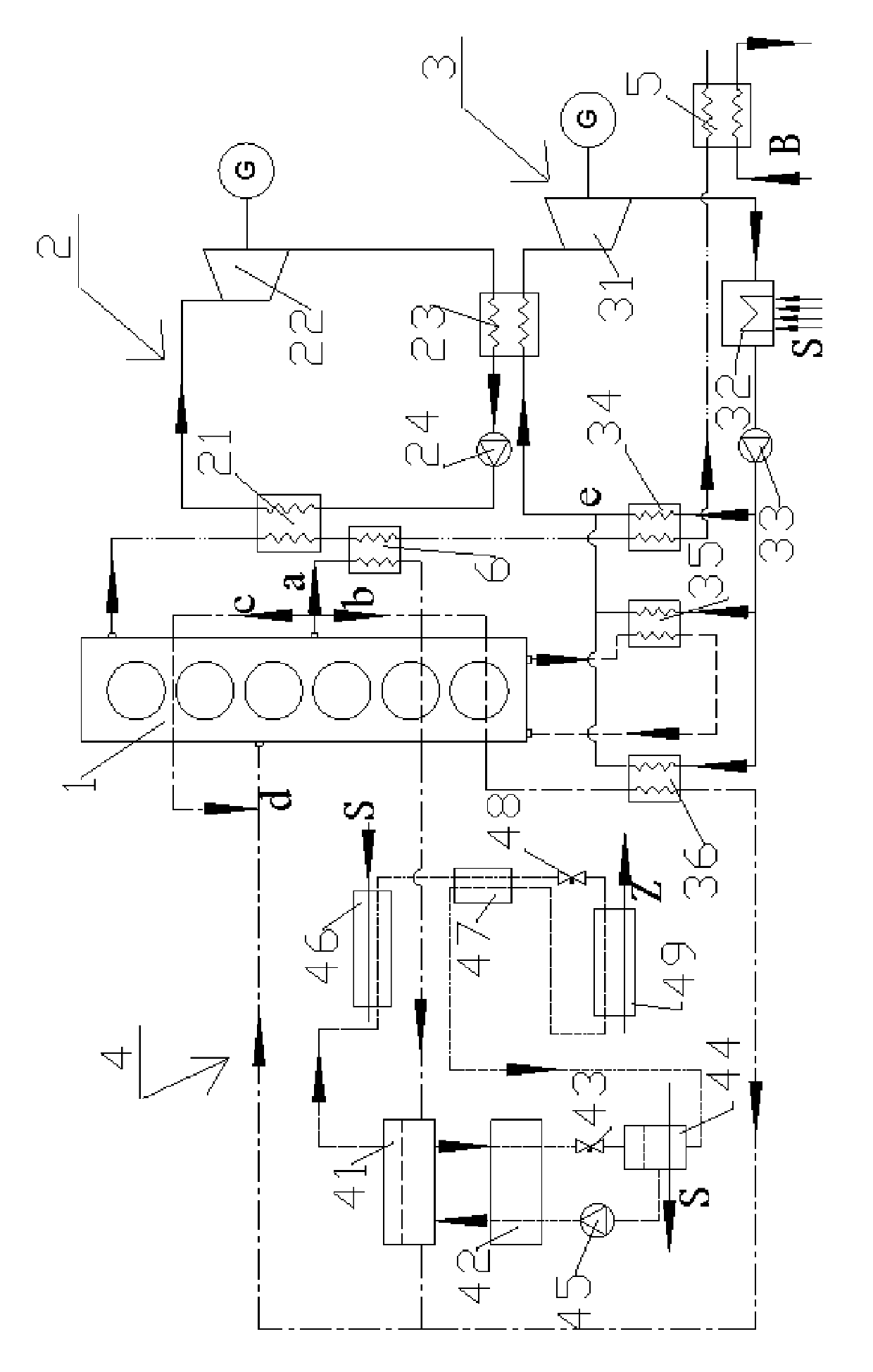
Figure 1
Abstract
Description
FIELD OF THE INVENTION
[0001] The present invention relates to an energy tower for utilizing the waste heat of an internal combustion engine, especially relates to a multi-energy-form output energy tower for stepwise recovering waste heat of a gas engine.BACKGROUND OF THE INVENTION
[0002] With the scarcity of worldwide petroleum resources, internal combustion engines fueled by conventional and unconventional natural gas (short for gas engine) are being used increasingly because of their characteristics of cleanness, high efficiency, low pollution and huge potential of gas resources. In particular, a gas combustion engine for large-scale power generation together with its waste heat recovering system often takes as a set of independent system for supplying energy to the buildings. Many developed countries pay attention to this system and called it as “second generation energy system”, which is widely used in the field of energy supply for buildings. The gas engine has various waste heat ...
Examples
embodiment
[0040]The parameters of the gas engine and the waste heat source thereof in the embodiment are shown in table 1.
[0041]
TABLE 1The parameters of the gas engine and the waste heat source thereof (under rated operating condition)ParameterValueRated power of gas engine1100 kWTemperature of exhausted gas540° C.Volume flow of inlet gas (under 1.16 m3 / sstandard condition)Volume flow of fuel gas (under0.0784 m3 / sstandard condition)Flow of jacket water 8.33 kg / sOutlet temperature of jacket 85° C.waterInlet temperature of jacket water 75° C.Air temperature after pressurized130° C.by the turbocharger
[0042]As the first stage for recovering the waste heat of the exhausted gas, the steam Rankine cycle system consists of the waste heat boiler, the back-pressure steam turbine, the condenser and the pump which are connected successively. In the first recovering stage, the exhaust after the turbocharger enters the waste heat boiler for heating the gas into a superheated steam under the pressure of 1.6...