
Method for catalytic oxidation of cellulose and method for making a cellulose product
a technology of cellulose and catalytic oxidation, which is applied in the field of catalytic oxidation of cellulose, can solve the problems of high water consumption, unfavorable alternative to raising consistency, and really high production costs, and achieve the effect of selectively oxidizing the c-6 hydroxyl groups
Patent Information
- Authority / Receiving Office
- US · United States
- Patent Type
- Patents(United States)
- Current Assignee / Owner
- Publication Date
- 2020-03-31
Smart Images
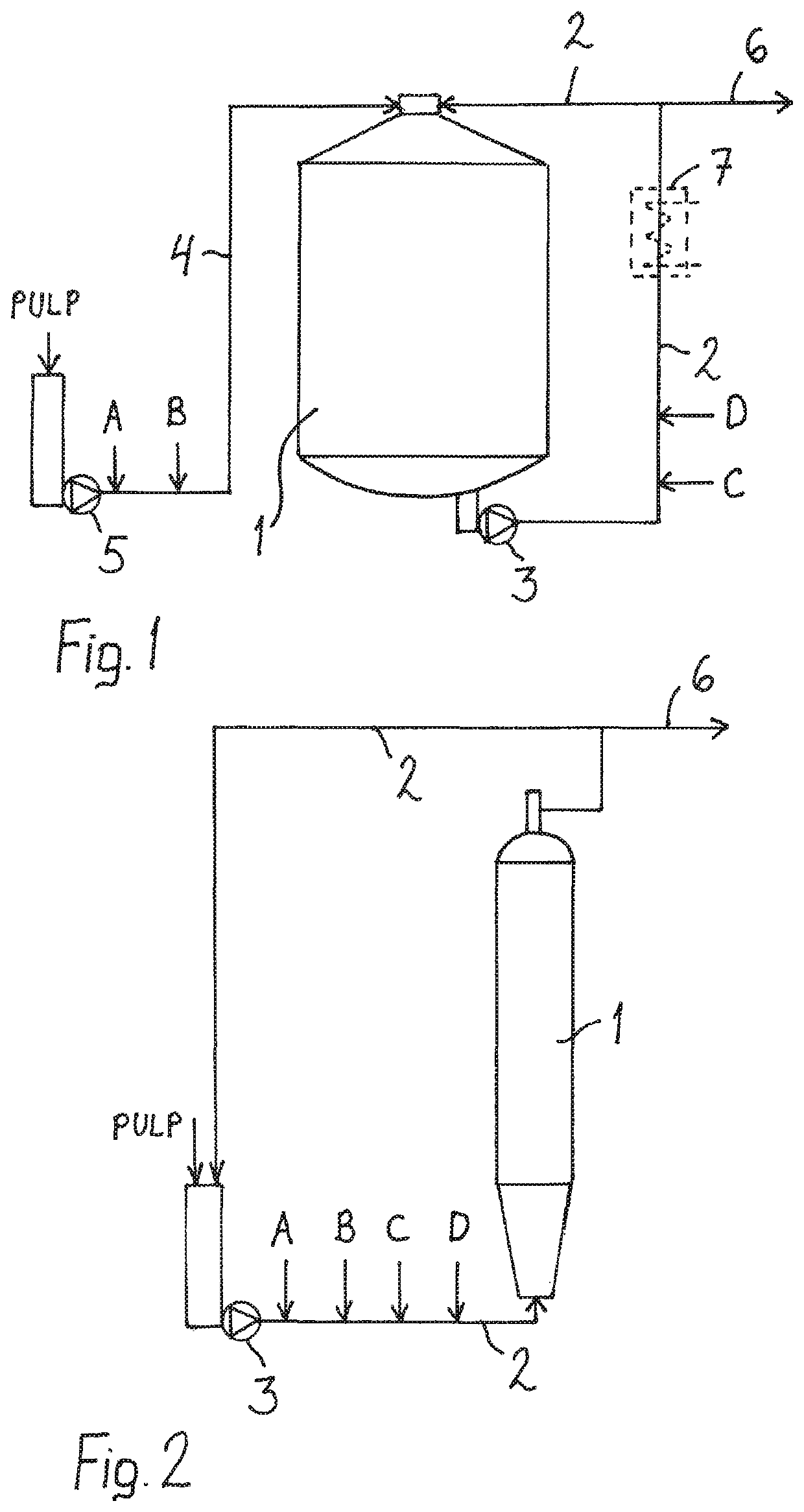
Figure 1 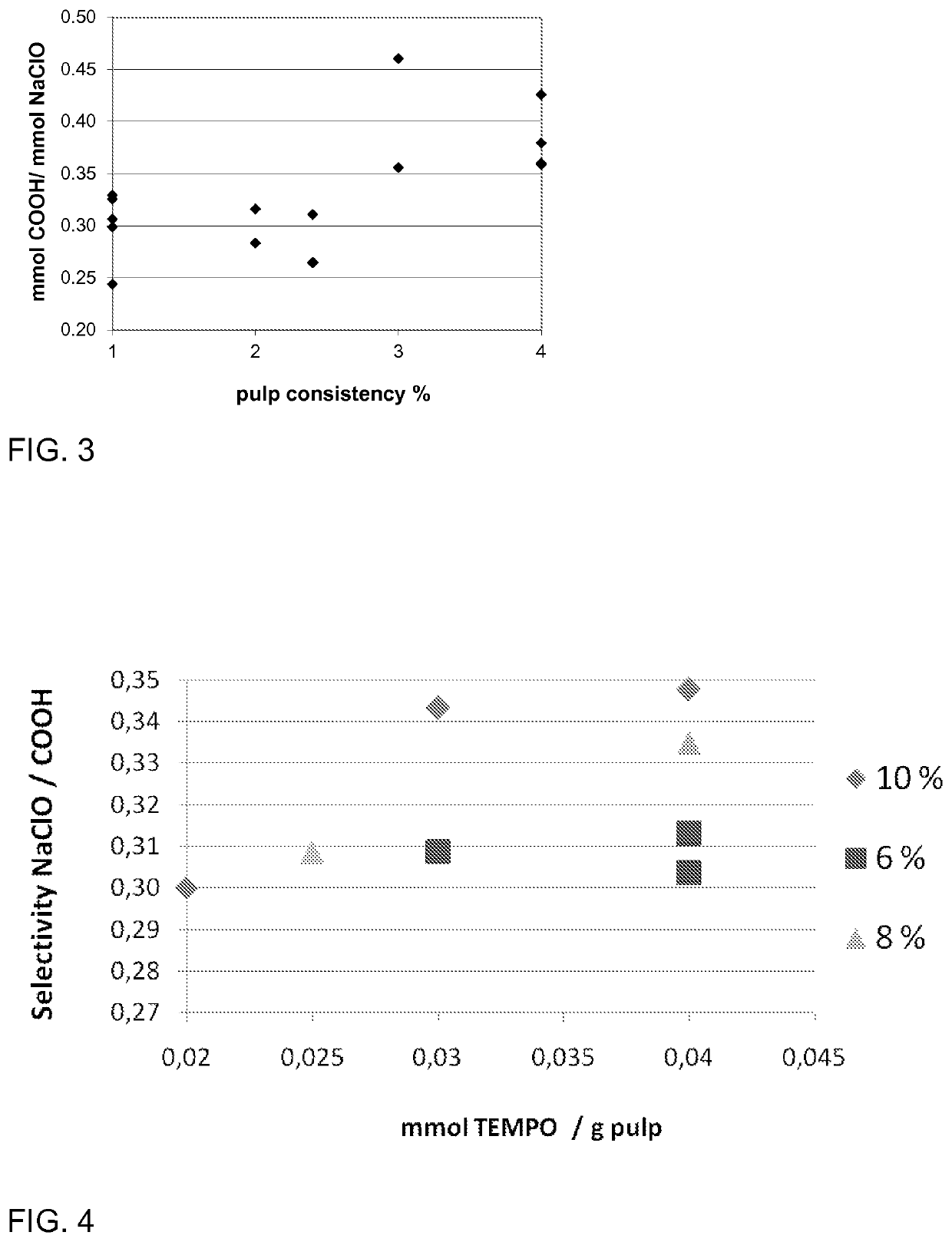
Figure 2 
Figure 3
Abstract
Description
FIELD OF THE INVENTION
[0001] The invention relates to a method for catalytic oxidation of cellulose using a heterocyclic nitroxyl radical as catalyst.BACKGROUND OF THE INVENTION
[0002] Cellulose is a renewable natural polymer that can be converted to many chemical derivatives. The derivatization takes place mostly by chemical reactions of the hydroxyl groups in the β-D-glucopyranose units of the polymer. By chemical derivatization the properties of the cellulose can be altered in comparison to the original chemical form while retaining the polymeric structure. Reaction selectivity is important so that a derivative of desired chemical structure could be obtained.
[0003] Heterocyclic nitroxyl compounds are known as catalysts that participate in the selective oxidation of C-6 hydroxyl groups of cellulose molecules to aldehydes and carboxylic adds, the corresponding oxoammonium salt being known as the active direct oxidant in the reaction series. One of these chemical oxidation catalysts kno...
Examples
Embodiment Construction
[0024]In the following disclosure, all percent values are by weight, if not indicated otherwise. Further, all numerical ranges given include the upper and lower values of the ranges, if not indicated otherwise.
[0025]The primary hydroxyl groups of cellulose are oxidized catalytically by a heterocyclic nitroxyl compound, for example 2,2,6,6-tetramethylpiperidinyl-1-oxy free radical, “TEMPO”. Other heterocyclic nitroxyl compounds known to have selectivity in the oxidation of the hydroxyl groups of C-6 carbon of the glucose units of the cellulose can also be used, and these compounds are widely cited in the literature. Hereinafter, the oxidation of cellulose refers to the oxidation of these hydroxyl groups to aldehydes and / or carboxyl groups. It is preferred that the hydroxyl groups are oxidized to carboxyl groups, that is, the oxidation is complete.
[0026]Whenever the catalyst “TEMPO” is mentioned in this disclosure, it is evident that all measures and operations where “TEMPO” is involv...