
Video multiviewer systems
a multi-viewer and video technology, applied in the field of video multi-viewer systems, can solve the problems of requiring a large amount of bandwidth, limiting the number of input video streams and output tv screens that current devices can therefore handle, and placing constraints on the location of multi-viewers, so as to achieve the effect of easy enlargement and easy sharing by combiners
Patent Information
- Authority / Receiving Office
- US · United States
- Patent Type
- Patents(United States)
- Current Assignee / Owner
- Publication Date
- 2020-07-28
Smart Images
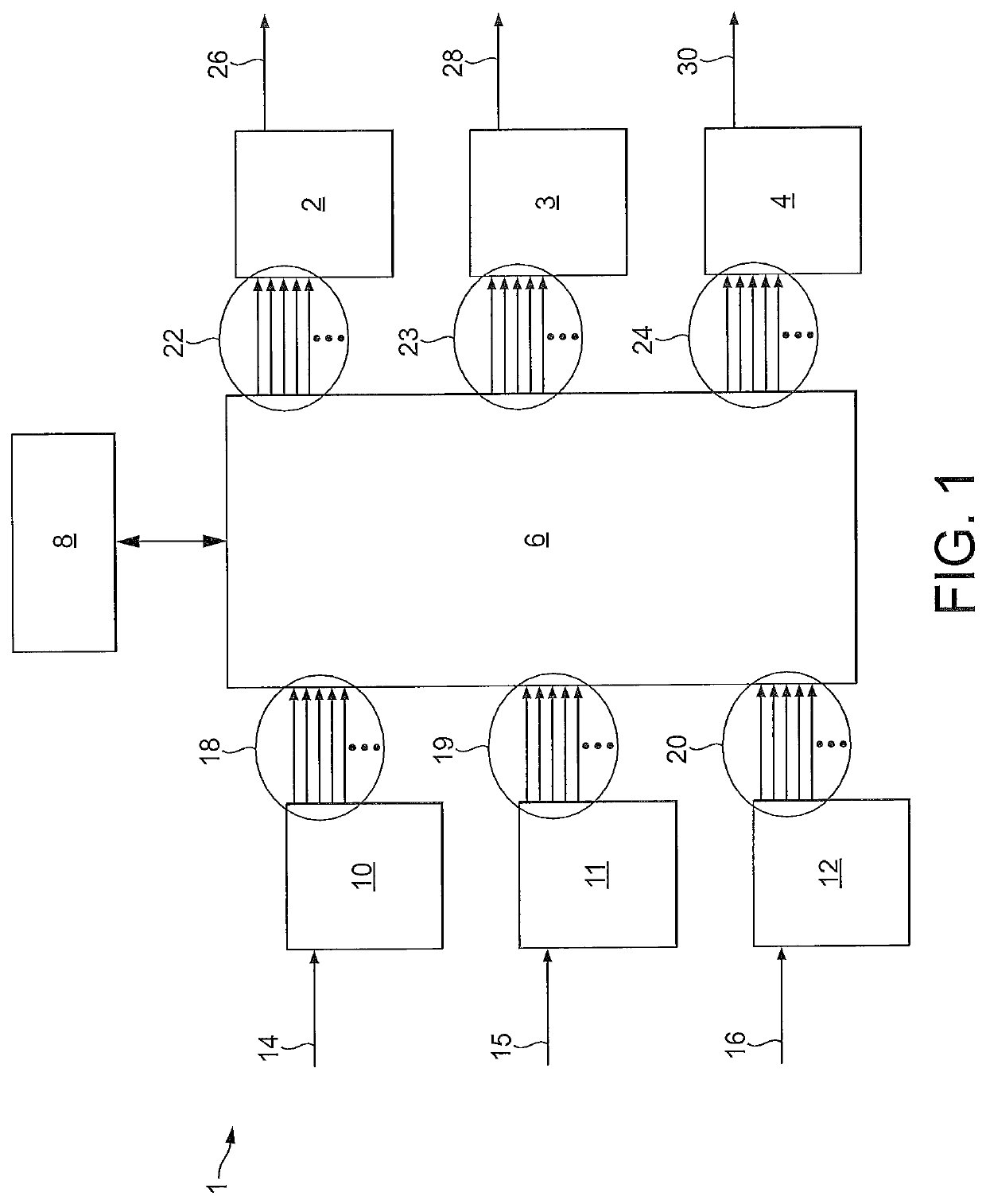
Figure 1 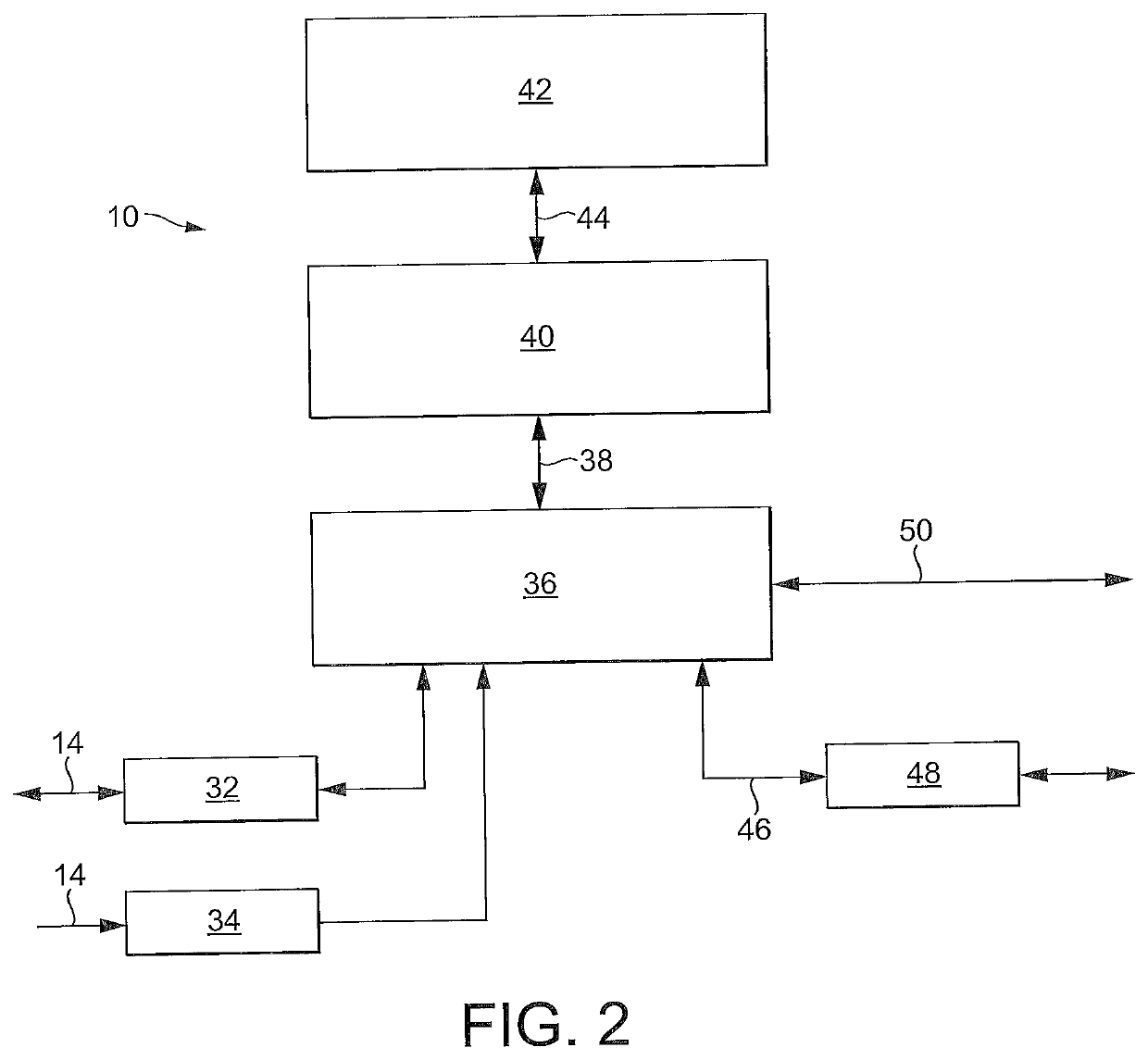
Figure 2 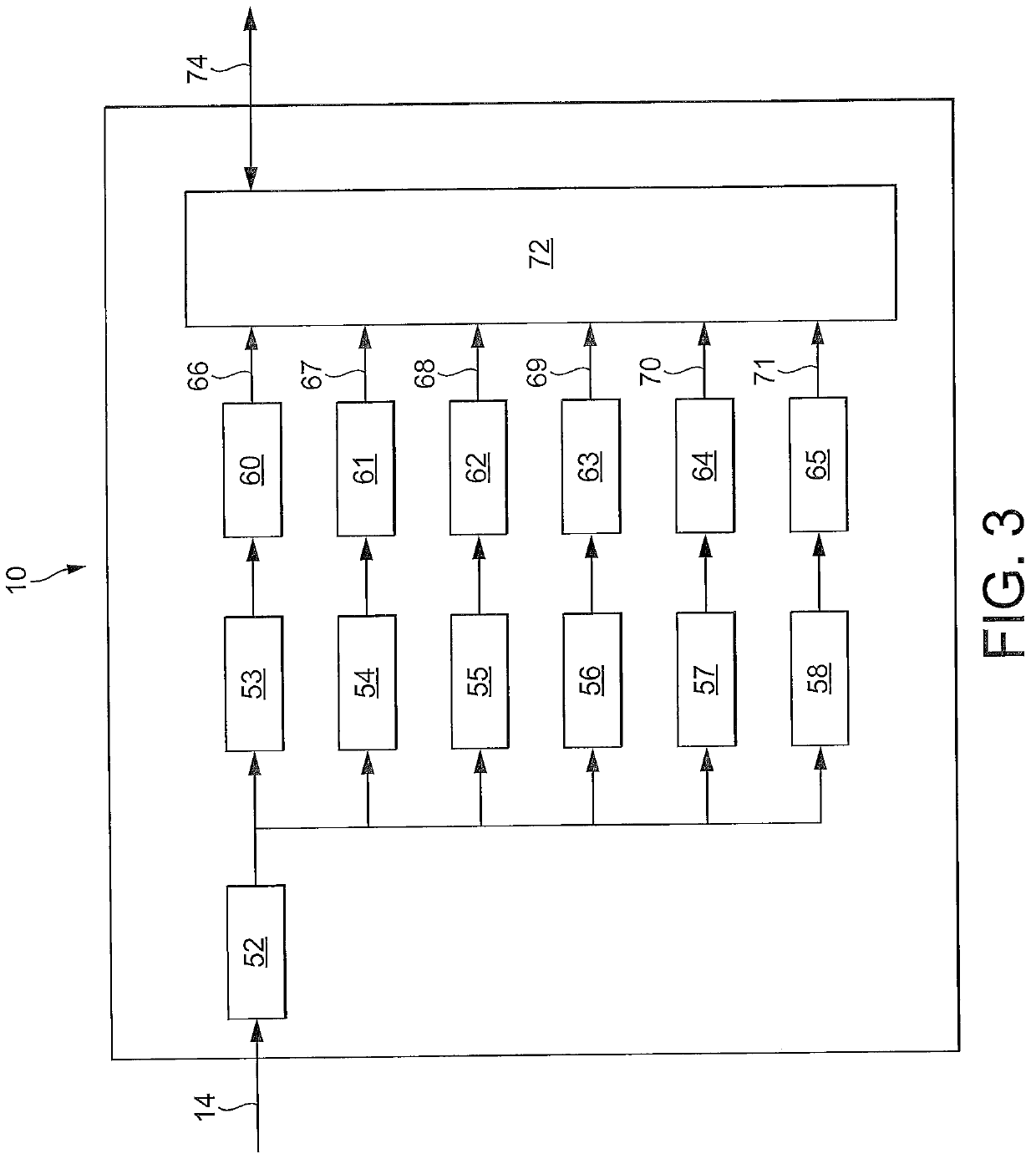
Figure 3
Abstract
Description
FIELD OF THE INVENTION
[0001] This invention relates to a video multiviewer system and to a method of simultaneously presenting, at a viewing location, video streams from multiple sources. The invention also lies, individually, in a prescaler and in a combiner for use in such a system.BACKGROUND TO THE INVENTION
[0002] Broadcast television production and transmission often involves simultaneous display of the video content of multiple video streams, to allow people to see what is in each stream. This might be images from the different cameras and other video sources in a studio during the production process, or the many channels being processed for transmission in a playout facility. Historically, with analogue television signals, this monitoring was achieved with a ‘wall’ of multiple small display devices (‘monitors’) each showing the image content of a single video stream. These would be used for basic content monitoring: allowing a check of what each camera is pointing at, or whether...
Examples
use example 1
[0103]A system with fixed options for the sub-image area size ratios (i.e. the ratio between the area of an image from a scaled stream to that of a full scale image at the same resolution) in the combined video stream.
System Constraints and Characteristics
[0104]1. The construction of the combined output video stream is inflexible but simply defined.[0105]2. The output video image area is considered as a set of fixed-size sub-areas, each of the same shape as the overall output image area.[0106]3. These sub-areas have a binary relationship to the overall image area size: they are ½, ¼, ⅛, 1 / 16 . . . of the height and width. They therefore occupy ¼, 1 / 16, 1 / 64, 1 / 256 . . . of the image area.[0107]4. Video streams used to make up the video stream combiner output have to fit within these sub-areas. Sub-image areas are not allowed to overlap.[0108]5. By using a binary set of sizes we can allow relatively flexible tiling arrangements with a relatively small set of pre-defined video stream ...
use example 2
[0121]A system with flexible output sub-image area sizes, where the video stream combiner can enlarge prescaled video streams to some extent. Such enlargement can be requested using the control module 8.
System Constraints and Characteristics
[0122]1. The sub-image areas are considered all to be the same shape (aspect ratio) as the full image area. A scaled video stream of a different aspect ratio will partially occupy an area of the correct aspect ratio.[0123]2. The sub-image areas are not allowed to overlap.[0124]3. The video stream combiner can scale the video streams meaning that the combined video stream can have any arrangement of sub-image areas that fulfils the first two requirements.[0125]4. The requirements for bandwidth and displayed video stream quality are such that it is acceptable for the video stream combiner to enlarge video streams to some extent. This potentially reduces video stream quality since the information lost during video stream resolution reduction in the ...
use example 3
[0135]A system with flexible output sub-image area sizes, where the more demanding video quality requirements mean that a video stream combiner can only reduce the size of prescaled video streams.
System Constraints and Characteristics
[0136]1. The sub-image areas are considered all to be the same shape (aspect ratio) as the full image area. A video stream of a different aspect ratio will partially occupy an area of the correct aspect ratio.[0137]2. The sub-image areas are not allowed to overlap.[0138]3. The video stream combiner can scale the video streams meaning that the combined video stream can have any arrangement of sub-image areas that fulfils the first two requirements.[0139]4. The video quality requirements are such that it is not acceptable for the video stream combiner to enlarge video streams; it can only reduce video streams.[0140]5. However, the video stream combiner has to deal with many input video streams but the total output is constrained to occupy a single full-re...