

Methods and compositions for the production of stably transformed, fertile monocot plants and cells thereof
a technology of stably transformed and fertile monocotyledons, applied in biochemistry apparatus and processes, peptides, etc., can solve the problems of inability to achieve success, lack of reports on methods for the transformation of i>monocotyledons /i>such as maize, and subsequent production of fertile maize plants, etc., to achieve enhanced -zein synthesis, less breakage susceptibility, and larg
Patent Information
- Authority / Receiving Office
- US · United States
- Current Assignee / Owner
- Publication Date
- 2005-06-16
- Estimated Expiration
- Not applicable · inactive patent
Smart Images
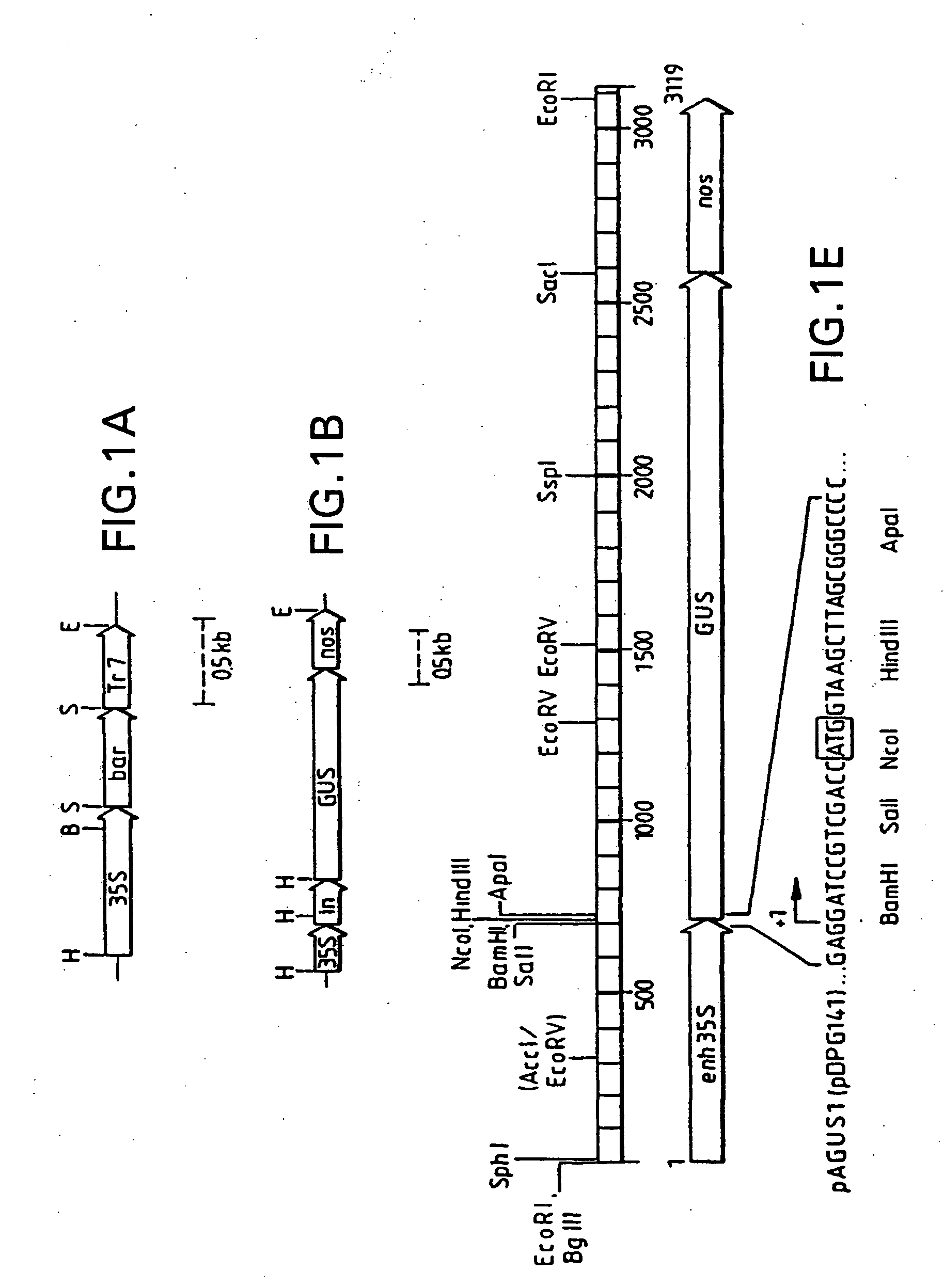
Figure 1 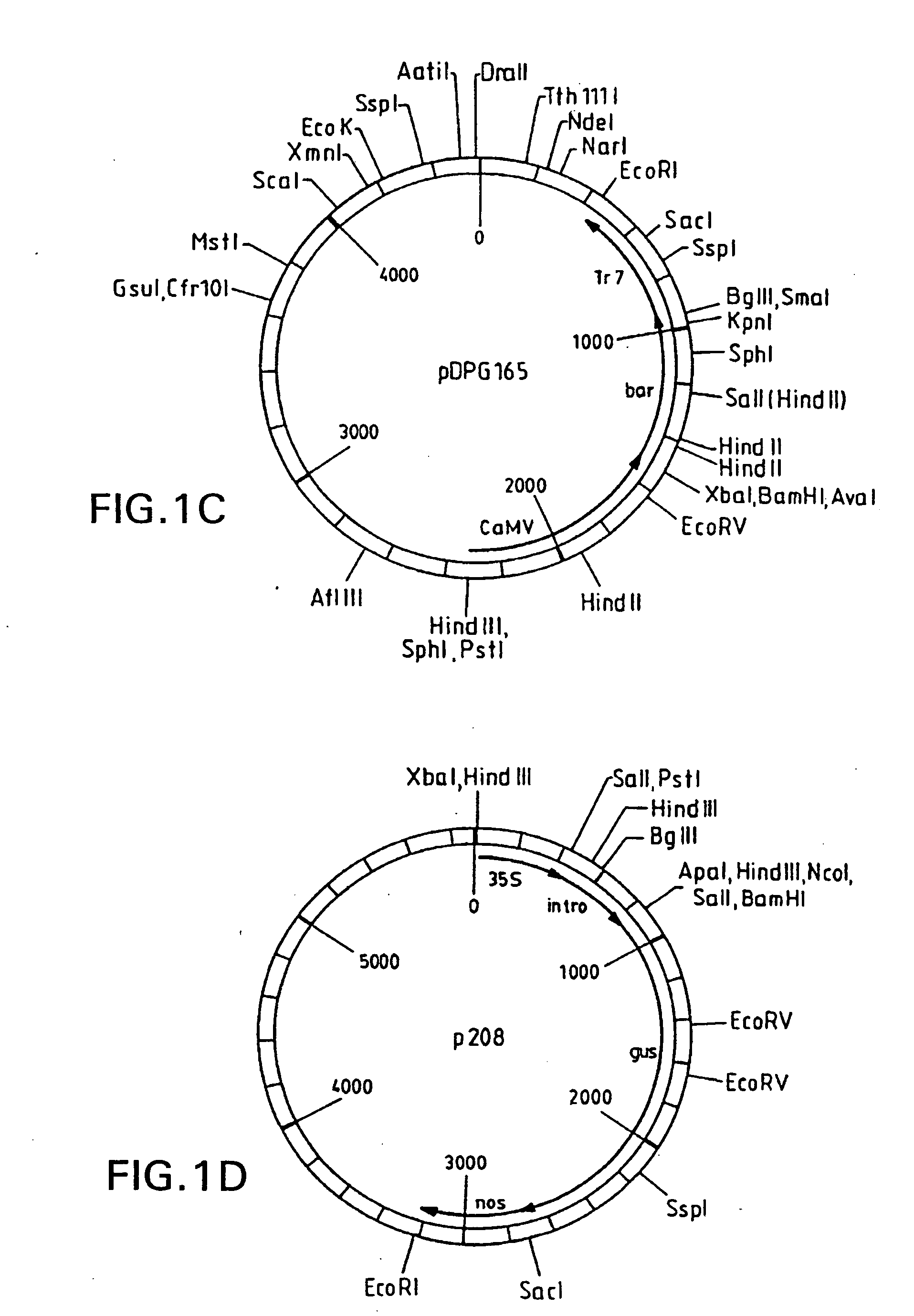
Figure 2 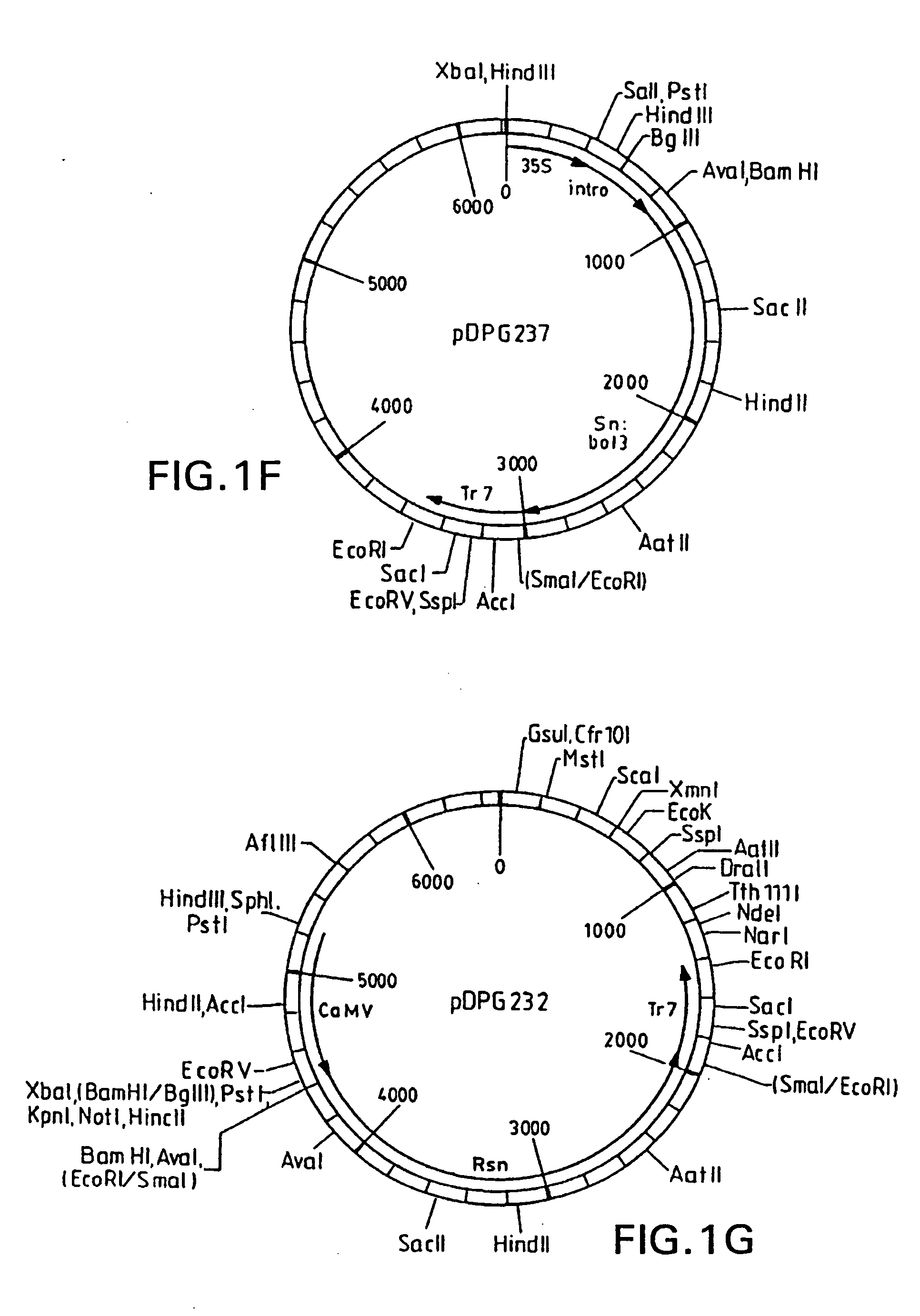
Figure 3
Abstract
Description
CROSS-REFERENCE TO RELATED APPLICATIONS
[0001] The present application is a continuation-in-part of U.S. Ser. No. 07 / 636,089, filed Dec. 28, 1990, which was a continuation-in-part of U.S. Ser. No. 07 / 508,045, filed Apr. 11, 1990, which was a continuation-in-part of U.S. Ser. No. 07 / 467,989, filed Jan. 22, 1990. These applications are expressly incorporated by reference into the application.BACKGROUND OF THE INVENTION
[0002] 1. Field of the Invention
[0003] The present invention relates to reproducible systems for genetically transforming monocotyledonous plants such as maize, to methods of selecting stable genetic transformants from suspensions of transformed cells, and to methods of producing fertile plants from the transformed cells. Exemplary transformation methods include the use of microprojectile bombardment to introduce nucleic acids into cells, and selectable and / or screenable marker systems, for example, genes which confer resistance (e.g., antibiotic, herbicide, etc.), or ...
Examples
example 1
Initiation of the Suspension Culture G(A188XB73)716 (designated SC716) for Use in Transformation
[0247] This Example describes the development of a maize suspension culture, designated SC716, which was employed in various of the transformation studies described hereinbelow. The Type II tissue used to initiate the cell suspension was initiated from immature embryos of A188×B73 plated onto N6-based medium with 1 mg / ml 2,4-D (201; see Table 1). A Type II callus was initiated by visual selection of fast growing, friable embryogenic cells. The suspension was initiated within 6 months after callus initiation. Tissue chosen from the callus to initiate the suspension consisted of undifferentiated Type II callus. The characteristics of this undifferentiated tissue include the earliest stages of embryo development and soft, friable, undifferentiated tissue underlying it.
[0248] Approximately one gram of tissue was added to 20 mls of liquid medium. In this example, the liquid medium was medium...
example 2
Initiation of the Suspension Culture (A188×B73) 82 (designated SC82) for Use in Transformation
[0252] This Example describes the development of another cell line employed in various of the transformation studies set forth below, termed SC82. In the development of SC82, inoculum for suspension culture initiation was visually selected from a Type II callus that was initiated from A188×B73 immature embryos plated on a N6-based medium containing 13.2 mg / l dicamba (227, Table 1). The suspension culture was initiated within 3 months of initiation of the Type II callus. Small amounts (50-100 mg) of callus distinguishable by visual inspection because of its highly proembryonic morphology, were isolated from more mature or organized structures and inoculated into a 50 ml flask containing 5 mls of filter-sterilized conditioned medium from the various G(A188×B73) 716 suspension cultures (402 medium with four types of capsule treatments and 409 medium).
[0253] After one week, this 5 ml culture ...
example 3
Initiation and Maintenance of Cell Line AT824
[0254] This example describes the initiation and maintenance of cell line AT824 which has been used routinely for transformation experiments. Immature embryos (0.5-1.0 mm) were excised from the B73-derived inbred line AT and cultured on N6 medium with 100 uM silver nitrate, 3.3 mg / L dicamba, 3% sucrose and 12 mM proline (2004). Six months after initiation type I callus was transferred to medium 2008. Two months later type I callus was transferred to a medium with a lower concentration of sucrose (279). A sector of type II callus was identified 17 months later and was transferred to 279 medium. This cell line is uniform in nature, unorganized, rapid growing, and embryogenic. This culture is desirable in the context of this invention as it is easily adaptable to culture in liquid or on solid medium.
[0255] The first suspension cultures of AT824 were initiated 31 months after culture initiation. Suspension cultures may be inititiated in a v...