
Peptides for the treatment of Alzheimer's disease and other beta-amyloid protein fibrillogenesis disorders
a technology of beta-amyloid protein and fibrillogenesis disorder, which is applied in the direction of peptide/protein ingredients, animal/human proteins, drug compositions, etc., can solve the problems of liver toxicity, drug success in cognitive improvement in ad patients,
Patent Information
- Authority / Receiving Office
- US · United States
- Patent Type
- Applications(United States)
- Current Assignee / Owner
- Publication Date
- 2005-07-14
- Estimated Expiration
- Not applicable · inactive patent
Smart Images
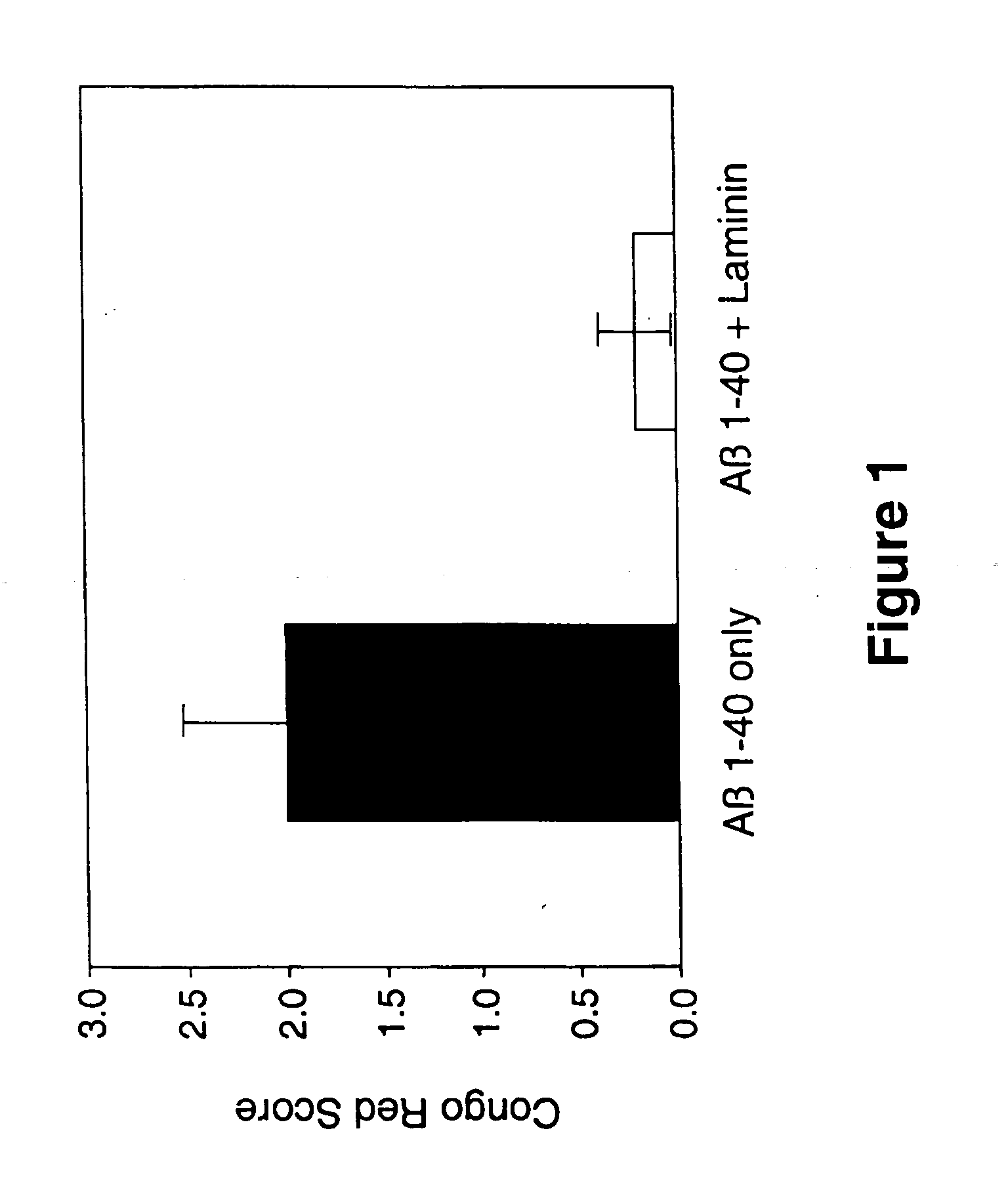
Figure 1 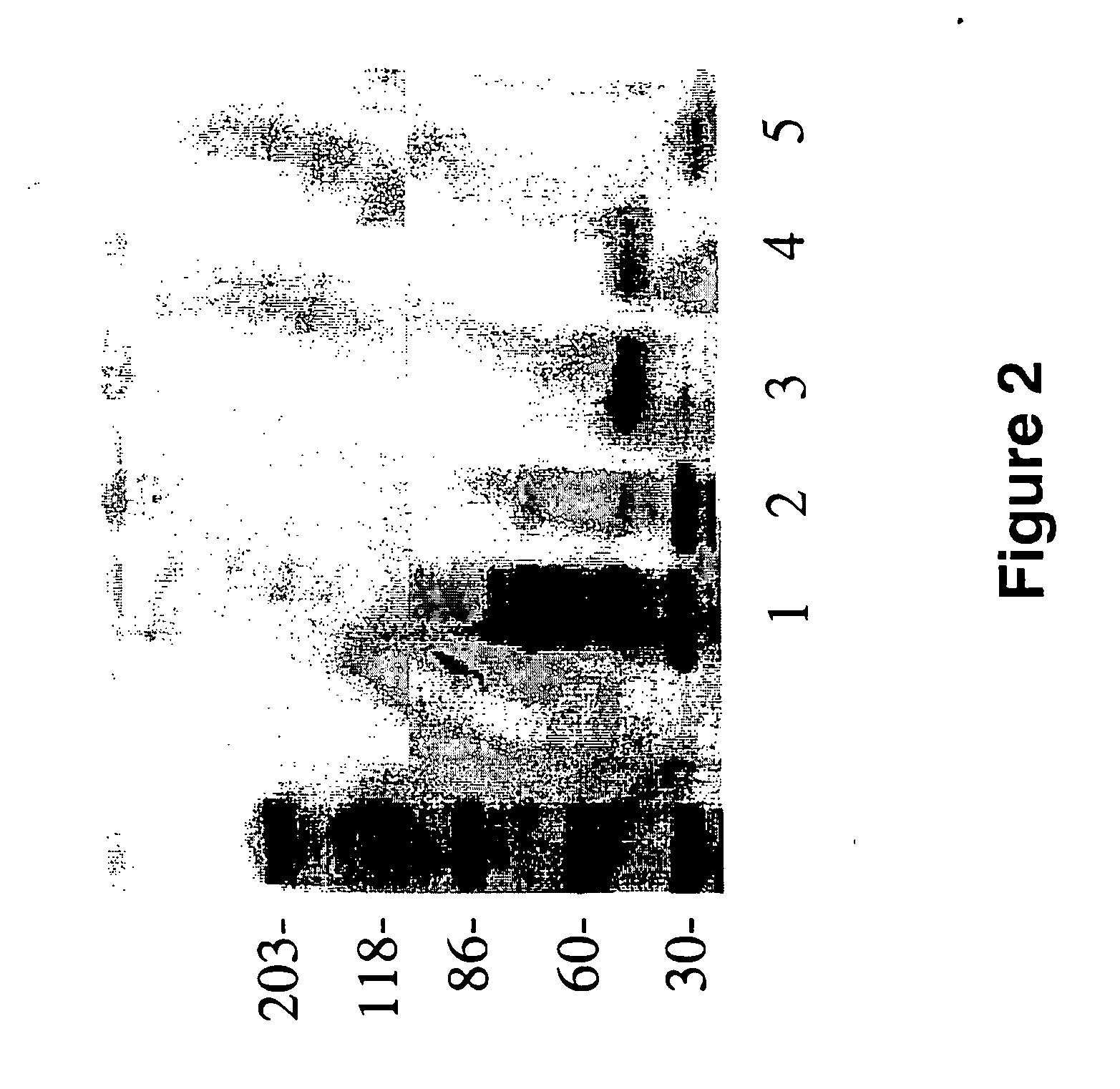
Figure 2 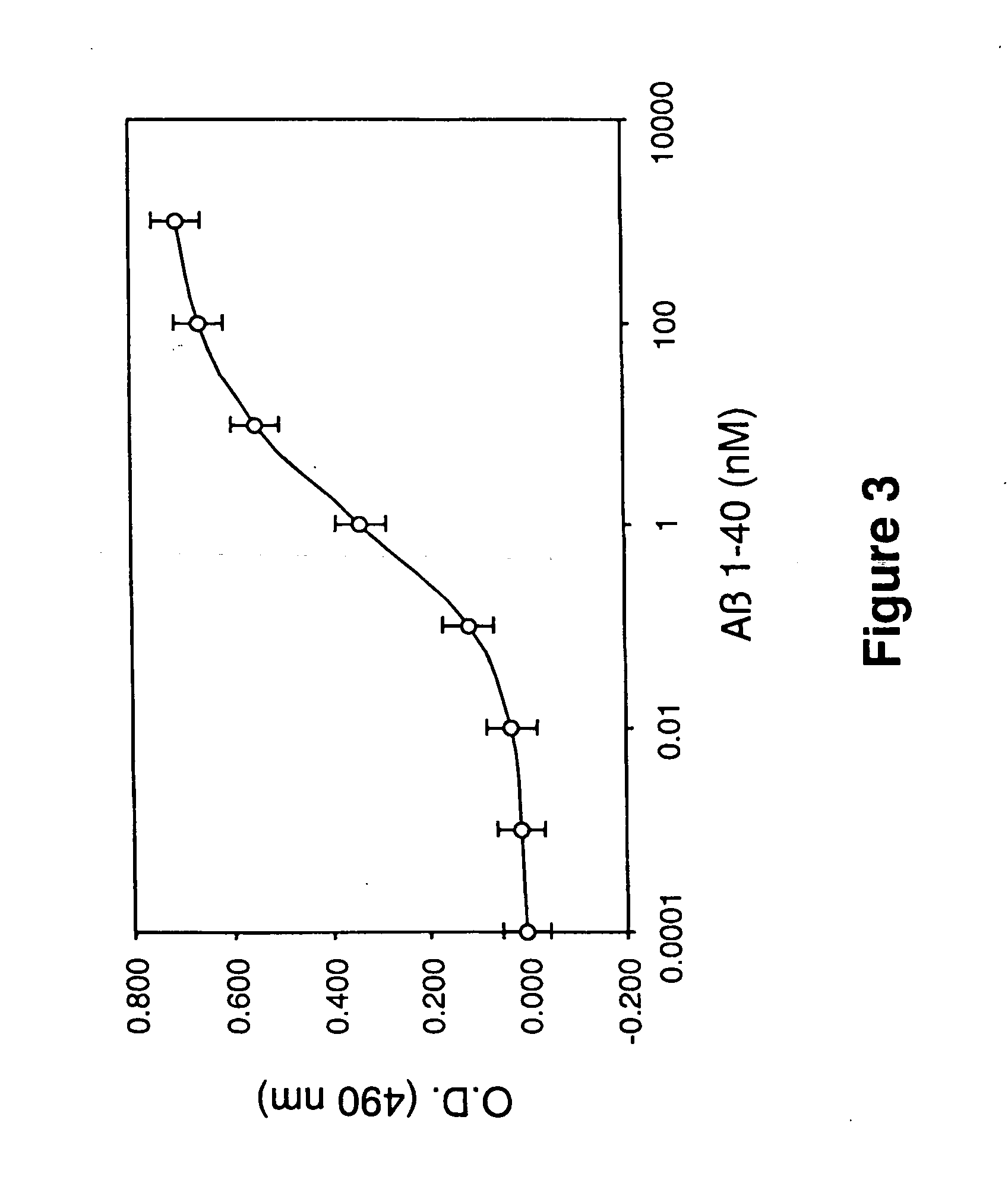
Figure 3
Abstract
Description
[0001] This application is a division of U.S. patent application Ser. No. 09 / 962,955 filed Sep. 24, 2001, which is a continuation-in-part of U.S. patent application Ser. No. 09 / 938,275 filed Aug. 22, 2001, which is a continuation of U.S. patent application Ser. No. 08 / 947,057 filed Oct. 8, 1997 which claimed priority to U.S. Provisional Application 60 / 027,981 filed Oct. 8, 1996.
[0002] This invention was made with government support under 1 R43 AG17787-01 awarded by the National Institute on Aging. The Government has certain rights in the invention.TECHNICAL FIELD
[0003] This invention relates to the use of laminin peptides and laminin derivatives for the treatment of Alzheimer's disease and other beta-amyloid protein fibrillogenesis disorders. This invention also relates to the use of laminin peptides and laminin derivatives as amyloid-fibril forming agents and compounds that are able to enhance Aβ fibrillogenesis. BACKGROUND OF THE INVENTION
[0004] Background for therapeutic use of...
Examples
example 1
[0095] Inhibition of Fibrillar Aβ Amyloid Deposition in Rodent Hippocampus by Laminin
[0096] The effects of laminin on Aβ amyloid deposition in brain was evaluated using a rodent model (Snow et al, Neuron 12: 219-234, 1994). In this study, 50 μg Aβ 1-42 (Bachem, Torrance, Calif., U.S.A.), or 50 μg Aβ 1-42+50 μg laminin (Sigma Chemical Co., St. Louis, Mo., U.S.A.; EHS tumor), were infused (using Alzet osmotic pumps) directly into hippocampus for 1 week in adult Sprague-Dawley rats (250-300 grams; 3 months old; n=8 per group). In addition, to assess the effects of laminin on neuronal cell viability and integrity, a group of animals was infused with only 50 μg of laminin. Infusion of Aβ only into hippocampus for 1 week using Alzet osmotic pumps produced amyloid deposits that stained extensively with Congo red (and demonstrated a red / green birefringence when viewed under polarized light). In contrast, co-infusion of Aβ+laminin prevented deposition of fibrillar Aβ amyloid, as shown by a ...
example 2
[0097] Purification of a ˜55 kDa Fragment and ˜30-kDa Sub-Fragment of Laminin that Binds Aβ
[0098] To generate enough of the ˜55 kDa laminin-fragment, and its ˜30 kDa sub-fragment, 10 mg of EHS mouse laminin (Sigma Chemical Co., St. Louis, Mo., U.S.A.) was digested with elastase as described in Example 7 (of U.S. patent application Ser. No. 08 / 947,057; filed on Oct. 7, 1997 and hereby incorporated as reference herein) and purified by electrophoresis. Briefly, intact EHS laminin was left undigested, or digested with elastase (Sigma Chemical Co., St. Louis, Mo., U.S.A.) prior to SDS-PAGE. More specifically, 0.1 mg of elastase in 200 μl of 50 mM Tris-HCl buffer (pH 8.0) were added to 5 ml of laminin (10 mg) in the same buffer and incubated at 37° C. for 2.5 hr, and a 5 μl aliquot was taken for analysis, whereas the remainder was immediately frozen at −80° C. These conditions have been worked out for optimal generation of the ˜55 kDa laminin fragment, and the generation of the ˜55 kDa la...
example 3
[0100] Isolated Laminin Globular Domains Bind Aβ (1-40) with a Single Affinity
[0101] Since the staining of the ˜55 kDa fragment of laminin by ligand blot analysis using Aβ 1-40 as a probe was so dramatic (not shown), we hypothesized that the ˜55 kDa fragment of laminin (which contains primarily laminin globular domains) must bind very tightly to Aβ. To study the interaction of Aβ (1-40) with the ˜55 kDa laminin fragment, a solid phase binding immunoassay was used, whereby the isolated ˜55 kDa laminin fragment was immobilized on microtiter plates and incubated with increasing concentrations of Aβ (1-40). Aβ 1-40 was found to bind the ˜55 kDa laminin-fragment in a concentration dependent and saturable fashion, with an apparent single dissociation constant of Kd=2.0×10⁻⁹ M (FIG. 3). When the amount of Aβ (1-40) bound to the wells was decreased, the Kd values obtained were identical, indicating an accurate Kd determination (Engel and Schalch, Mol. Immunol. 17: 675-680, 1980; Fox et al,...