

Apparatus and methods for control of waste treatment processes
Patent Information
- Authority / Receiving Office
- US · United States
- Current Assignee / Owner
- Publication Date
- 2006-01-05
- Estimated Expiration
- Not applicable · inactive patent
Smart Images
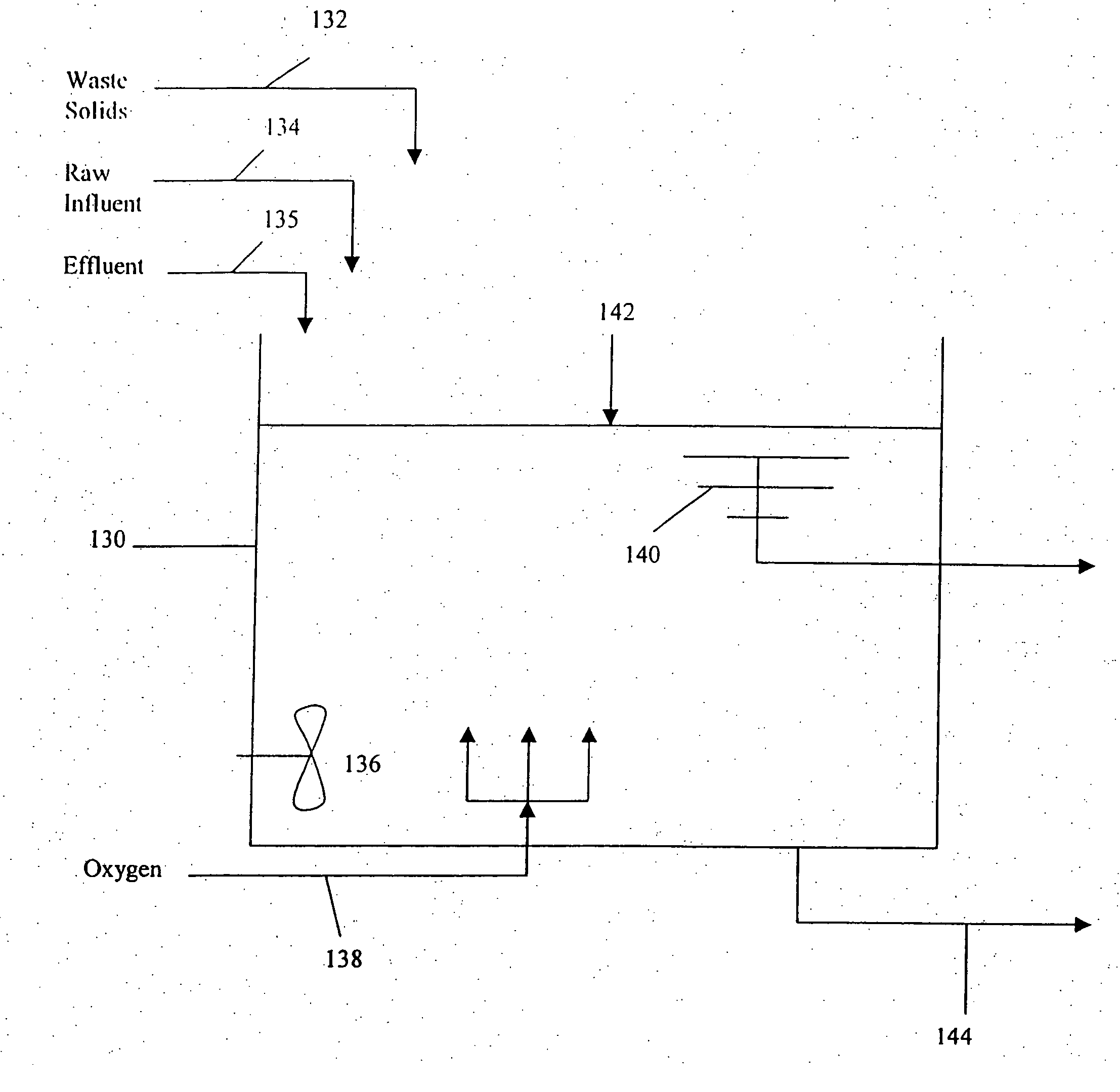
Figure 1 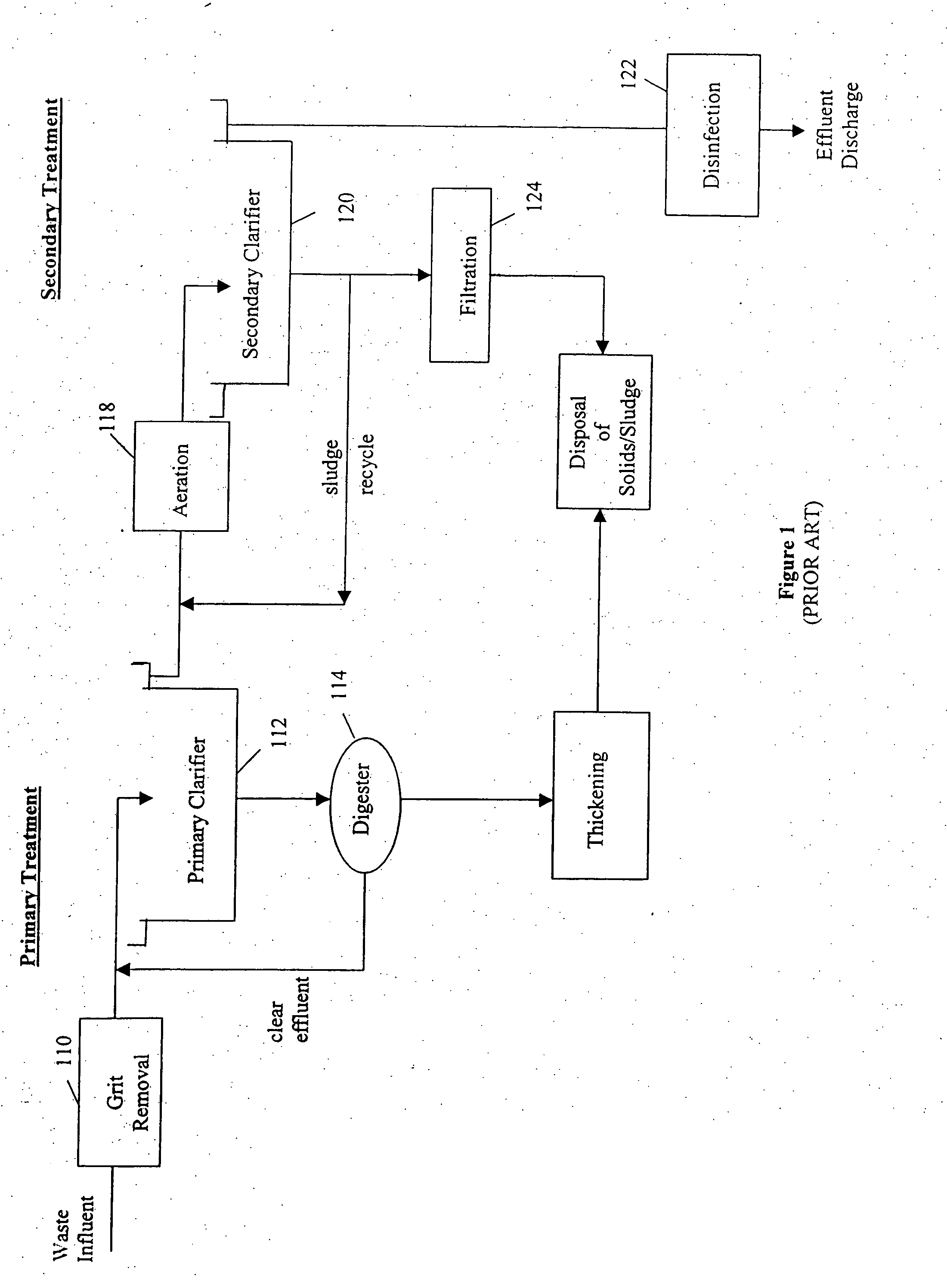
Figure 2 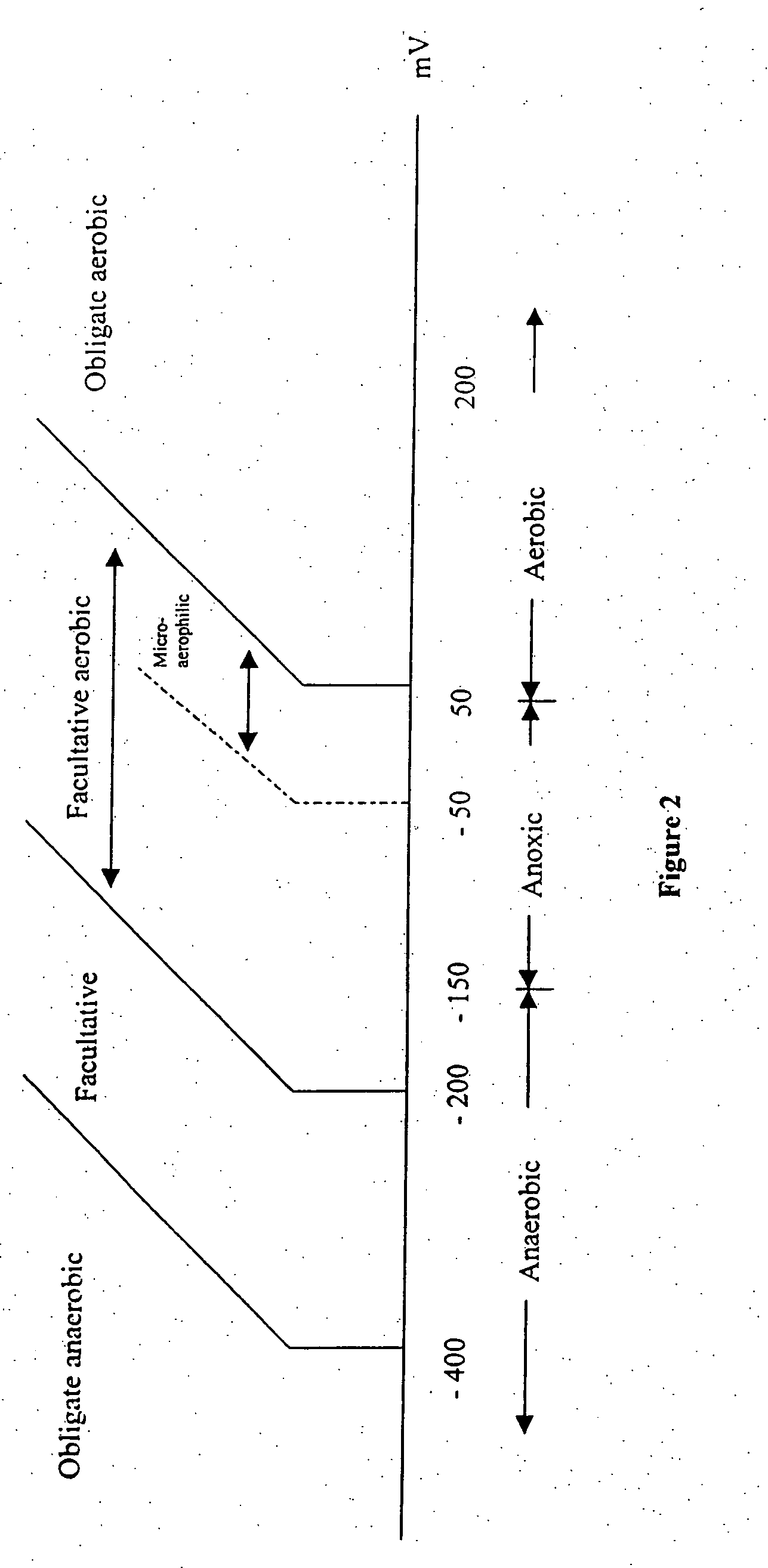
Figure 3
Abstract
Description
RELATED APPLICATIONS
[0001] This application is a continuation-in-part of U.S. Ser. No. 10 / 985,265, filed on Nov. 10, 2004, which is a continuation of U.S. Ser. No. 10 / 658,575, filed on Sep. 9, 2003 (now U.S. Pat. No. 6,833,074), which is a continuation of U.S. Ser. No. 09 / 798,313, filed on Mar. 2, 2001 (now U.S. Pat. No. 6,660,163). The entire disclosures of these applications are incorporated herein by reference.BACKGROUND OF THE INVENTION
[0002] 1. Field of the Invention
[0003] The present invention relates to biological treatment of contaminated liquids and effluent, and, more particularly, to methods and apparatus for the creation and / or application of customized biology populations to biological processes, such as wastewater treatment.
[0004] 2. Description of the Related Art
[0005] Before being discharged to the environment, contaminated waters from municipal, commercial, and industrial sources frequently must be treated to prevent harmful impacts. The treatment processes use...
Examples
example 1
[0059] The following procedure selects for facultative anaerobes, independent of nitrifiers, at the expense of obligate aerobes, to specifically augment biology that rapidly breaks down particulate cBOD into soluble cBOD for utilization. [0060] 1. Fill tank 130 with a combination of excess activated sludge and raw influent, providing a nominal suspended solids concentration of between 3,000 and 5,000 mg / liter. [0061] 2. Mix contents of tank 130 using mixer 136 without aeration until the ORP is anaerobic, but not so low as to evoke sulfide generation by sulfate reducing bacteria, should there be sulfate present in the raw influent or waste sludge. The mixture can also settle (without mixing) to accelerate the drop in ORP. This mixing and settling should last for about 4 to 8 hours. [0062] 3. Stop the mixing and allow the mixture to settle, providing a decantable volume of at least 25% of the volume of tank 130. This will require about 2 to 4 hours. [0063] 4. Remove the high cBOD, hig...
example 2
[0067] The following procedure selects for facultative anaerobes and aerobes, preserving nitrifiers, at the expense of obligate aerobes, to specifically augment biology low in yield. This is particularly useful for the minimization of residual solids. [0068] 1. Fill tank 130 with a combination of excess activated sludge and raw influent, providing a nominal suspended solids concentration of between 5,000 and 7,500 mg / liter. [0069] 2. Mix contents of tank 130 using mixer 136 without aeration and / or settle until the ORP is anaerobic, but not so low as to evoke sulfide generation by sulfate reducing bacteria, should there be sulfate in the raw influent or waste sludge. This mixing should last for between 8 hours and 3 days. [0070] 3. Continue mixing with mixer 136, and aerate tank 130“aggressively” until the ORP is >100 mV for 24 hours, >150 mV for 12 hours, or >200 mV for 4 hours. [0071] 4. Stop the aeration but continue mixing until the ORP is anaerobic for at least 48 hours. If the ...
example 3
[0079] The following procedure selects for facultative aerobes and nitrifiers to reduce high yield organisms, and improves the nitrification / denitrification capacity. If available, a recycle stream high in ammonia and cBOD content can be used in place of, or in combination with the raw influent, as long as the cBOD (mg / liter) to NH3—N (mg / liter) ratio is greater than 3. Note that this ratio is referenced to ammonia nitrogen, not Total Kjeldahl Nitrogen (TKN). [0080] 1. Fill tank 130 to approximately 75% full with activated sludge at a suspended solids concentration of between 2,500 and 7,500 mg / liter. [0081] 2. Mix contents of tank 130 using mixer 136 and with aeration and / or settle until the ORP is aerobic and the ammonia content is [0082] 3. Stop the aeration. [0083] 4. With continued mixing, fill about another 5 to 10% of the volume of tank 130 with additional raw influent. Monitor the ORP and nitrate concentrations until the nitrate concentrations are [0084] 5. Continue to mix t...