
System and method for cache-friendly volumetric image memory storage
Patent Information
- Authority / Receiving Office
- US · United States
- Current Assignee / Owner
- Publication Date
- 2006-01-26
- Estimated Expiration
- Not applicable · inactive patent
Smart Images
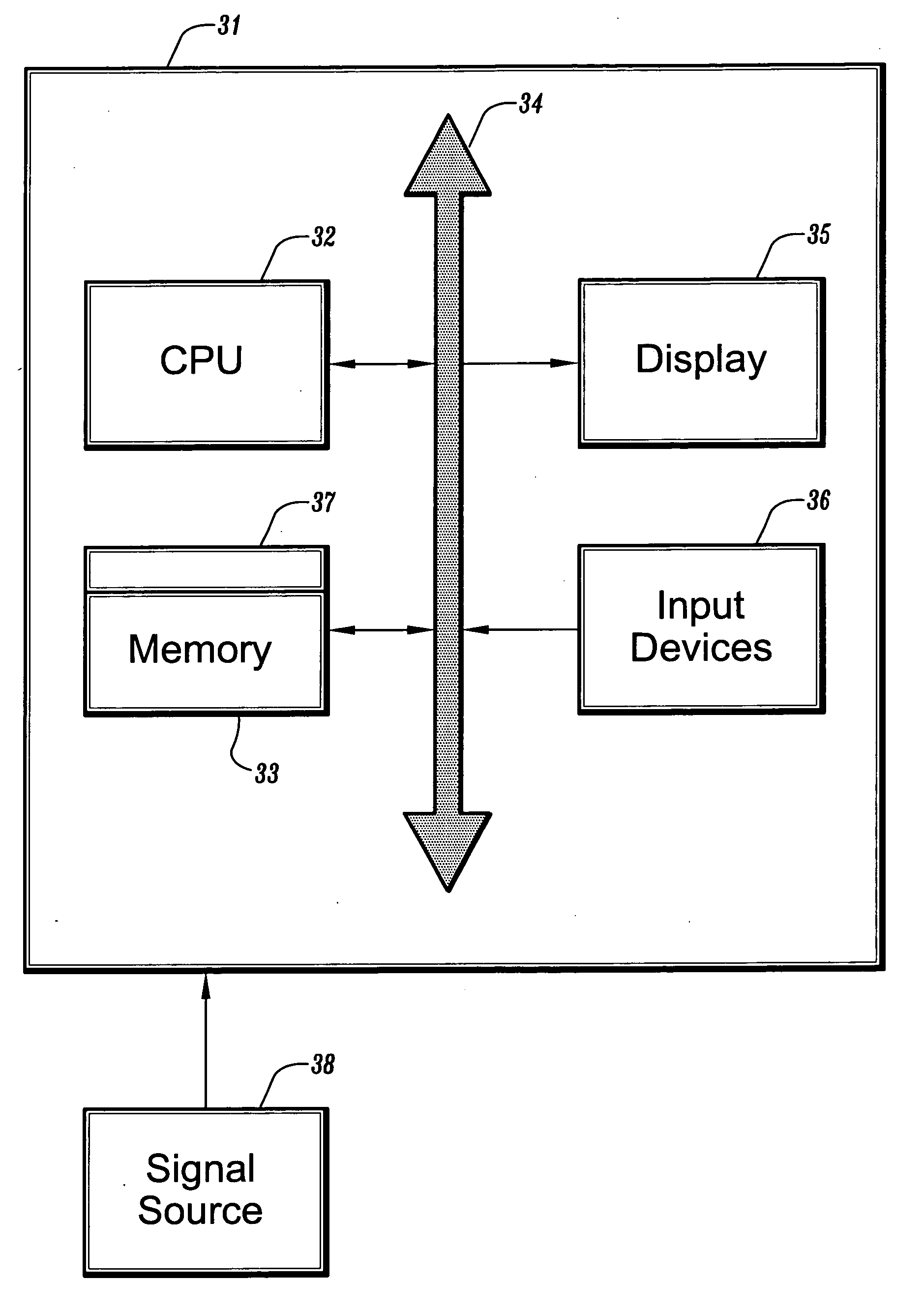
Figure 1 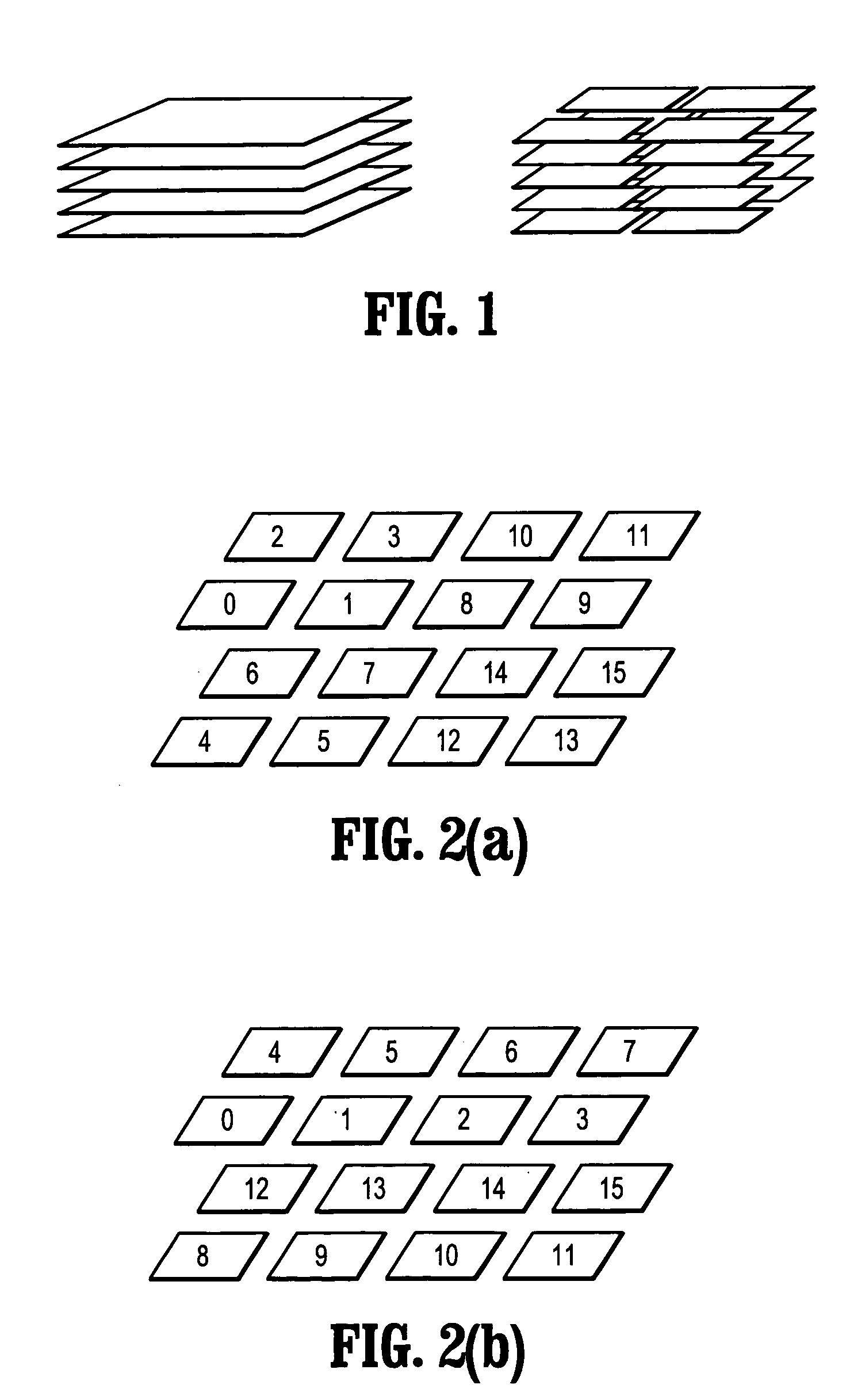
Figure 2 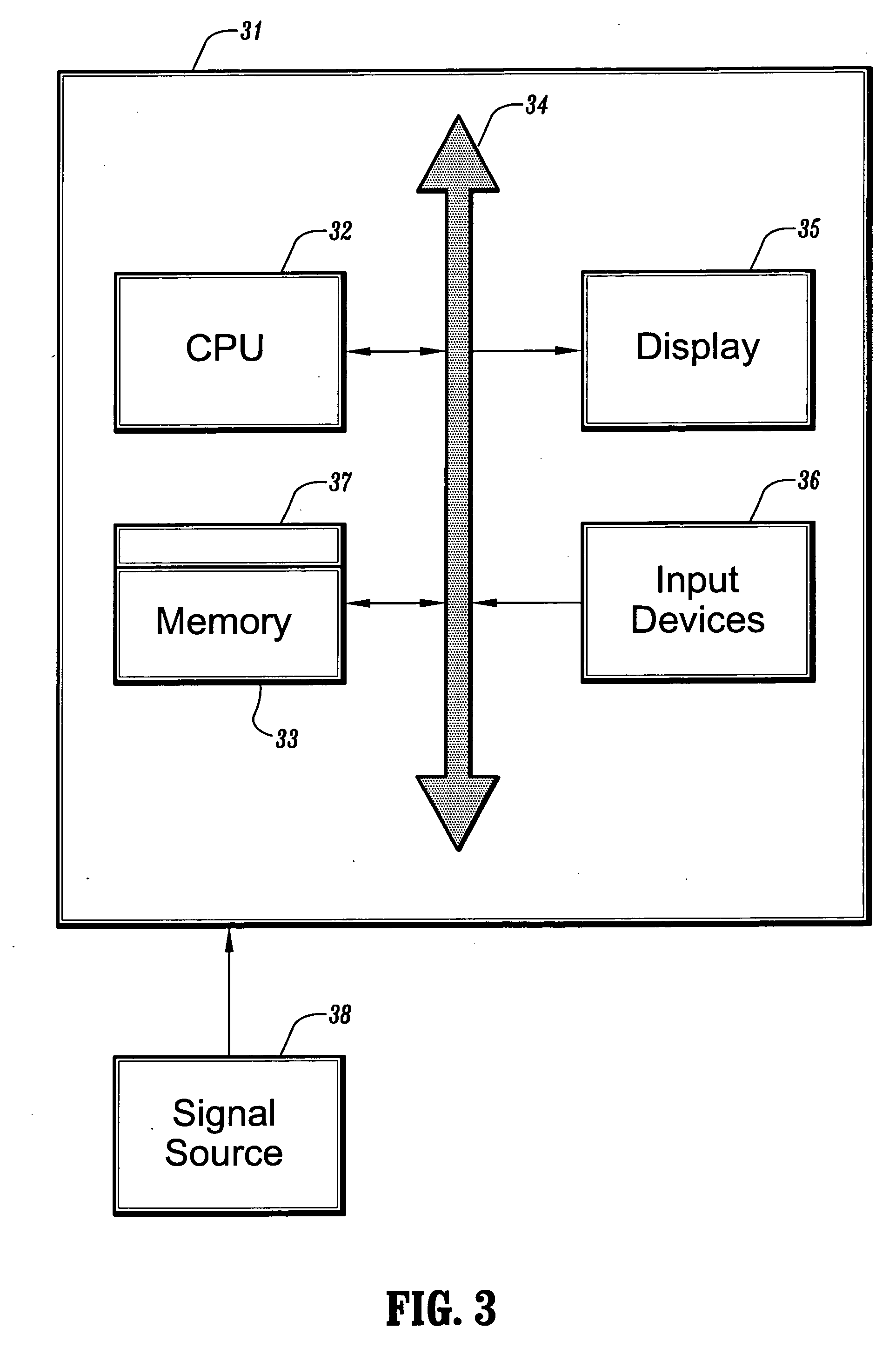
Figure 3
Abstract
Description
CROSS REFERENCE TO RELATED UNITED STATES APPLICATIONS
[0001] This application claims priority from “Cache-Friendly Volumetric Image Memory Storage”, U.S. Provisional Application No. 60 / 589,841 of Cathier, et al., filed Jul. 21, 2004, the contents of which are incorporated herein by reference.TECHNICAL FIELD
[0002] This invention relates to cache storage management in medical image processing. DISCUSSION OF THE RELATED ART
[0003] Efficiency is an important factor for any real-life application development. In the field of image processing, the success of many theories is related to the existence of fast algorithms, e.g. Fast Fourier transforms or wavelets. Even simple concepts like distance transforms are still an active research field for increasing computation times.
[0004] When dealing with large volumetric images, however, a hardware issue known as cache-misses appears, and may become a bottleneck of an algorithm. In many cases, independently of the particular algorithm being used...
Examples
first embodiment
[0045] In the invention for non-dyadic image sizes, a straightforward approach to handling an arbitrary image size is to include the image into the smallest dyadic image that can contain it. This can have a disadvantage that much more memory than is actually needed is allocated. In the worst-case scenario, where one or more of the dimensions of the image have a size of 2n+1, a dyadic image of nearly 8 times the size of the original image has to be allocated. In an average case scenario, one can expect to allocate about three times as much memory as is routinely needed.
[0046] In a variation of this embodiment of the invention, a way to limit this supervolume cost it to limit an optimal storage ordering scheme to a fixed number of less significant bits. For example, an optimal storage ordering scheme can be limited to the last 3 bits, and a lexicographical order can then be used on these cubes. The offset scheme becomes
offset(x,y,z)=(x+Nx×(y+Ny×z))×23×3+(z3y3x3z2y2x2z1y1x1)
where th...
second embodiment
[0048] According to the invention for non-dyadic image sizes, one ordering scheme that minimizes the supervolume involves dividing the image into smaller dyadic cubes. If the sub-cube fits entirely inside the image, then an optimal storage ordering scheme applies. If not, then another order applies, such as the standard lexicographic ordering scheme.
[0049] Another embodiment of the invention that minimizes the use of a supervolume to that necessary to contain the original volumetric data starts from an optimal storage order for a cubic dyadic image. Recall that the offset for this case can be defined by the formula offset(x,y,z)=∑i(23ixi+23i+1yi+23i+2zi).
Note that the coefficient associated with a coordinate bit corresponds to the number of elements that can be scanned up to that bit, so that an increment of this bit yields a jump of the size of this coefficient. A modification of this formula according to this embodiment of the invention involves defining
└x┘G=x−x mod G
...