
Achromatic imaging lens with extended depth of focus
a technology of achromatic imaging and depth of focus, applied in the field of optics, can solve the problems of large aperture, large lateral resolution, large numerical aperture, etc., and achieve the effects of reducing chromatic aberration of incident light, extending depth of focus, and high lateral resolution of incident ligh
Patent Information
- Authority / Receiving Office
- US · United States
- Patent Type
- Applications(United States)
- Current Assignee / Owner
- Publication Date
- 2006-04-20
- Estimated Expiration
- Not applicable · inactive patent
Smart Images
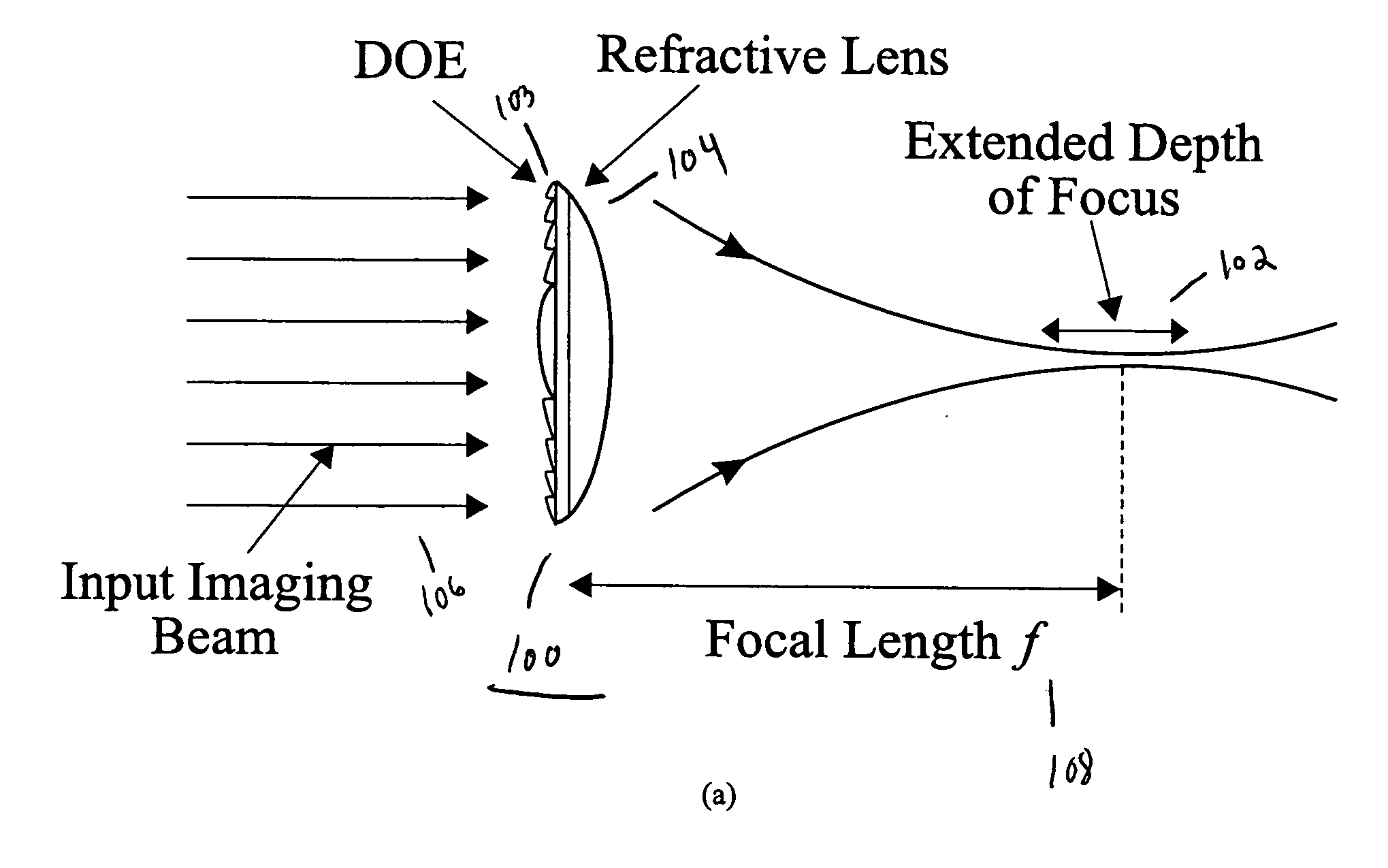
Figure 1 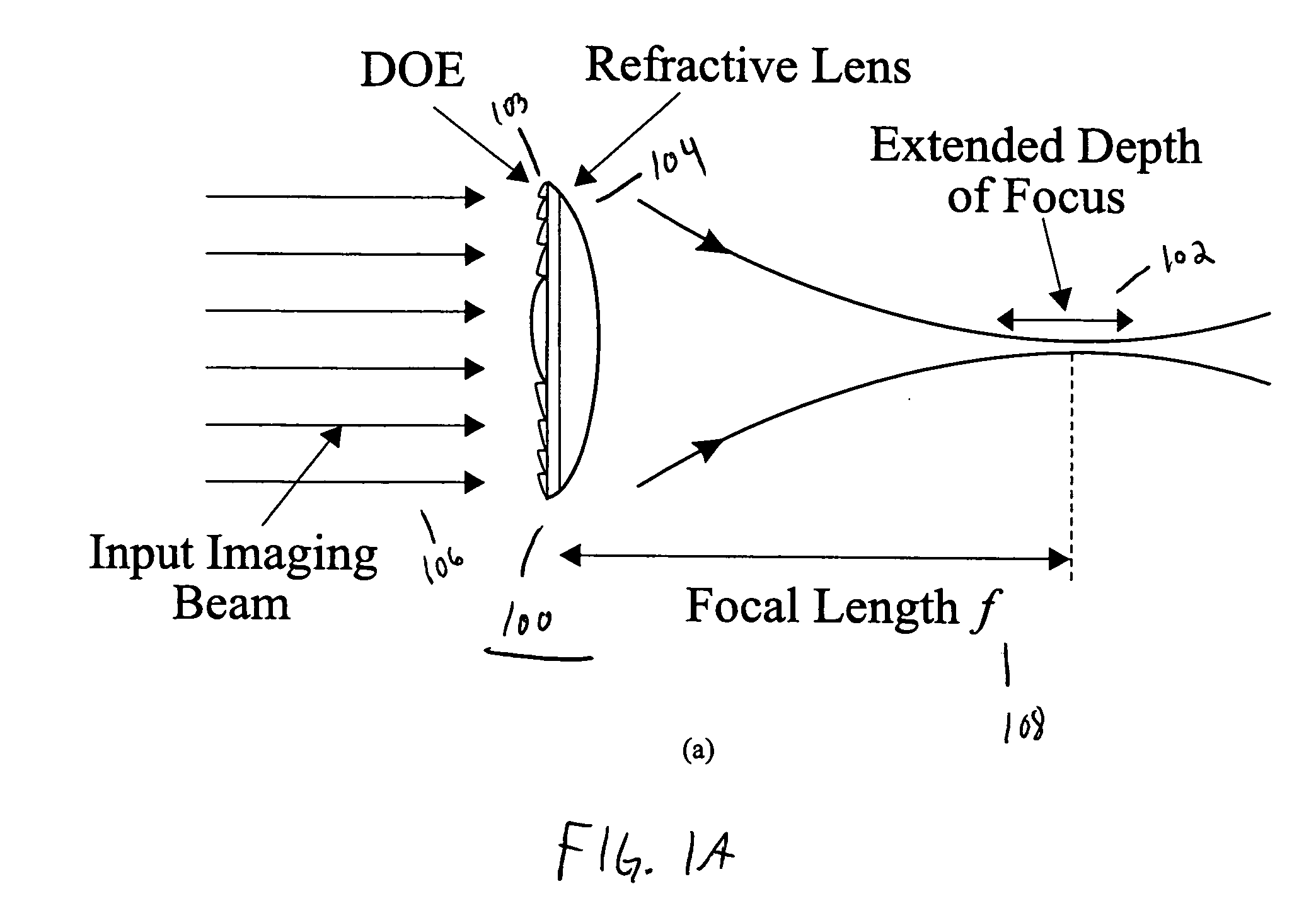
Figure 2 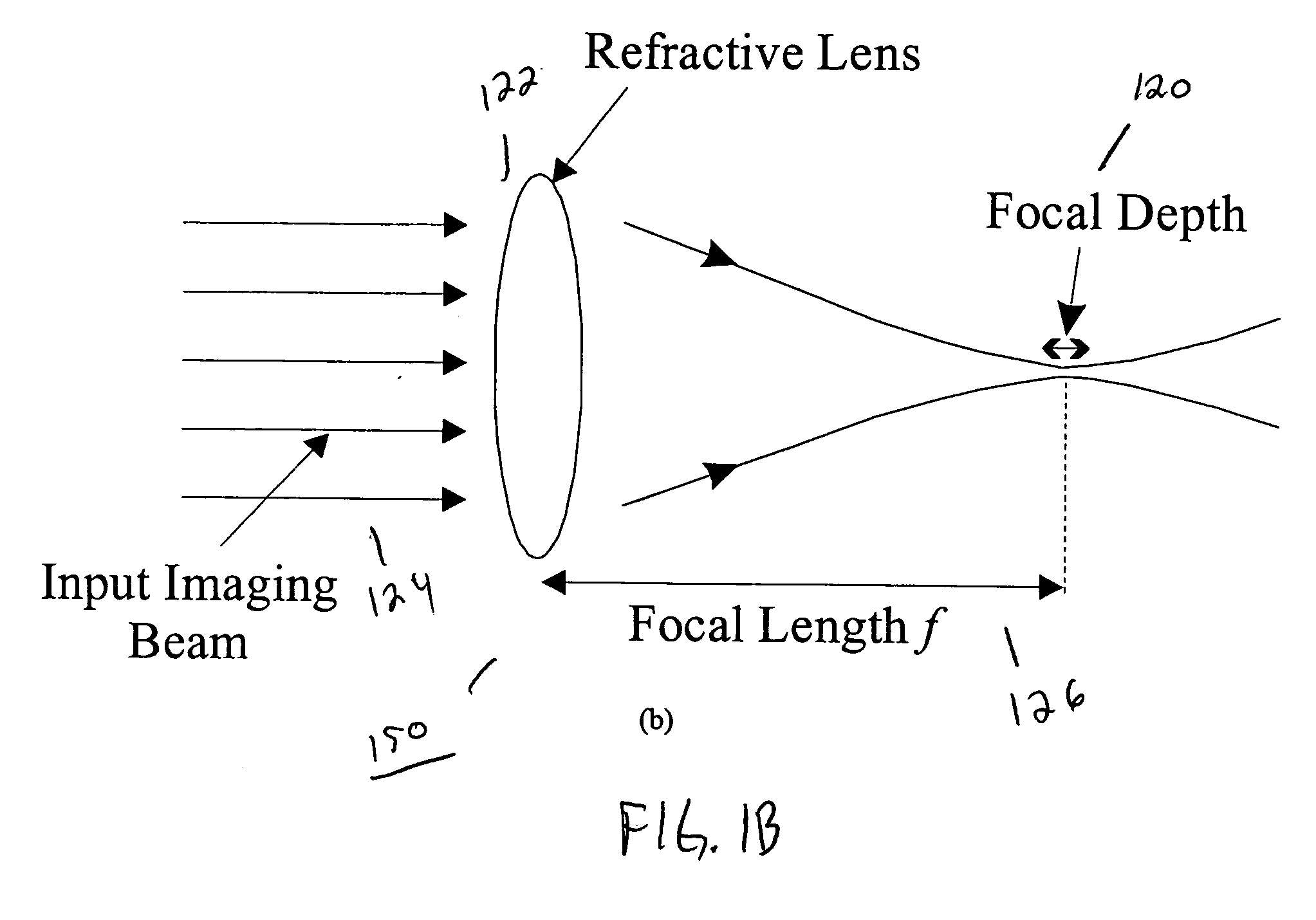
Figure 3
Abstract
Description
STATEMENT REGARDING FEDERALLY SPONSORED-RESEARCH OR DEVELOPMENT
[0001] This invention was made with U.S. Government support under contract DMI-0319169 awarded by the National Science Foundation. The Government has certain rights in the invention.CROSS-REFERENCE TO RELATED APPLICATIONS
[0002] Not Applicable. INCORPORATION BY REFERENCE OF MATERIAL SUBMITTED ON A COMPACT DISC
[0003] Not Applicable. FIELD OF THE INVENTION
[0004] The invention disclosed broadly relates to the field of optics and more particularly relates to the field of optical imaging lenses. BACKGROUND OF THE INVENTION
[0005] Optical systems that simultaneously exhibit long focal depth and high lateral resolution find considerable applications in many different fields, e.g., microscopy, optical alignment, imaging, and optical interconnection. However, according to scaling and paraxial approximations, conventional optical lenses obey the following well-known relationships: ΔX=k1λ / NA, ΔZ=k2λ / NA2, (1) where ΔX is the mi...
Examples
Embodiment Construction
[0039] The present invention discloses a design for an achromatic hybrid refractive-diffractive lens that extends the depth of focus (DOF) without sacrificing the system's transverse resolution. The extended DOF lens combines a specially designed DOE that generates a long range of pseudo-non-diffractive rays with a corresponding refractive lens to diminish chromatic aberrations in the desired spectral band. Utilizing a hybrid refractive-diffractive device configuration simultaneously preserves the favorable properties of both the diffractive element (long focal depth) and the refractive lens (low chromatic aberration, high-energy concentration).
[0040] The present invention can be used with various optical wavebands for focal depth extension. The present invention operates in the entire visible waveband and extends the DOF of a lens tenfold, as shown in experimental results, without decreasing any lateral resolution. FIG. 1A shows a schematic of the hybrid lens 100 of the present in...