
Method for dynamically adjusting the data transfer order of PCI express root ports
Patent Information
- Authority / Receiving Office
- US · United States
- Current Assignee / Owner
- Publication Date
- 2006-05-18
- Estimated Expiration
- Not applicable · inactive patent
Smart Images
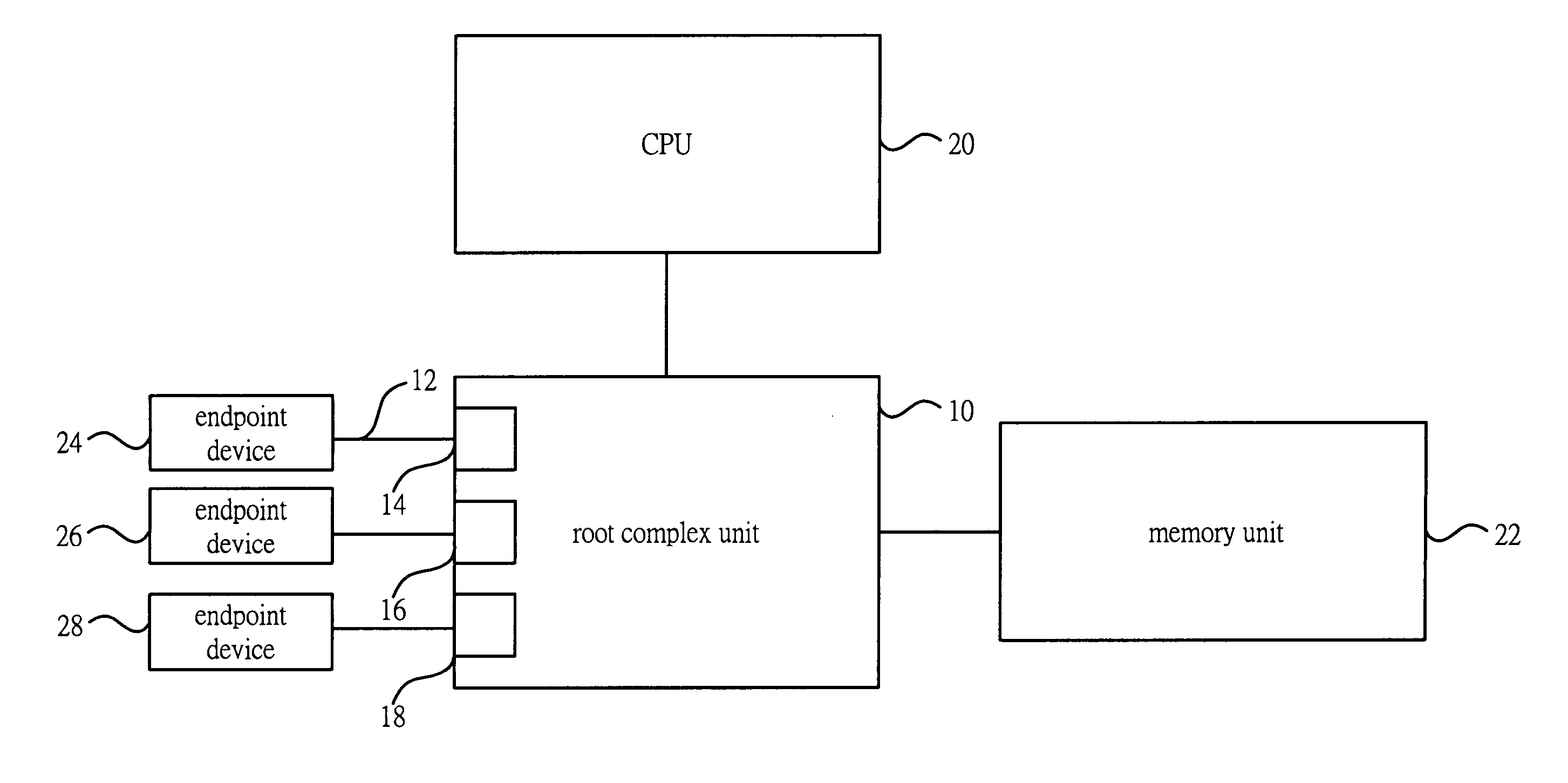
Figure 1 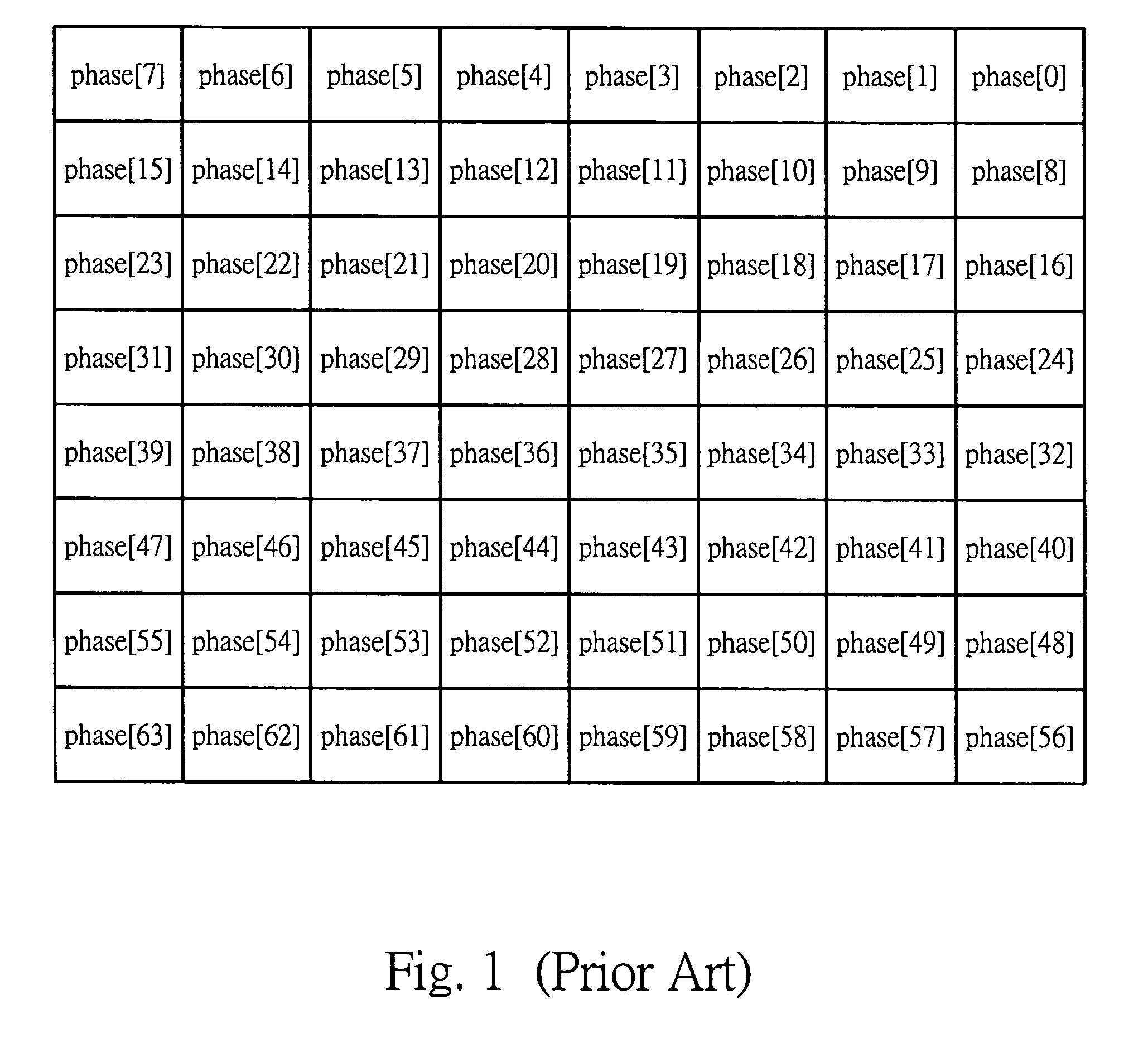
Figure 2 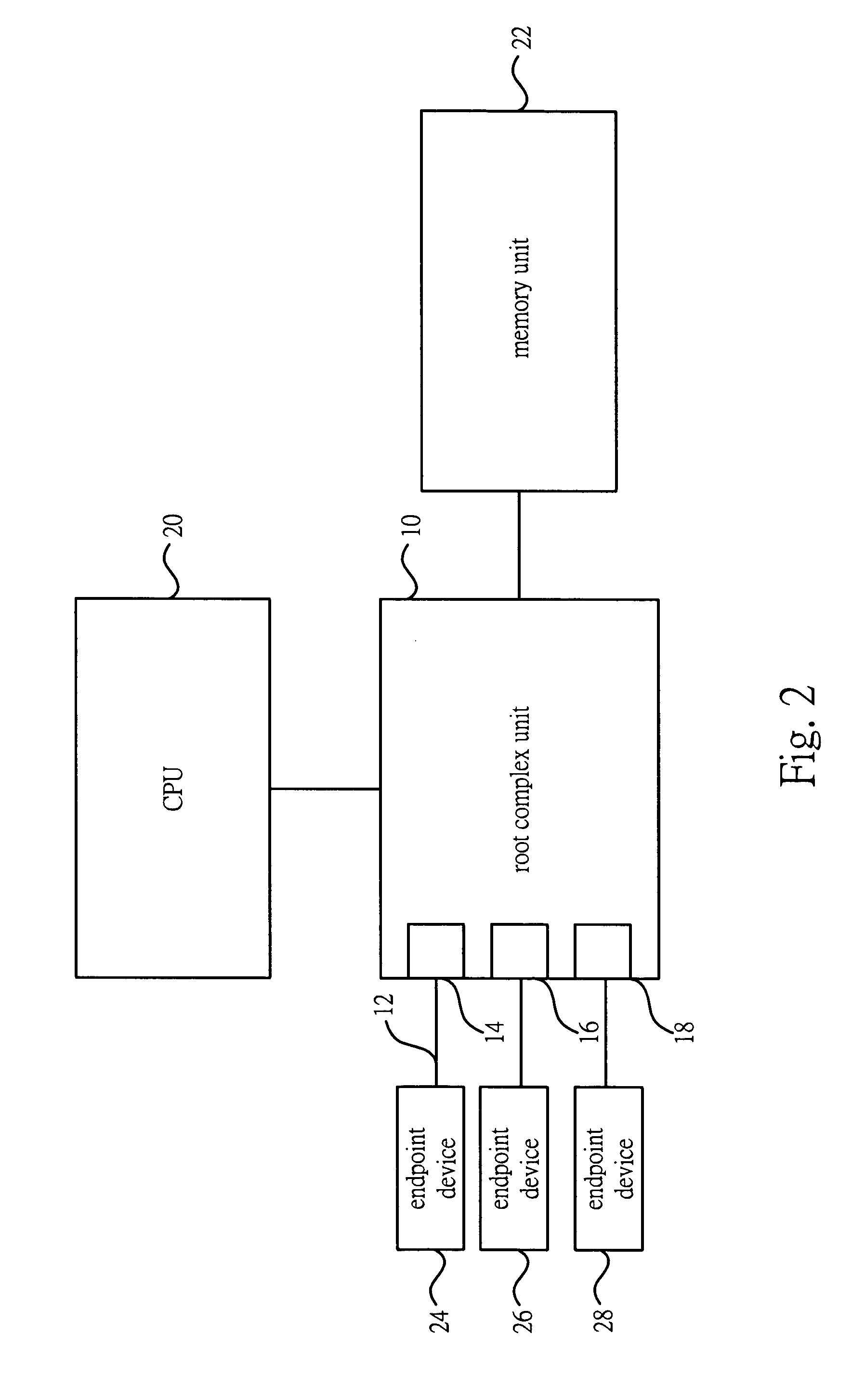
Figure 3
Abstract
Description
BACKGROUND OF THE INVENTION
[0001] 1. Field of the Invention
[0002] The present invention is related to an input / output bus of the Peripheral Component Interconnect Express (PCI Express) standard, and more particularly, to a method for dynamically adjusting the data transfer order of PCI Express root ports. This method can be used to dynamically update the port arbitration table according to the flow control norm. Thus, it can improve the flexibility of the data transfer of the PCI Express root ports.
[0003] 2. Description of Related Art
[0004] With the rapid progress of computer systems, the functionality of the computer systems becomes better and better. The best improvement is to combine multimedia services with the present computers. Hence, the data transferred in the computer systems nowadays further includes time-related data such as sound or video data. In order to fit in with time-related attributes, the computer systems should transfer these time-related data in a fixed tim...
Examples
Embodiment Construction
[0021] The main concept of the present invention is to use the flow control norm of the PCI Express standard to find the root ports with larger data transfer volumes. Thereby, the present invention can dynamically update the port arbitration table to make the root ports with larger data transfer volumes have a high priority for data transfer so that the data transfer of the root ports can have better flexibility and higher efficiency.
[0022] Reference is made to FIG. 2, which is a block diagram of a PCI Express interface in accordance with a preferred embodiment of the present invention. As shown in FIG. 2, the PCI Express interface includes a root complex unit 10, which is respectively connected to a CPU 20, a memory unit 22 and multiple endpoint devices 24, 26 and 28. Therein, the endpoint devices 24, 26 and 28 are connected to root ports 14, 16 and 18 of the root complex unit 10 via a PCI Express bus 12. When the endpoint devices 24, 26 and 28 need to transmit data to the memory ...