
Prosthetic nucleus apparatus and method
a technology of prosthetic nucleus and nucleus, which is applied in the direction of prosthesis, osteosynthesis devices, spinal implants, etc., can solve the problems of reducing the efficiency so as to achieve the function facilitate pain relief, and restore the height of the intervertebral dis
Patent Information
- Authority / Receiving Office
- US · United States
- Patent Type
- Applications(United States)
- Current Assignee / Owner
- Publication Date
- 2008-01-03
- Estimated Expiration
- Not applicable · inactive patent
Smart Images
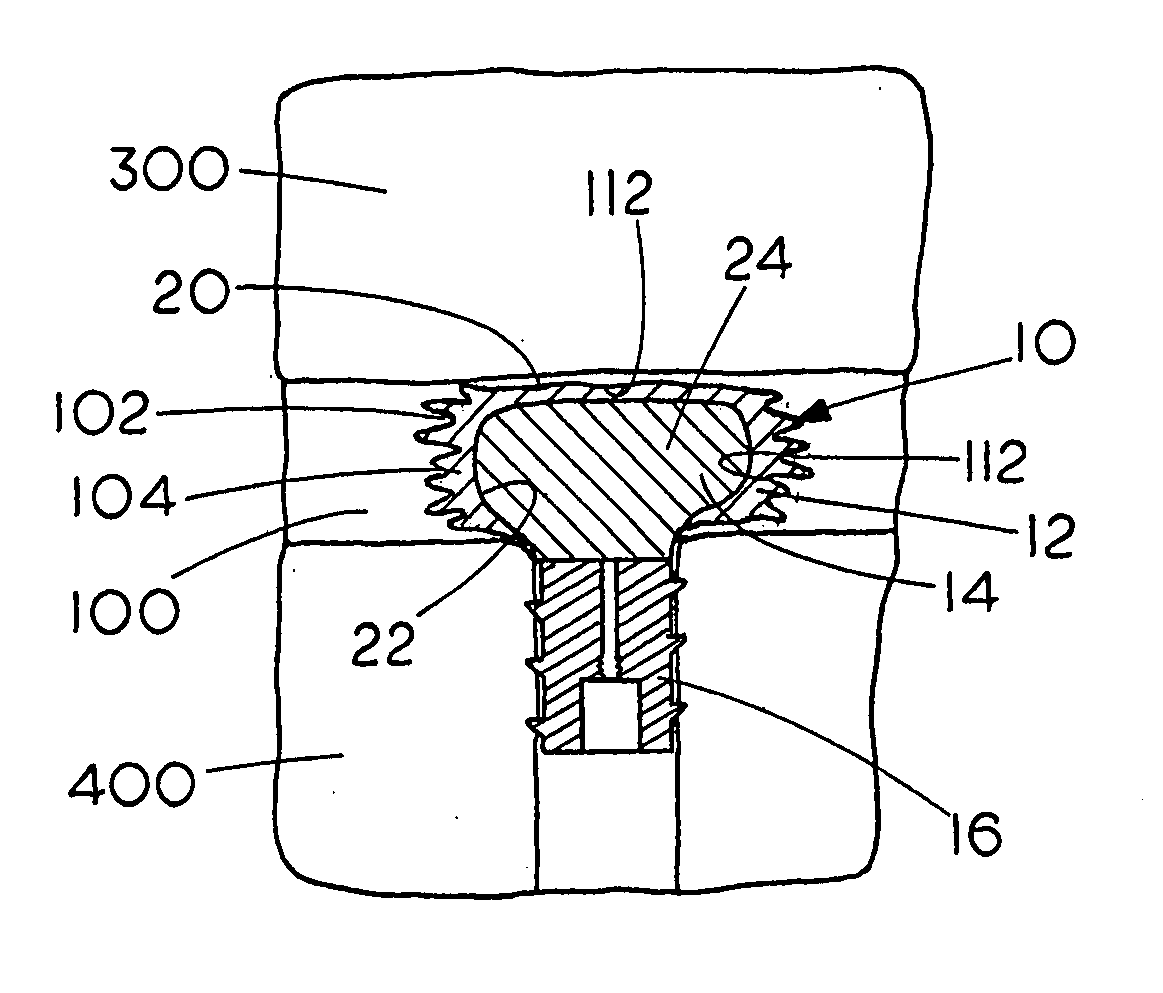
Figure 1 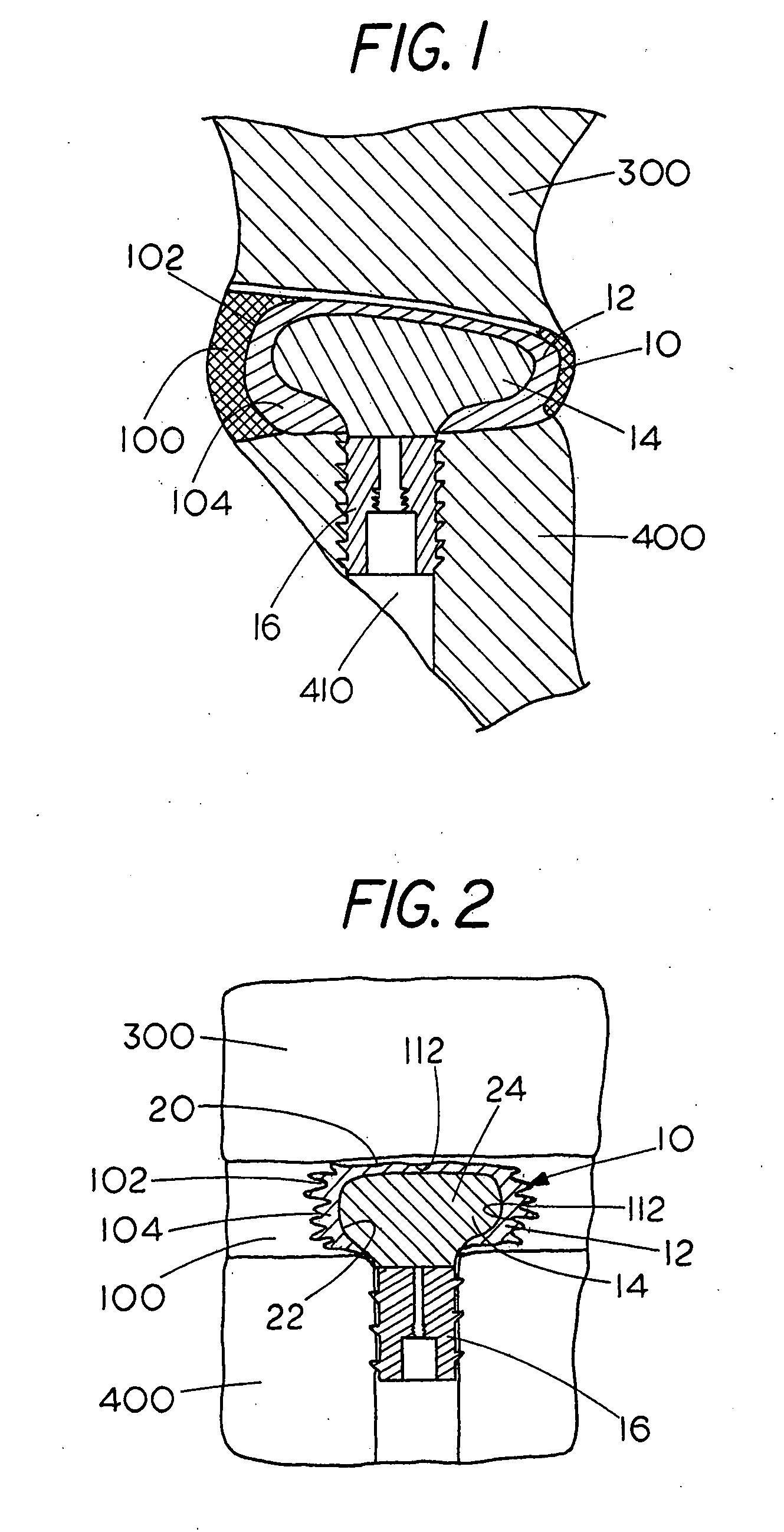
Figure 2 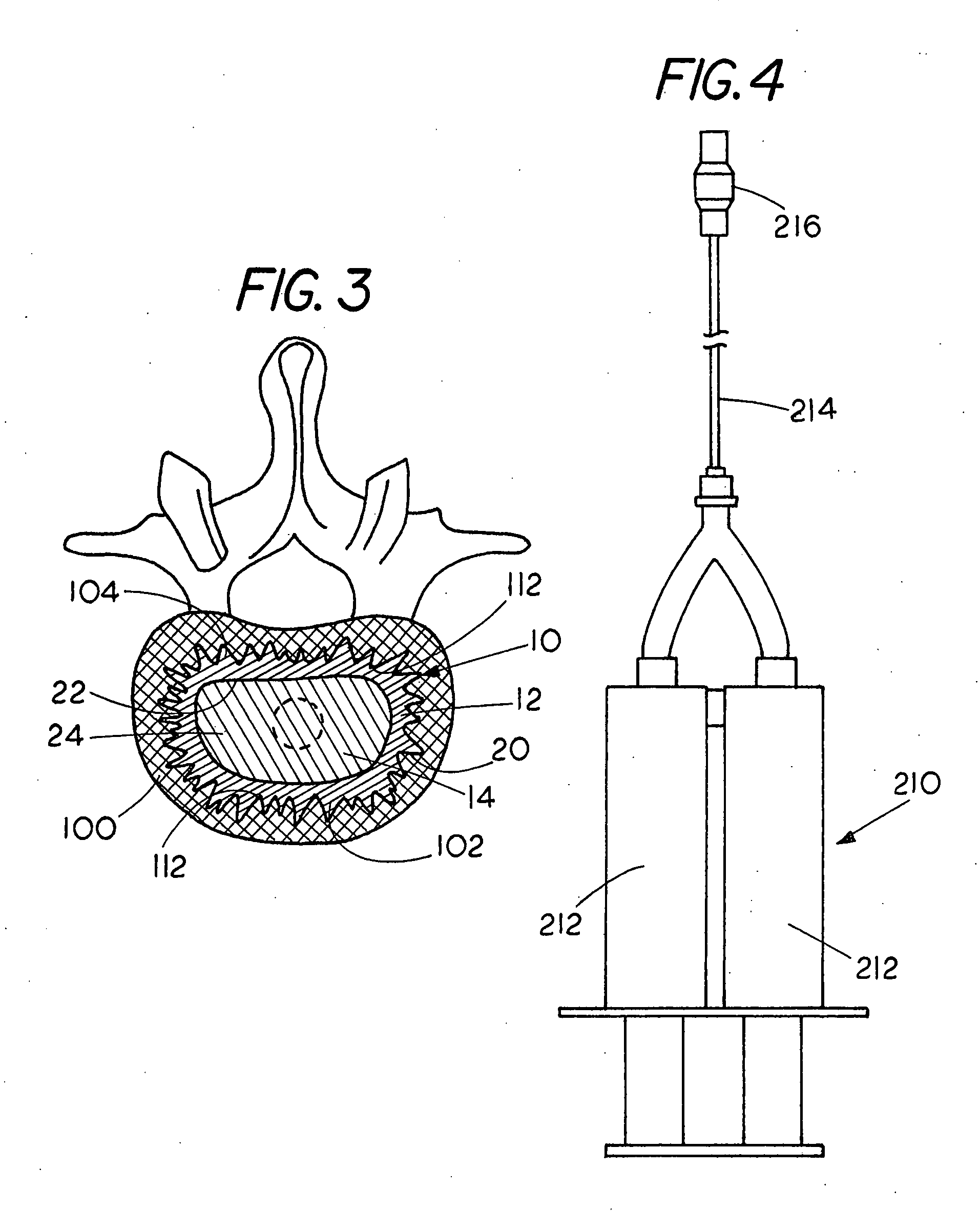
Figure 3
Abstract
Description
CROSS-REFERENCE TO RELATED APPLICATIONS
[0001] The present U.S. patent application is a divisional of U.S. patent application Ser. No. 11 / 199,541 which claims priority and benefits from co-pending and commonly assigned U.S. Provisional Patent Application No. 60 / 599,989 filed Aug. 9, 2004, and is a continuation-in-part of co-pending U.S. patent application Ser. Nos. 10 / 972,184; 10 / 972,039; and 10 / 972,040; 10 / 972,176; and U.S. application Ser. Nos. 10 / 972,065; 10 / 971,779; 10 / 971,781; 10 / 971,731; 10 / 972,077; 10 / 971,765; 10 / 971,775; 10 / 972,299; and 10 / 971,780; all of which were filed on Oct. 22, 2004 and which claim priority and benefits from U.S. Provisional Patent Application Nos. 60 / 558,069 filed Mar. 31, 2004 and 60 / 513,899 filed Oct. 23, 2003, which claim the benefit of priority from commonly assigned U.S. Pat. No. 6,921,403 issued on Jul. 26, 2005, which is a continuation-in-part of commonly assigned U.S. Pat. No. 6,899,716 issued on May 31, 2005, which is a continuation-in-part o...
Examples
Embodiment Construction
[0051] Embodiments of prosthetic nucleus apparatus 10 and delivery apparatus 210 and their components for introduction of a prosthetic nucleus apparatus 10 are generally illustrated throughout the figures. A prosthetic nucleus apparatus 10 in accordance with the present invention is configured to be positioned within a de-nucleuated space 104 within an intervertebral disc 100. In one aspect, the prosthetic nucleus apparatus 10 is configured to at least in part replace at least one function of the native nucleus pulposus. Prosthetic nucleus apparatus 10 generally includes a barrier sealant membrane 12 and a prosthetic nucleus material 14. In an aspect of the present invention, a plug 16 may also be provided. The prosthetic nucleus apparatus 10 is positioned within the de-nucleated space 104 and will typically exert a force against the vertebral end plate of superior vertebral body 300 and a vertebral end plate of the inferior vertebral body 400 adjacent to the intervertebral disc 100...