
Soluble Coffe Product
Patent Information
- Authority / Receiving Office
- US · United States
- Current Assignee / Owner
- Publication Date
- 2008-07-10
- Estimated Expiration
- Not applicable · inactive patent
Smart Images
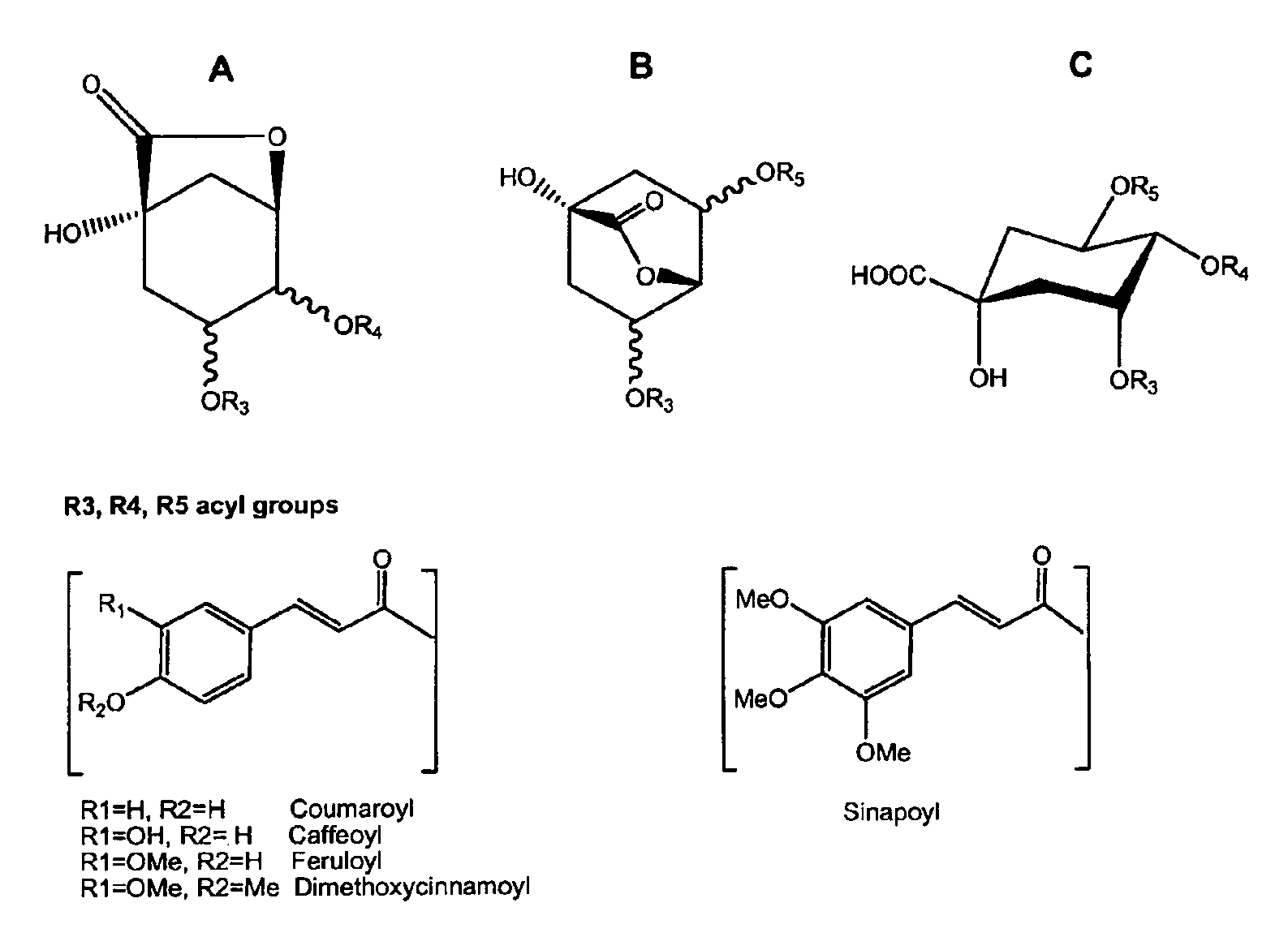
Figure 1 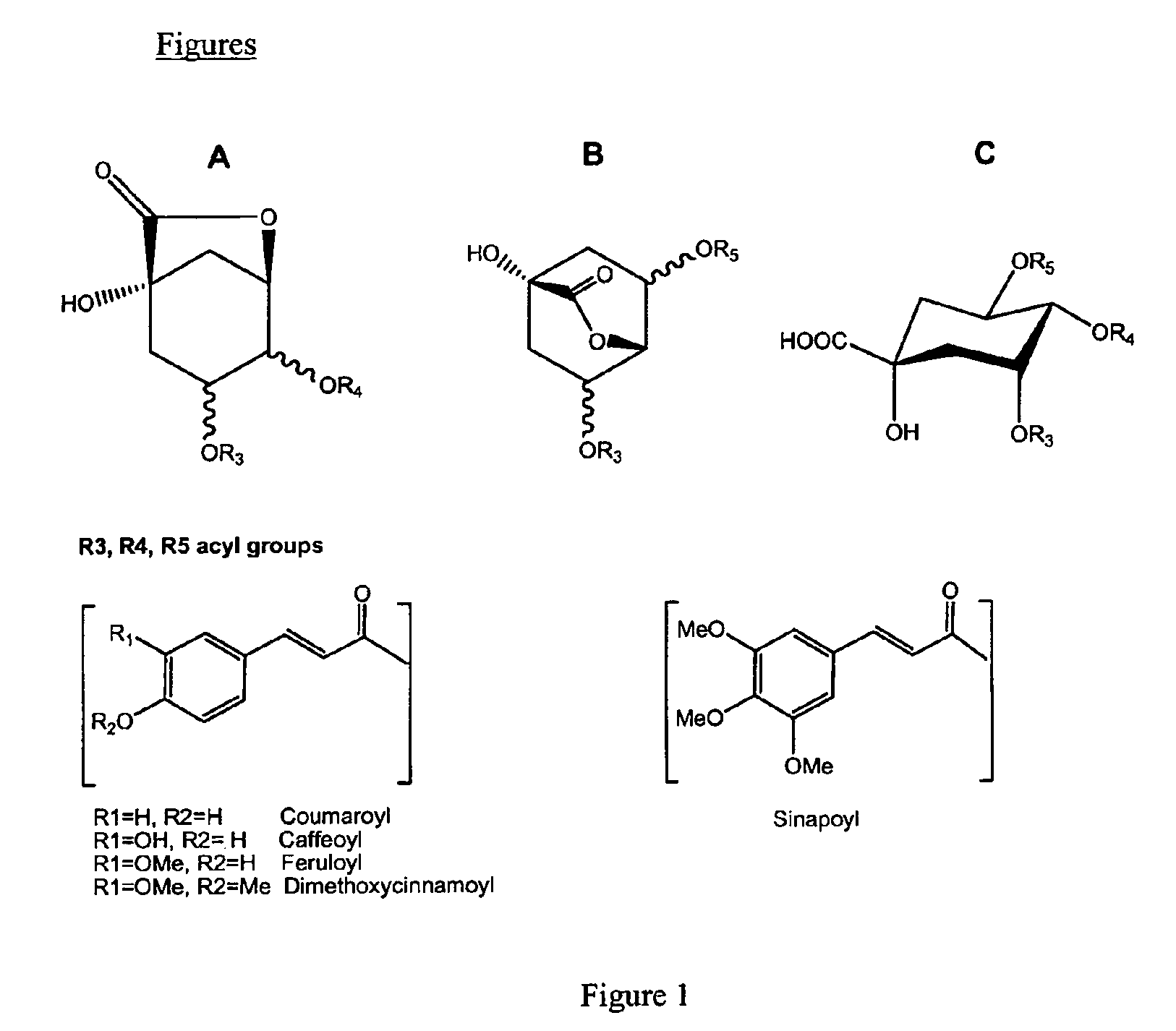
Figure 2
Abstract
Description
FIELD OF THE INVENTION
[0001] The present invention relates to a coffee product, a method of preparing a coffee product and the use of enzymes, sorbents and / or solvent extraction to treat a coffee extract so as to provide such a product.BACKGROUND OF THE INVENTION
[0002] A coffee beverage is generally produced in three steps involving roasting of the green beans, grinding of the roasted beans and then extraction of the coffee components from the ground beans. Within the roasting step, the thermal treatment generates a large variety of aroma and taste molecules which are absent from the original green bean. The chemical transformations involved in the roasting process are numerous and, to date, not all fully elucidated. Reactions and chemical transformations that are known to occur during the roasting process include, for instance, dehydration, Maillard reactions, caramelisation, pyrolysis, hydrolysis, and fragmentation.
[0003] Bitterness in coffee is a known result of the roasting process...
Examples
example 1
Enzymatic Treatment of Soluble Coffee
[0091]Robusta coffee beans were roasted and ground. An aqueous extract was then prepared by treating the ground coffee beans at a temperature of from 110 to 130° C. so as to extract a yield of about 25 wt % of the total weight of the ground coffee beans. The extract was spray-dried.
[0092]15 g of dried coffee extract were dissolved in 500 ml of boiling water. After cooling to room temperature, the coffee solution (50 ml) was distributed into eight 100 ml flasks. Various amounts of immobilized hog liver esterase (0.2 U / mg of coffee, 0.5 U / mg of coffee, and 1 U / mg of coffee) were added to the coffee solutions. The flasks were immersed in a water bath heated to 40° C. and samples were withdrawn after 0 h, 2 h and 4 h reaction times. The mixtures were filtered (filters of 150 mm of diameter) to remove the enzyme and the obtained coffee solutions were diluted to 1.3% t.s. for sensory analysis.
Sample Analysis
[0093]Coffee samples were prepared at 1% t.s....
example 2
Treatment with Sorbents
[0096]Robusta coffee extract was obtained as described in example 1.
Method 1 (Samples 7 to 14)
[0097]3 g of Polyclar / PVPP (ex Sigma) or 3 g of active charcoal (Norit C granular) or 3 g of XAD4 or XAD16 (both ex Supelco) were added to 3 g of the Robusta extract in 200 mL of Millipore water. The suspension was stirred at room temperature for 2.5 h and filtered over filter paper (+Celite in the case of active charcoal). The recovered and partially saturated sorbent was used for two further, consecutive batches of fresh coffee in the same manner. The filtrates were freeze-dried in a Virtis Benchtop K apparatus.
Method 2 (Sample 15)
[0098]Continuous treatment on XAD 16 (30 g, column 2 cm internal diameter×20 cm height) was performed as follows. The sorbent was suspended in water and washed with water, ethanol and again water and then filled into the column. The coffee extract, 1.5% t.s. was continuously eluted through it. 200 mL fractions were collected at a flow rate...
example 3
Solvent Extraction
[0102]Robusta coffee extract was obtained as described in example 1. 3 g of Robusta extract dissolved in 200 mL of Millipore water were extracted with 200 mL of ethyl acetate. The organic extract was used to treat a second batch of fresh coffee extract (3 g in 200 mL) and step two was repeated a further two times. The resulting coffee extracts were separately stripped with ethanol (3 times each) and finally freeze-dried.
Sensory / Analytical Evaluation
[0103]The sensory / analytical evaluation of coffee fractions was conducted as described above. The results are given in the following table.
TABLE 7liquid / liquid extraction with partially saturated ethyl acetate5CQA:totalcaffeine:CyclesYield fromSensory3CQALCQA:3CQALSample(1)extract (2)score (3)(4)3CQAL (4)(4)161722.9132279308174975.43473127D01007.092034(1) Cycle “1” denotes that the solvent is fresh; cycle “4” denotes that the solvent is partially saturated (3 batches of extract having been previously extracted)(2) % by w...