
Hologram recording material and hologram recording medium
Patent Information
- Authority / Receiving Office
- US · United States
- Current Assignee / Owner
- Publication Date
- 2010-04-08
- Estimated Expiration
- Not applicable · inactive patent
Smart Images
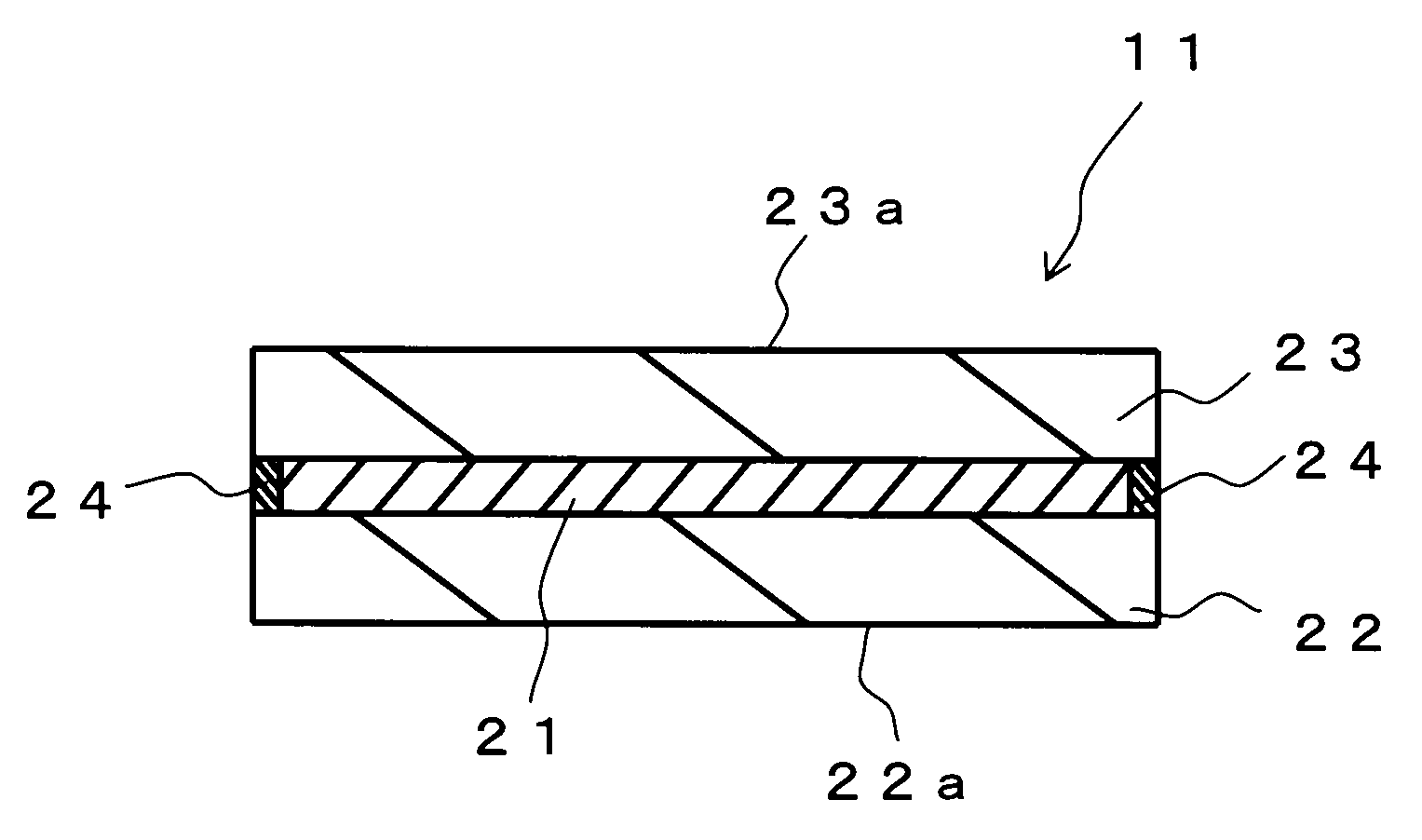
Figure 1 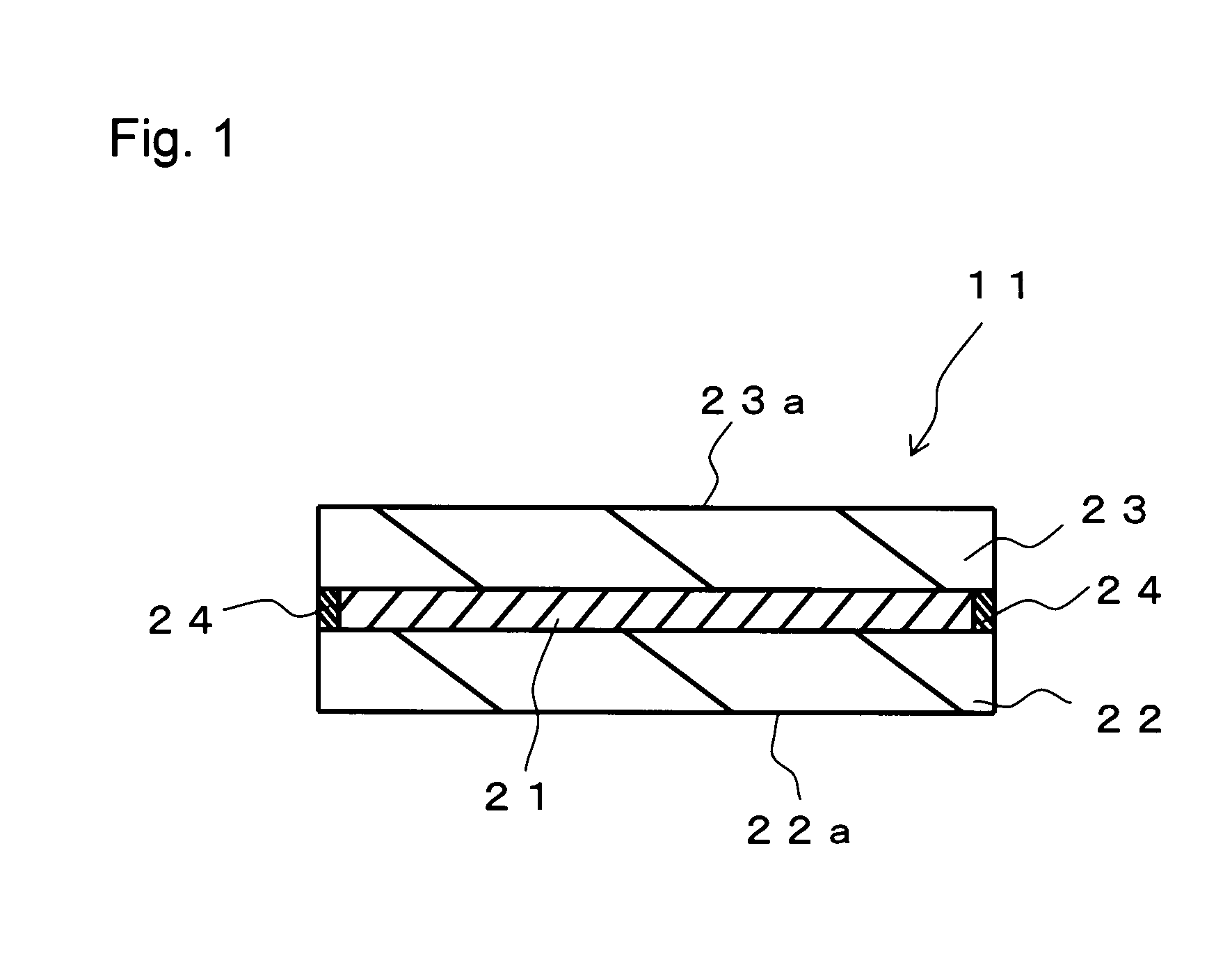
Figure 2 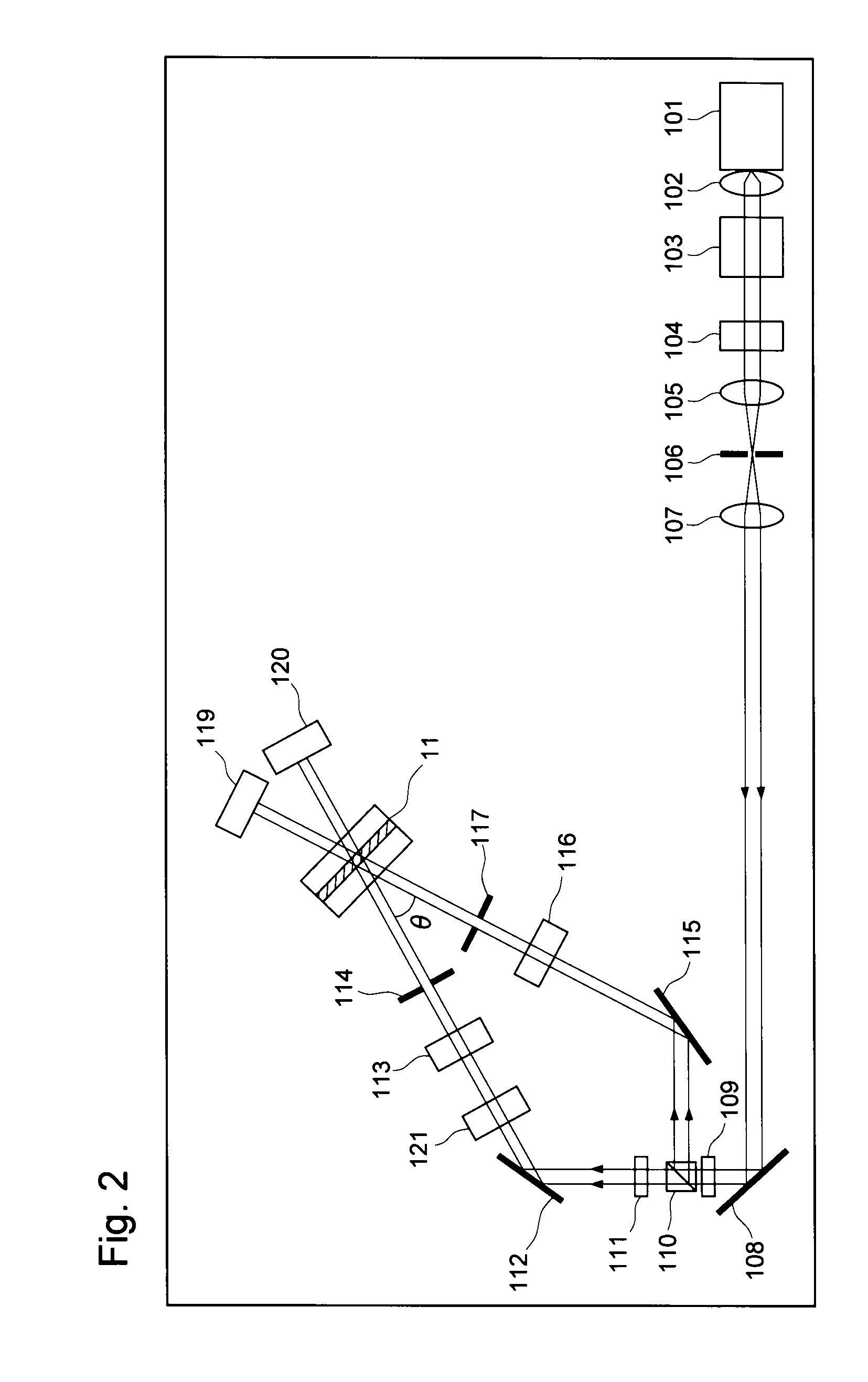
Figure 3
Abstract
Description
BACKGROUND OF THE INVENTION
[0001] 1. Field of the Invention
[0002] The present invention relates to a hologram recording material suitable for volume hologram recording, and a hologram recording medium having a hologram recording layer made of the hologram recording material.
[0003] 2. Disclosure of the Related Art
[0004] Research and development of holographic memories have been advanced as recording technique making it possible to attain large-capacity recording and high-speed data transmission. Examples of the property required for a hologram recording material include high refractive index change at the time of recording, high sensitivity, low scattering, environment resistance, that is, storage stability, durability, low dimension change, high multiplicity, and the like.
[0005] As a hologram recording material, attention has been paid to an organic-inorganic hybrid material, which is made mainly of an inorganic matrix and a photopolymerizable monomer, and the hybrid material has been in...
Examples
example 1
(Synthesis of an Acrylamide Derivative Monomer)
[0125]From N-(hydroxymethyl)acrylamide and polyethylene glycol monomethyl ether, a target compound (a) of monoacrylamidemethyl ether-monomethyl ether of polyethylene glycol represented by the following formula was synthesized in accordance with a method described in JP-A-2006-225446:
CH2═CHCONHCH2OH+HO(C2H4O)nCH3→CH2═CHCONHCH2O(C2H4O)nCH3 (a).
[0126]A mixed solution of 100 parts by weight of N-(hydroxymethyl)acrylamide (manufactured by Wako Pure Chemical Industries, Ltd.), 266 parts by weight of polyethylene glycol monomethyl ether (manufactured by Alfa Aesar Co. in UK, weight-average molecular weight Mw=350), 0.3 part by weight of p-toluenesulfonic acid, and 0.2 part by weight of hydroquinone was heated to 60° C. in the flow of nitrogen gas, and then was reacted for 10 hours. Next, the volatile components were distilled off at 40° C. under reduced pressure. Thereafter, an unreacted fraction of N-(hydroxymethyl)acrylamide was removed by...
example 2
[0144]A hologram recording material solution and a hologram recording medium were obtained in the same manner as in Example 1 except that instead of the above 100 parts by weight of monoacrylamidemethyl ether-monomethyl ether of polyethylene glycol (a), a mixture of 90 parts by weight of the compound (a) and 10 parts by weight of methoxypolyethylene glycol acrylate (trade name: LIGHT ACRYLATE 130A, manufactured by Kyoeisha Chemical Co., Ltd.) was used as a photopolymerizable compound.
[0145]About the resultant hologram recording medium sample, angle multiplex recording was conducted for property evaluation in the same manner as in Example 1. As a result, the dynamic range: M / # was 34.9, which was a converted value corresponding to the case that the thickness of the hologram recording material layer was converted to 1 mm.
[0146]In the same manner as in Example 1, the recording shrinkage ratio was measured. As a result, the ratio was 0.1%.
example 3
[0147]A hologram recording material solution and a hologram recording medium were obtained in the same manner as in Example 1 except that instead of the above 100 parts by weight of monoacrylamidemethyl ether-monomethyl ether of polyethylene glycol (a), a mixture of 70 parts by weight of the compound (a) and 30 parts by weight of methoxypolyethylene glycol acrylate (trade name: LIGHT ACRYLATE 130A, manufactured by Kyoeisha Chemical Co., Ltd.) was used as a photopolymerizable compound.
[0148]About the resultant hologram recording medium sample, angle multiplex recording was conducted for property evaluation in the same manner as in Example 1. As a result, the dynamic range: M / # was 37.0, which was a converted value corresponding to the case that the thickness of the hologram recording material layer was converted to 1 mm.
[0149]In the same manner as in Example 1, the recording shrinkage ratio was measured. As a result, the ratio was 0.14%.