

Treatment of mci and alzheimer's disease
a technology for alzheimer's disease and mci, which is applied in the field of treatment of mci and alzheimer's disease, can solve the problems of not being able to prevent or slow the underlying nerve degeneration in patients, and no therapy is currently available to forestall the progression of mci to alzheimer's disease, etc., to achieve cell viability, increase the expression of pds/ttr complex, and improve the effect o
Patent Information
- Authority / Receiving Office
- US · United States
- Patent Type
- Applications(United States)
- Current Assignee / Owner
- Publication Date
- 2010-11-18
- Estimated Expiration
- Not applicable · inactive patent
Smart Images
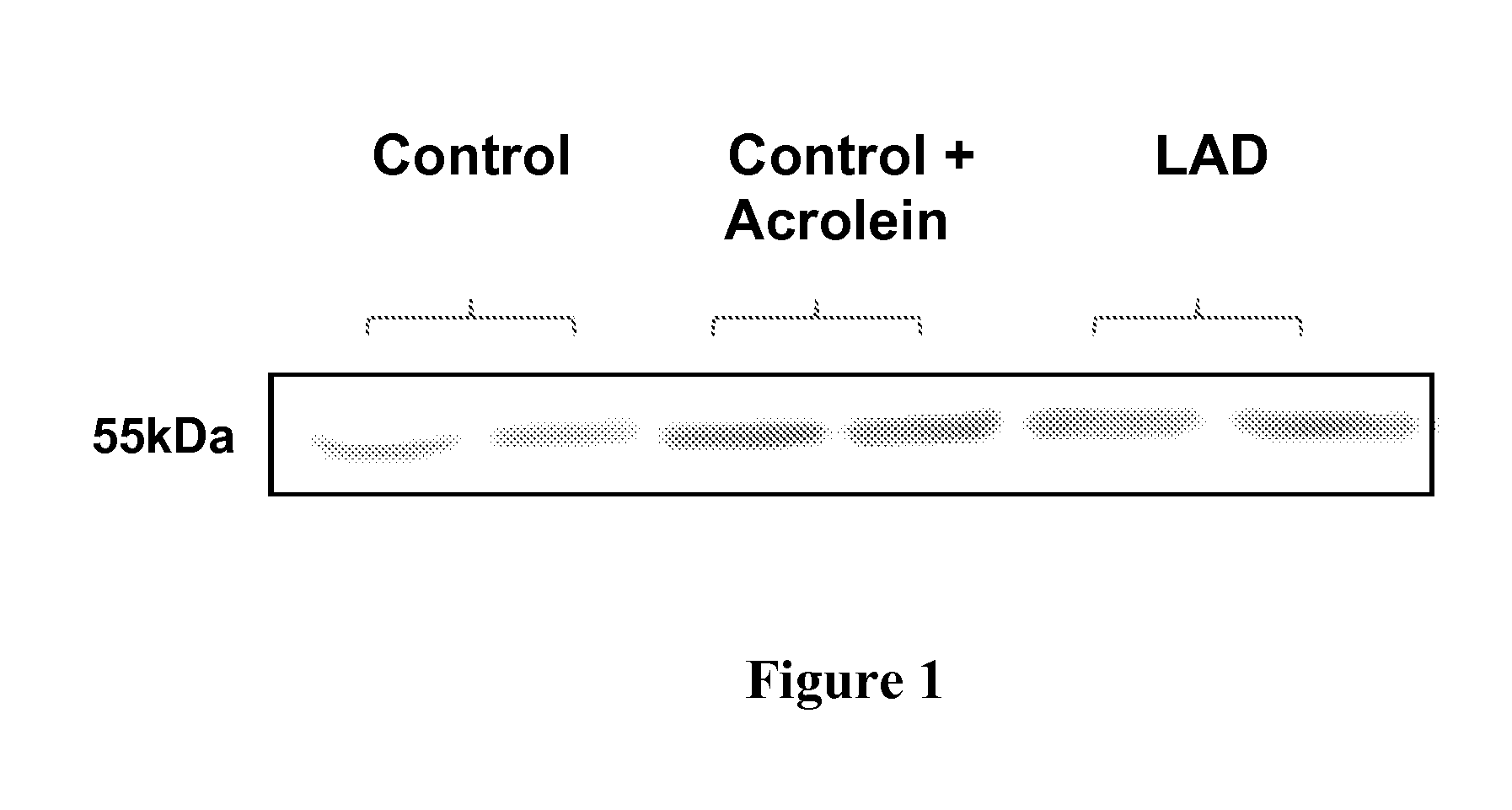
Figure 1 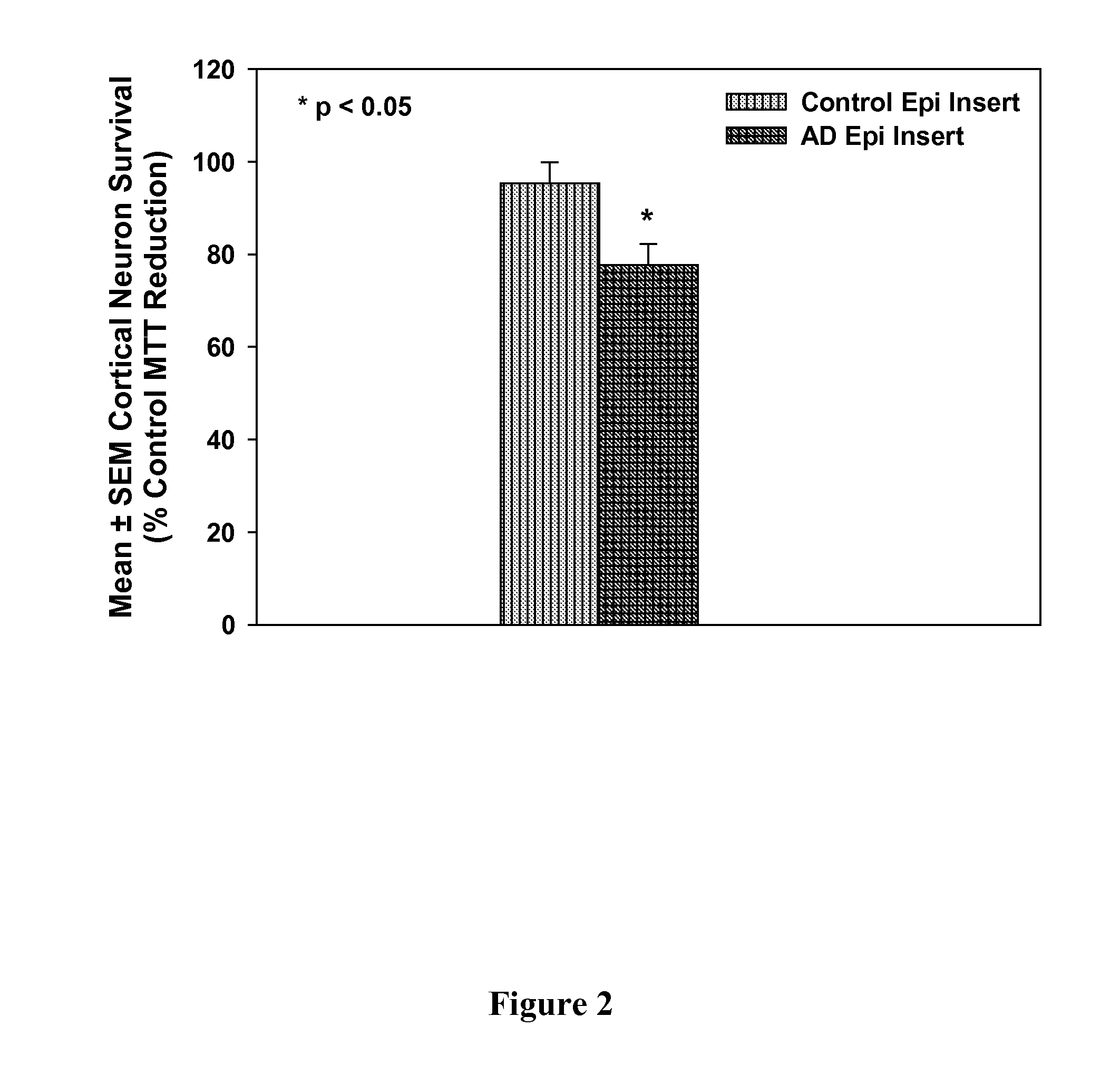
Figure 2 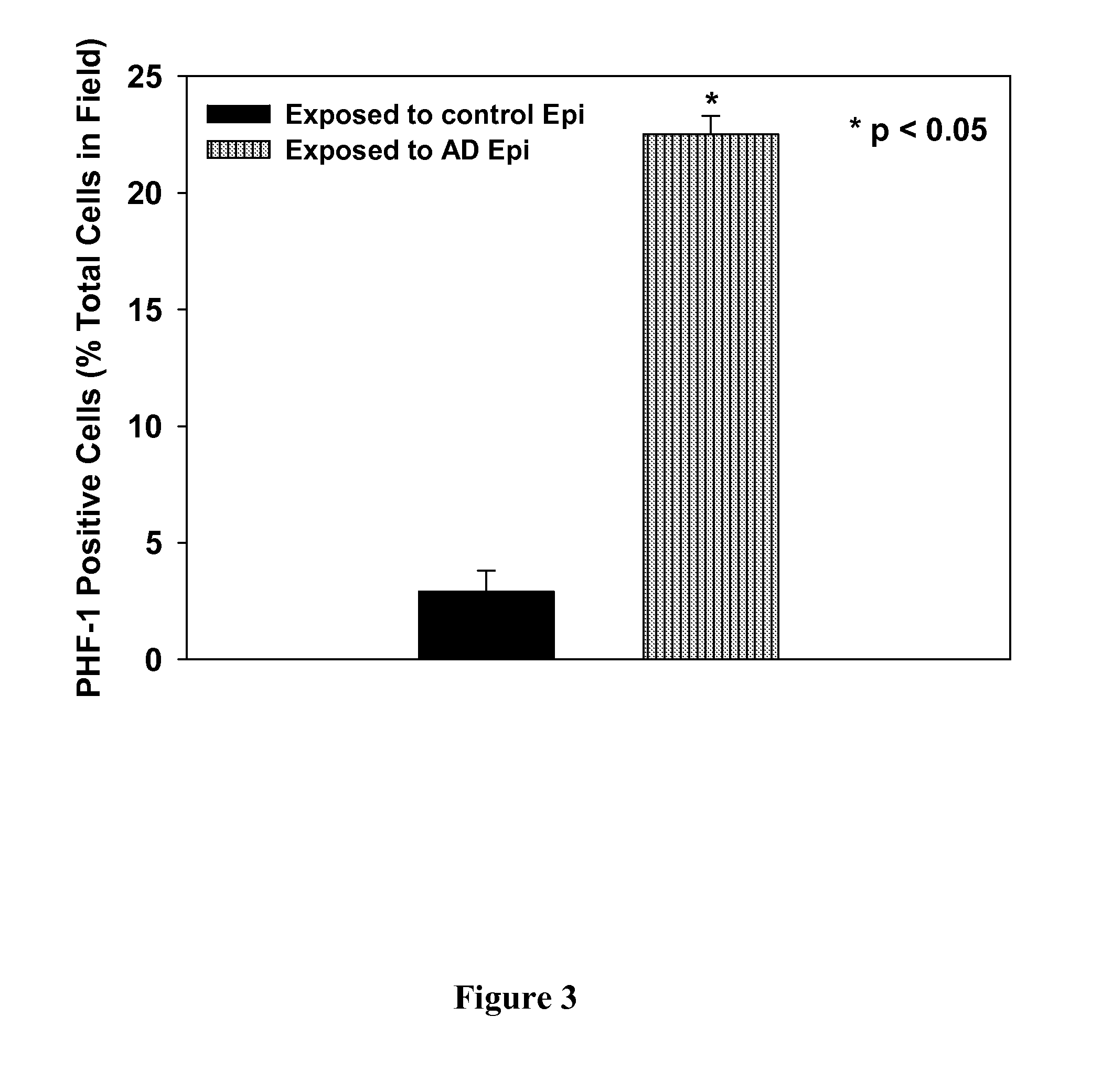
Figure 3
Abstract
Description
REFERENCE TO RELATED APPLICATION
[0001] This application claims the benefit of U.S. Provisional Patent Application No. 61 / 216,452, filed May 15, 2009, and U.S. Provisional Patent Application No. 61 / 234,551, filed Aug. 17, 2009, both of which are hereby incorporated by reference in their entireties.BACKGROUND OF THE INVENTION
[0002] Alzheimer's disease (AD) is a well-known but incompletely understood progressive neurodegenerative disease affecting ever-larger numbers of individuals in the aging population. Currently Alzheimer's disease affects 4 million Americans. Statistics from the National Institute on Aging estimate that there may be 14 million Americans with Alzheimer's disease by 2040 unless preventative strategies are developed.
[0003] The earliest clinical manifestation of Alzheimer's disease is described as a syndrome called Mild Cognitive Impairment (MCI). While detection of MCI may permit necessary lifestyle modifications to be planned and implemented, no therapies are currently...
Examples
example 1
Neurotoxic Effect of PDS / TTR Complex
[0151]It has been shown that examination of cell culture medium obtained from epithelial cells derived from Alzheimer's disease patients showed elevated levels of the PDS / TTR complex compared to control cells, indicating that the PDS / TTR complex can be used as an effective biomarker for the early diagnosis of Alzheimer's disease. See, U.S. Application Pub. No. 20080026405, the disclosure of which is incorporated by reference herein. This example shows that in addition to being a biomarker for disease, the PDS / TTR complex is also neurotoxic.
[0152]First of all, it was found that acrolein (an alpha, beta unsaturated three carbon aldehydic by-product of lipid peroxidation) causes normal control epithelial cells to express the PDS / TTR complex into culture medium at comparable levels to the epithelial cells derived from Alzheimer's disease patients. For these experiments, primary cultures of choroid plexus epithelail cells were established from short po...
example 2
Nifedipine, Nifedipine Analog Mix and / or T3 / T4 Inhibit PDS / TTR Expression
[0157]The assays described in Example 1 provide a tool to identify potential therapeutic agents that can protect neuronal cells against the PDS / TTR complex. The inventors observed that compounds such as nifedipine (1,4-dihydro-2,6-dimethyl-4-(2-nitrophenyl)-3,5-pyridinydicarboxylic acid dimethyl ester, CAS#21829-25-4 (Sigma Aldrich)), a calcium channel blocker prescribed for high blood pressure; or nifedipine analogs such as oxidized derivative of nifedipine ((2,6-dimethyl-4-(2-nitrophenyl)-3,5-pyridinedicarboxylic acid dimethyl ester, CAS# 67035-22-7 (Sigma Aldrich)) or a nitroso derivative of nifedipine (2,6-dimethyl-4-(2-nitrosophenyl)-3,5-pyridinedicarboxylic acid dimethyl ester, CAS#50428-14-3 (Sigma Aldrich)), can effectively inhibit the expression of PDS / TTR complex in cell culture, individually or in combination. In addition, T3 and T4 were also evaluated and found to be effective in inhibiting the expr...
example 3
Nifedipine Analogs Inhibit Inflammatory Cytokine Production
[0162]It was reported that inflammatory response elements (cytokines) are elevated in Alzheimer's disease patients. The inventors tested the nifedipine mix and individual analogs in astrocytoma cultures. Human astrocytoama cells were plated at 2.5×10⁵ cells / well in 6 well culture plates and were grown for 24 hours. Cultures were then switched to serum free Opti-MEM and treated with the nifedipine mixture and individual analogs for 24 hours. Three 6-well plates were subjected to each treatment. Following treatment, medium was collected from each well and levels of IL-1β, IL-6, TNF-α and TGF-β were measured using commercially available ELISAs. Exemplary results are shown in FIG. 7. As can be seen from FIG. 7, IL-1, IL-6 and TNF-α secreted in the medium were significantly reduced with the treatment of nifedipine mix or oxidized nifedipine, indicating these compounds have a direct positive effect on neuroinflammation.