
Fall arrest safety net
a safety net and safety technology, applied in the field of safety nets, can solve the problems that maintaining a suspended safety net to span the entire overhead area may not be appropriate, and achieve the effects of simple design, reduced manufacturing costs, and reduced maintenance costs
Patent Information
- Authority / Receiving Office
- US · United States
- Patent Type
- Applications(United States)
- Current Assignee / Owner
- Publication Date
- 2011-01-20
Smart Images
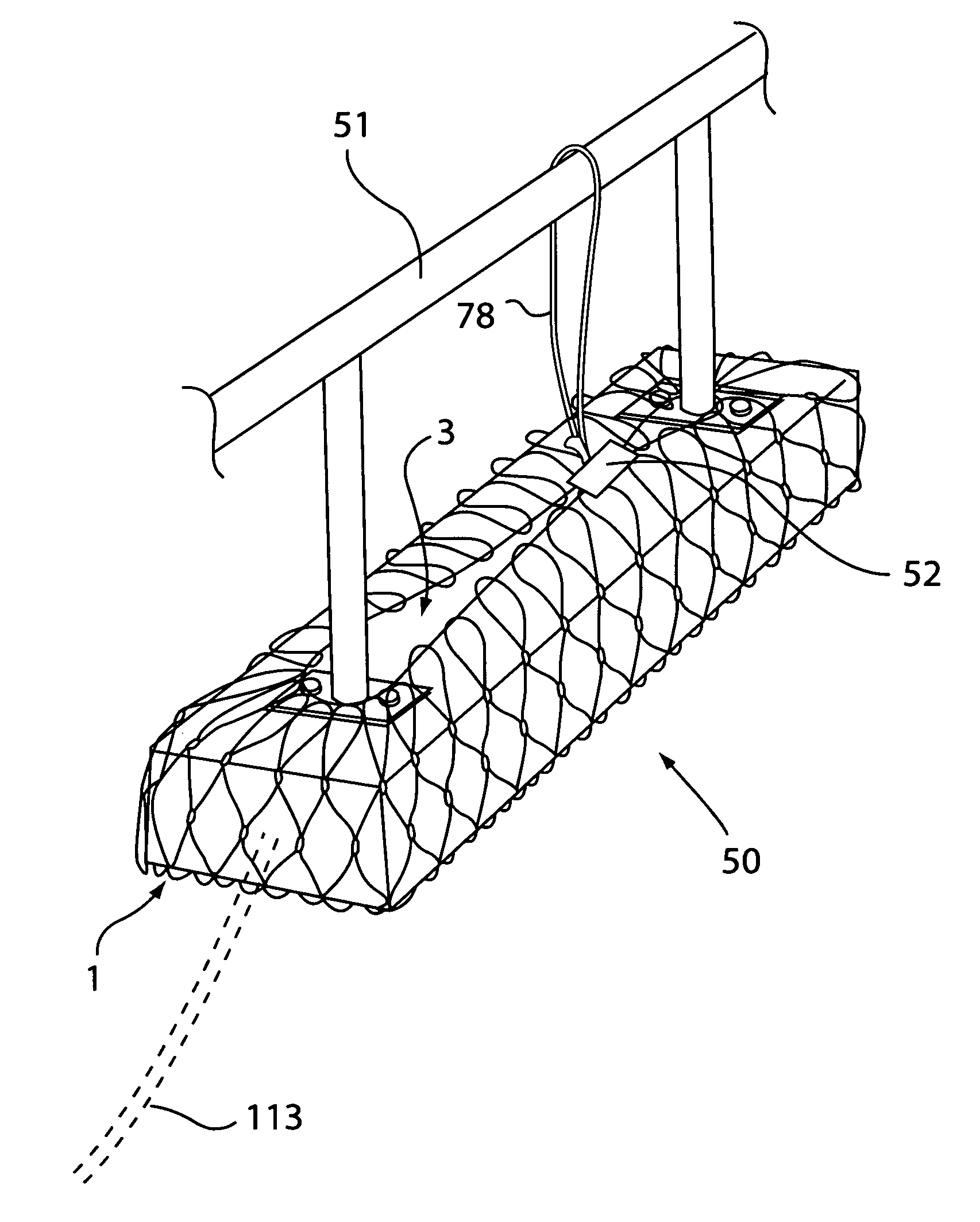
Figure 1 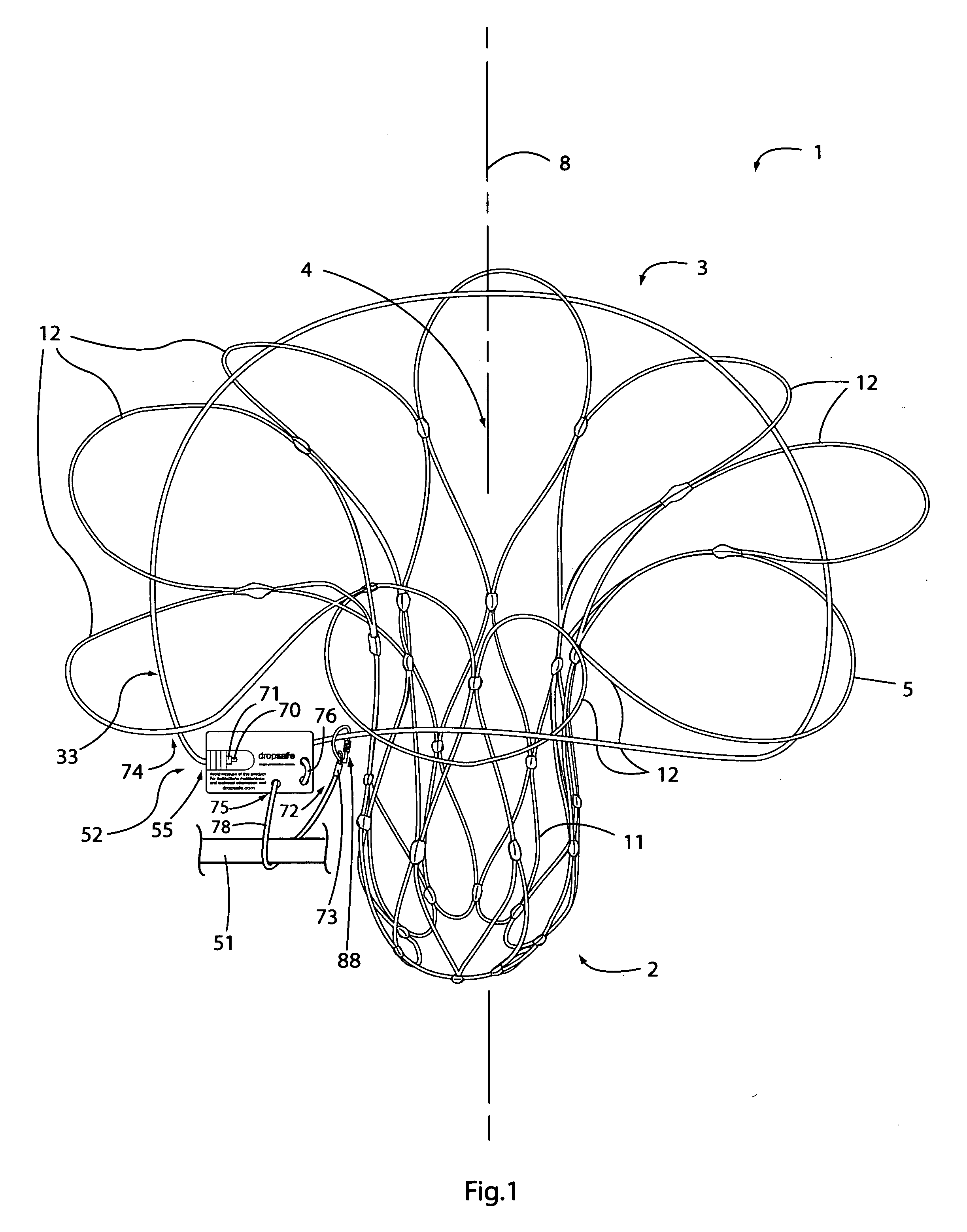
Figure 2 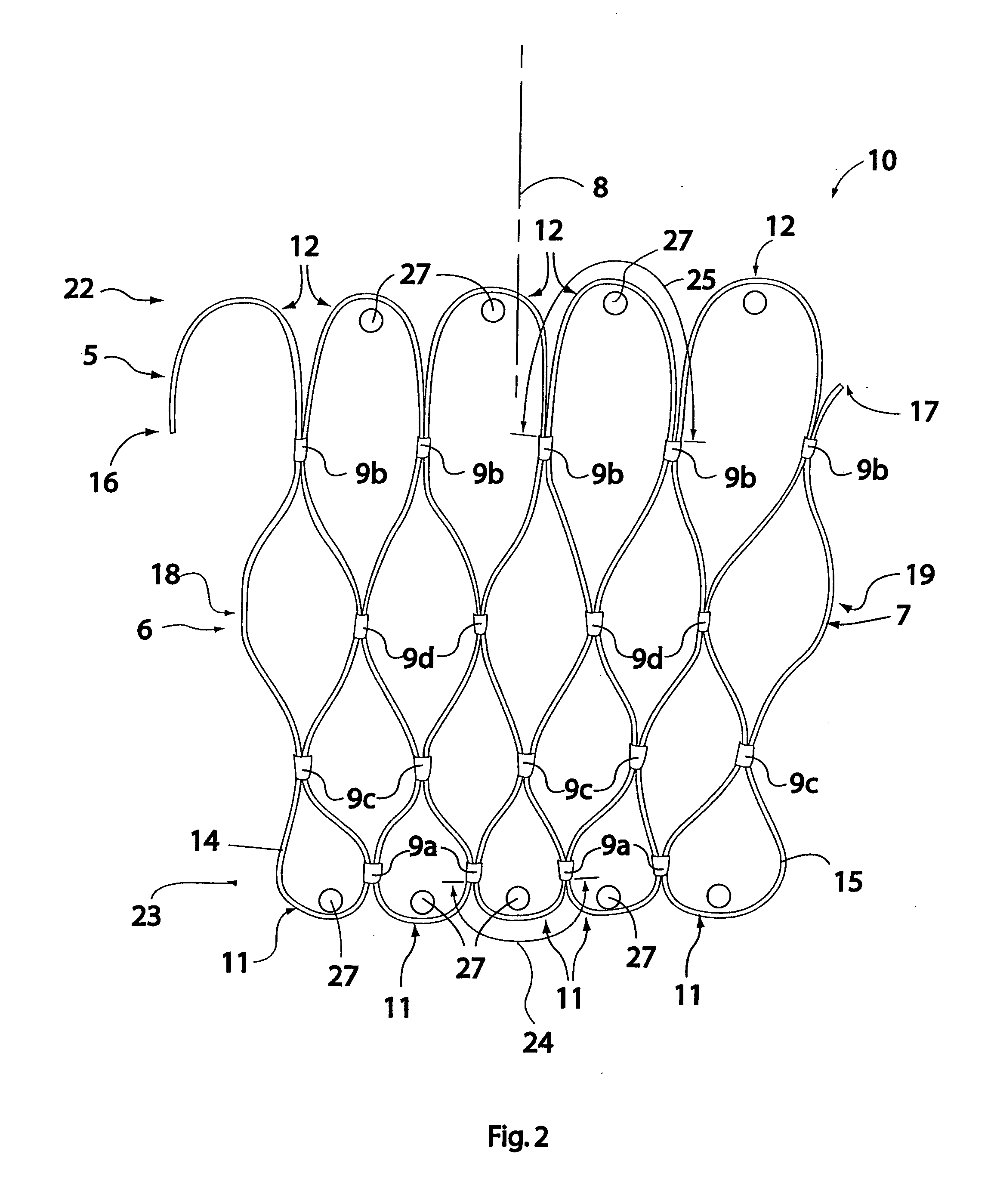
Figure 3
Abstract
Description
TECHNICAL FIELD
[0001] The present invention relates to a safety net having an attachment device for securing to a construction element particularly for use as a fall arrest apparatus.BACKGROUND OF THE INVENTION
[0002] When working at elevated positions, in order to protect anyone below the working position, a safety apparatus should be provided to arrest a fall of debris. Typically a safety net may be suspended just below the working height fastened, for example, to free standing columns or to fixtures mounted to a wall.
[0003] However for permanent fall arrest protection, for instance in engineering facilities having overhead fittings, maintaining a suspended safety net to span the entire overhead area may not be appropriate due to the construction of the facility, the working height, the obstruction it would cause or its cost. There is therefore a need for an improved safety apparatus which addresses these drawbacks, is relatively inexpensive to manufacture and easy to install. It is...
Examples
Embodiment Construction
[0030]Referring to FIG. 1 and 2 of the drawings, a first embodiment of a safety net assembly includes a bag 1 having a narrow closed end 2 and a broader opposing open mouth 3 in which an opening 4 is provided for receiving an apparatus to be secured, such as a light fitting 50 (shown in FIG. 7) mounted overhead on a construction member such as a beam 51. A line 33 passes in a ring through the eyes 12 of the mouth 3 and cooperates with a choker fitting 52 to draw together the eyes 12 to close the opening 4. An end of the line 33 is looped around the beam 51 to secure the assembly in place.
[0031]In the first embodiment illustrated the mesh is made from a length of wire 5 which may be continuous (i.e. a single length) or discontinuous (for instance, including end-to-end joints) and which provides a degree of flexibility and resilience to the bag 1, allowing it to be expanded in the transverse direction to accommodate apparatus of varying size, while being readily collapsible. The bag 1...