
Methods and compositions for treating distress dysfunction and enhancing safety and efficacy of specific medications
Patent Information
- Authority / Receiving Office
- US · United States
- Current Assignee / Owner
- Publication Date
- 2011-06-30
- Estimated Expiration
- Not applicable · inactive patent
Smart Images
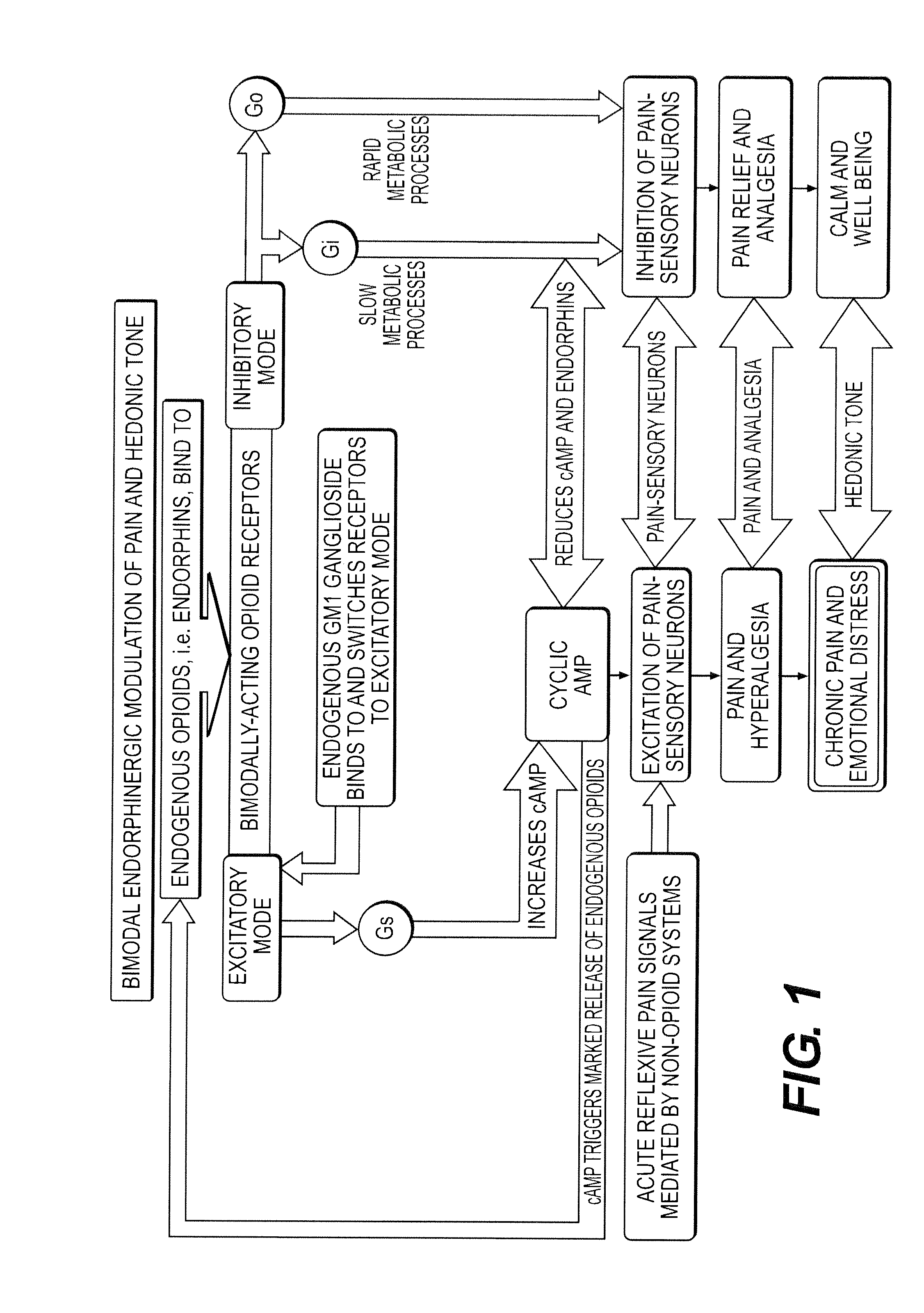
Figure 1 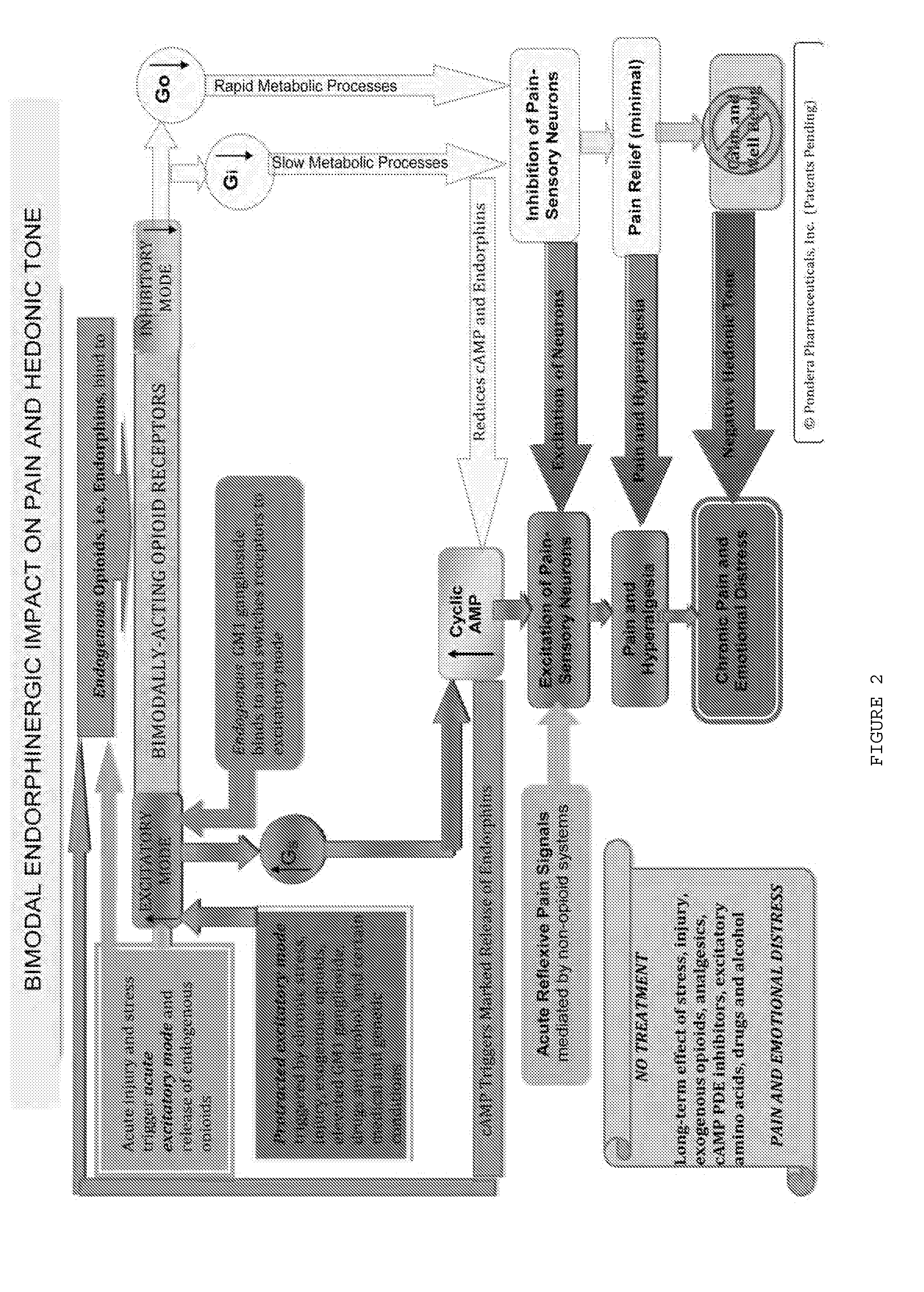
Figure 2 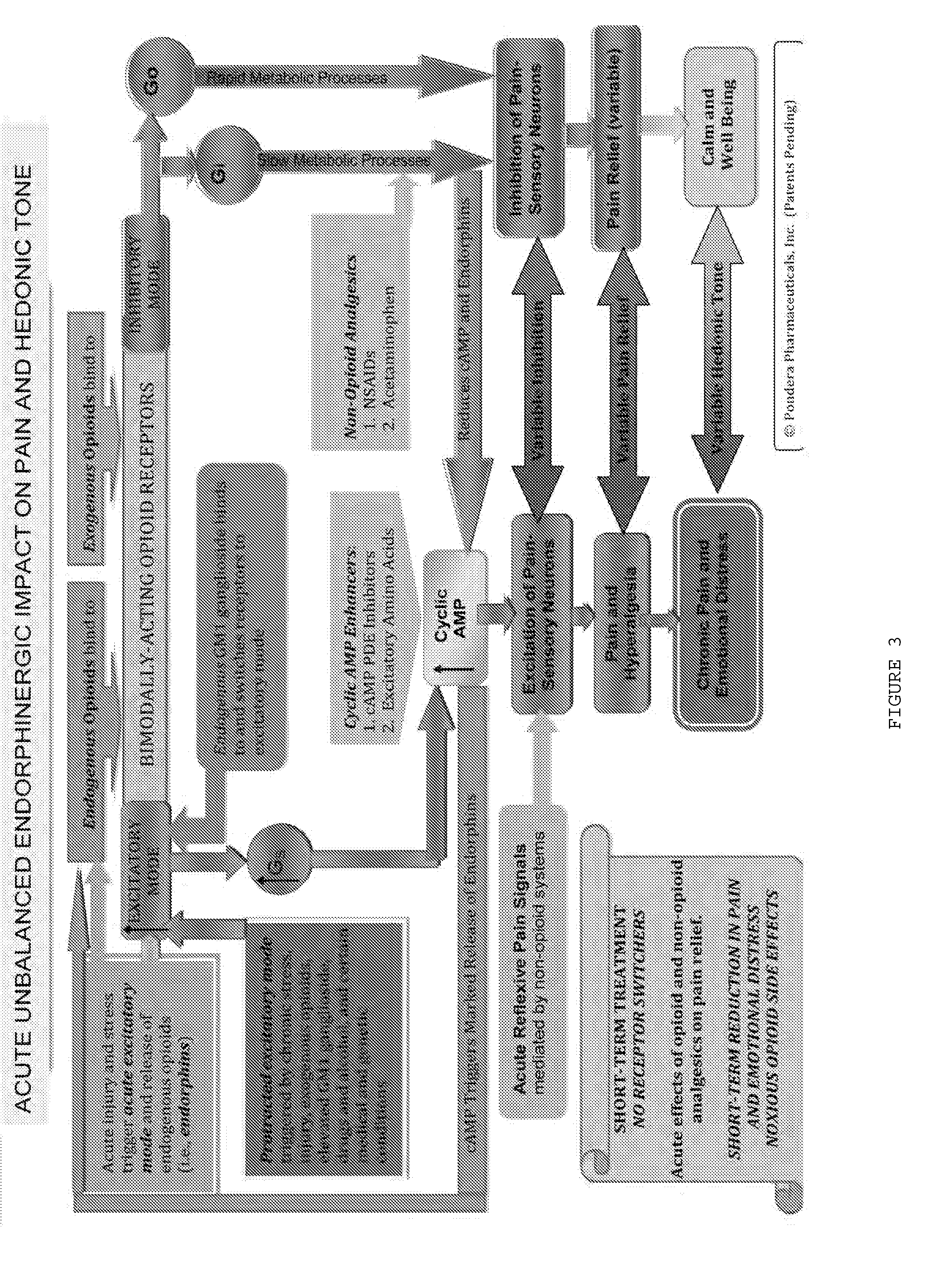
Figure 3
Abstract
Description
CROSS-REFERENCE TO RELATED APPLICATIONS
[0001] This application claims priority of U.S. Patent Application No. 61 / 289,293, filed on Dec. 22, 2009, U.S. Patent Application No. 61 / 309,766, filed on Mar. 2, 2010, U.S. Patent Application No. 61 / 322,665, filed on Apr. 9, 2010, U.S. Patent Application No. 61 / 323,465, filed on Apr. 13, 2010, U.S. Patent Application No. 61 / 330,631, filed on May 3, 2010, U.S. Patent Application No. 61 / 351,653, filed on Jun. 4, 2010, U.S. Patent Application No. 61 / 375,463, filed on Aug. 20, 2010, U.S. Patent Application No. 61 / 385,873, filed on Sep. 23, 2010, and U.S. Patent Application No. 61 / 386,952, filed on Sep. 27, 2010. The contents of these applications are incorporated by reference in their entirety.FIELD OF INVENTION
[0002] The present invention relates to methods and compositions for reducing Distress Dysfunction by restoring and maintaining homeostatic balance in the neurotransmitter systems underlying the Stress Response and the experience of emotiona...
Examples
example 1
[0287]The surprising discovery that led to the novel method and composition of the present invention came from a series of clinical trials using drug formulations that were developed by present co-inventor Dr. Stanley M. Crain. Dr. Crain demonstrated that a combination of certain agents, such as rolipram, caffeine, and isobutylmethylxanthine (IBMX), combined with other agents, such as naltrexone and naloxone, resulted in a formulation that could increase mouse tail-flick latencies in a hot-water immersion analgesia study.
[0288]The study of Example 1 was designed and intended to ascertain whether the analgesia (pain relief) demonstrated in the preclinical tail-flick studies could be duplicated in humans. The co-treatment formulations for these studies included combinations of two agents.
[0289]Study Design:
[0290]For these trials, a hot-water finger-immersion pain paradigm was used, measuring both pain threshold and tolerance. The index finger of the non-dominant hand was submerged in ...
example 2
[0328]A preliminary study of Distress Dysfunction included four patients in psychotherapy, all of whom suffered from years of Distress Dysfunction, characterized by chronic emotional distress, anxiety, irritability, and anhedonia, which were not improved by traditional psychiatric medication or years of psychotherapy.
[0329]The four patients (2 males, 2 females; ages 28-56) took a twice-daily formulation of caffeine pills (50 mg) and magnesium sulfate solution (500 mg), which, within two days, produced meaningful relief from these chronic symptoms. The patients reported a significant reduction in anxiety, irritability, and depression, and an increase in satisfaction and well being. This rapid relief of chronic intractable symptoms was remarkable. However, when it became clear that one patient had dramatically greater improvement than the others, an assessment revealed that he regularly consumed acetylsalicylic acid and acetaminophen to help him sleep.
[0330]Theorizing that these agent...
example 3
[0333]To assess the efficacy of this innovative treatment for Distress Dysfunction with a very serious, chronic disorder that is typically considered to be “untreatable”, a 28 year old female, diagnosed with Autistic Spectrum Disorder, was treated with ultra-low-dose naltrexone and caffeine.
[0334]Relevant symptoms included the following: limited eye contact, avoidance of even minor stimulation or frustration, highly reactive emotionally and physically to minor frustrations, extremely irritable and quick to anger, fearful of any arousal (both positive and negative), isolation and anhedonia. The subject historically avoided caffeine as well as physical exertion and excitement of any kind, since she felt that caffeine and these activities tended to make her intensely agitated. Despite this chronic caffeine reaction, the treatment consisted of ULDN (5 μg daily) and caffeine (150 mg daily). Therapeutic benefits were evident within the first few days of treatment, and steadily increased o...