
Adjustable orthopedic boot
Patent Information
- Authority / Receiving Office
- US · United States
- Current Assignee / Owner
- Publication Date
- 2011-12-22
Smart Images
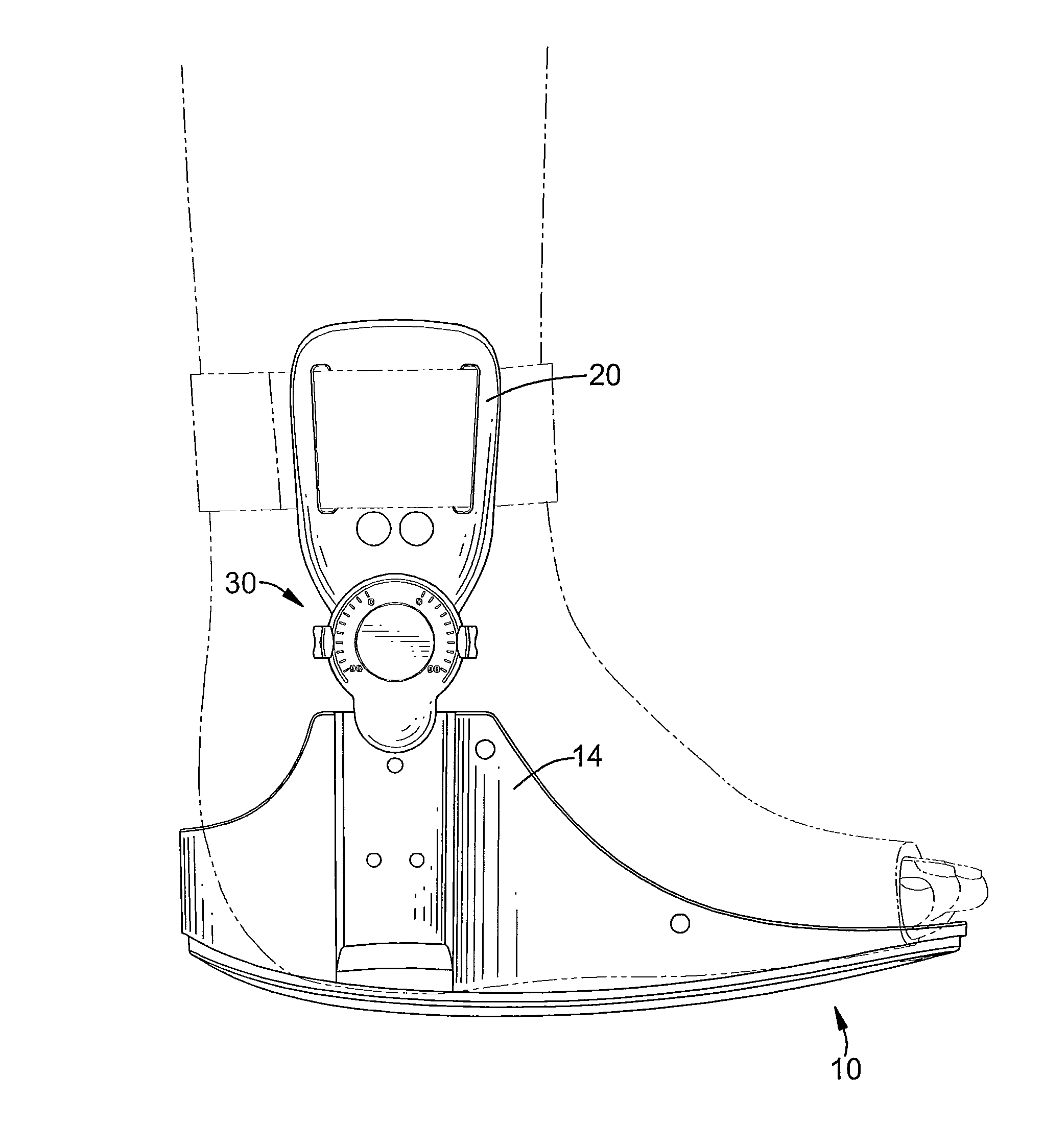
Figure 1 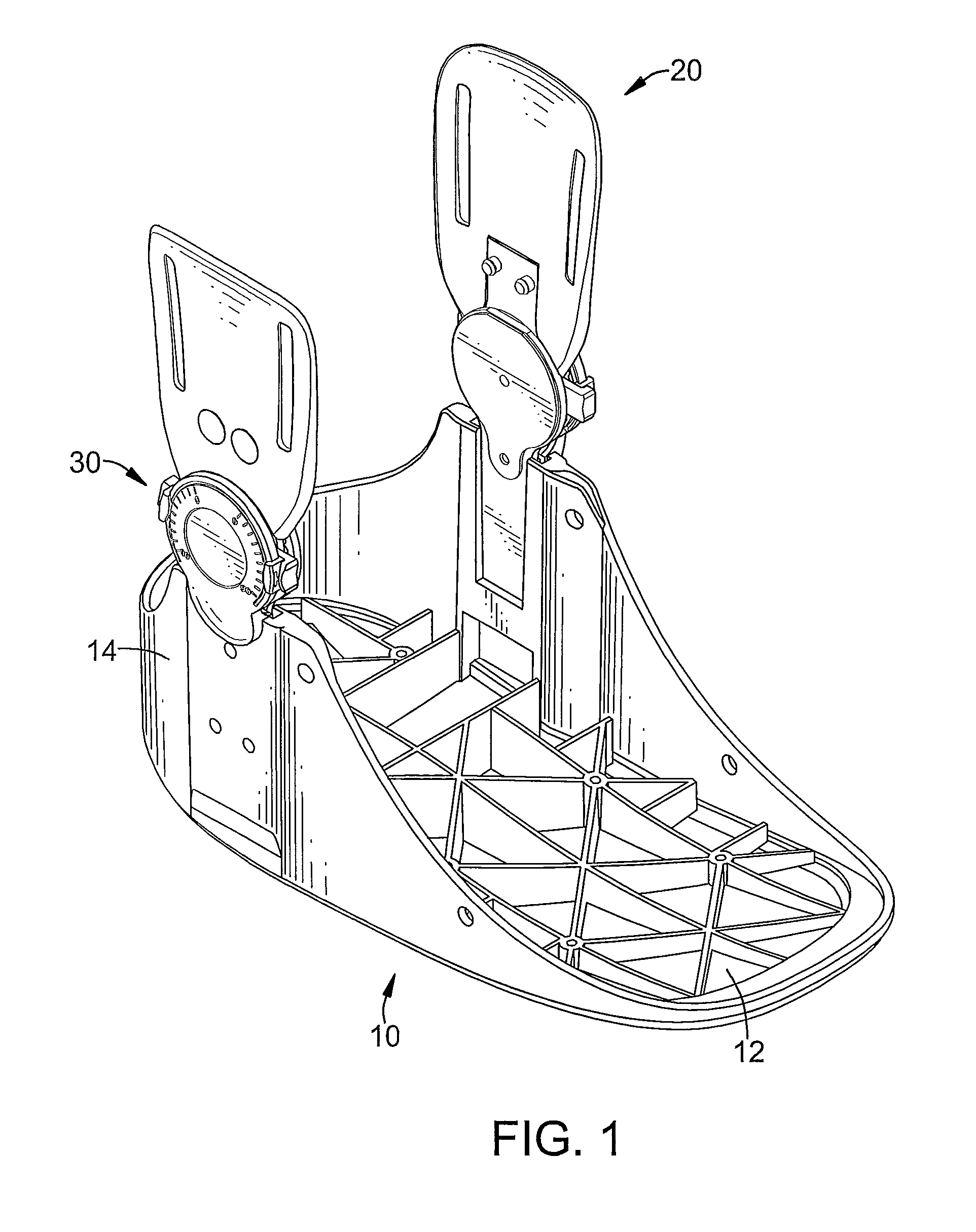
Figure 2 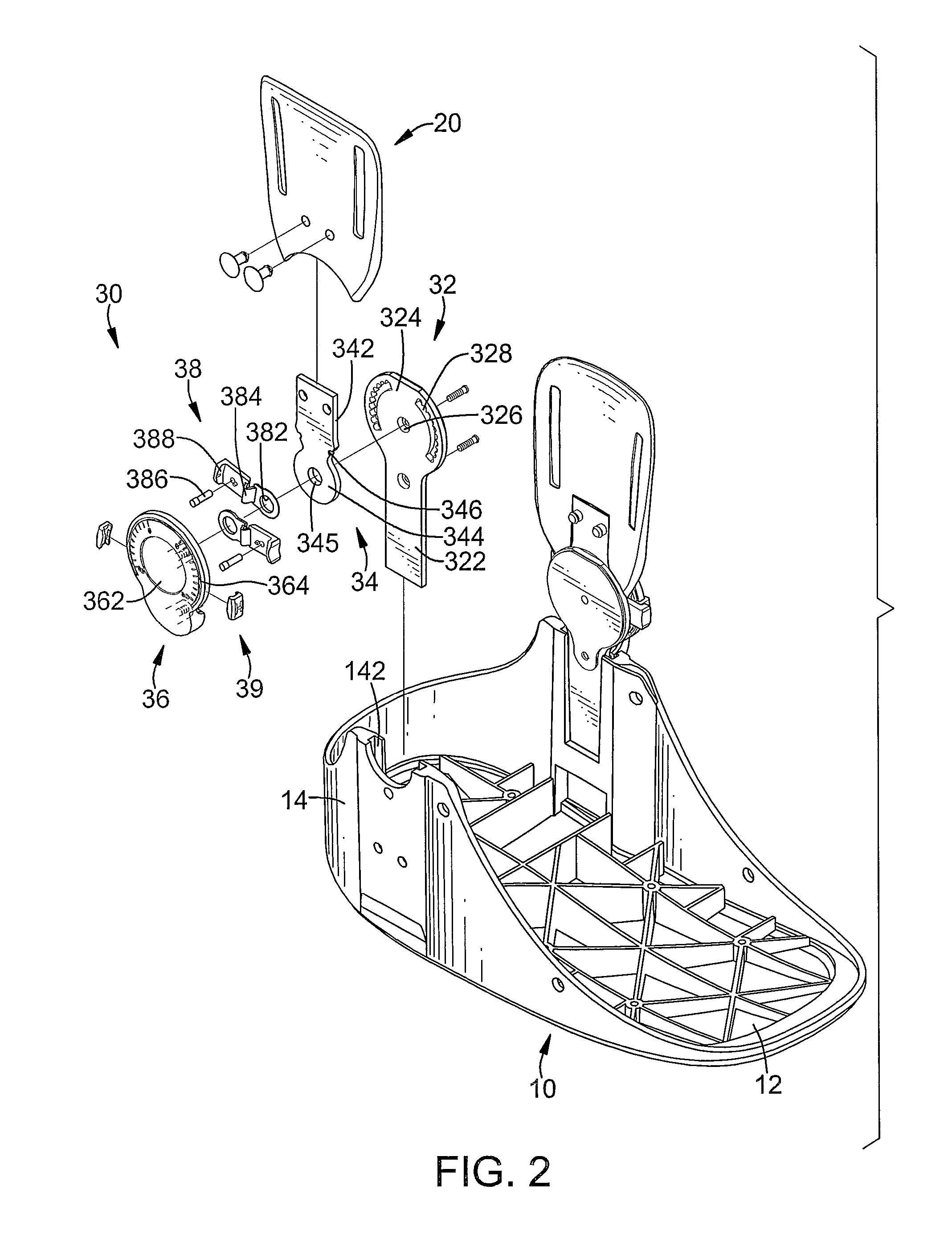
Figure 3
Abstract
Description
BACKGROUND OF THE INVENTION
[0001] 1. Field of the Invention
[0002] The present invention relates to an orthopedic boot, and more particularly to an adjustable orthopedic boot.
[0003] 2. Description of Related Art
[0004] An orthopedic boot is always use to hold a twisted ankle or broken leg at a fixed position during a rehabilitating process. A conventional orthopedic boot substantially comprises a foot support and two leg supports. The leg supports are mounted securely and respectively on two sides of the foot support to hold a leg of a user at a fixed angle relative to his / her foot.
[0005] However, the leg supports of the conventional orthopedic boot is unadjustable to the foot support, so the leg of the user can only be held at a fixed angle relative to the foot during the rehabilitation. Therefore, the leg of the user cannot move or rotate relative to the foot during wearing the conventional orthopedic boot on, but this will reduce the rehabilitation effect to the injured ankle or leg. Th...
Examples
Embodiment Construction
[0018]With reference to FIGS. 1 to 3, an orthopedic boot in accordance with the present invention comprises a foot support 10, two leg supports 20 and two joint assemblies 30.
[0019]The foot support 10 may have a U-shaped cross section and comprises a sole segment 12 and two side walls 14. The side walls 14 are formed on and protrude from the top of the sole segment 12 respectively from two side edges of the sole segment 12. Each side wall 14 has an inner side and a securing channel 142. The inner sides of the side walls 14 face to each other. The securing channel 142 is defined longitudinally in the inner side of the side wall 14.
[0020]The leg supports 20 are respectively connected adjustably to the side walls 14 of the foot support 10 via the joint assemblies 30.
[0021]Each joint assembly 30 is mounted between one of the side walls 14 of the foot support 10 and a corresponding one of the leg supports 20. Each joint assembly 30 comprises a securing panel 32, a connecting panel 34, a ...