
Expandable Surgical Implant Device
Patent Information
- Authority / Receiving Office
- US · United States
- Current Assignee / Owner
- Publication Date
- 2015-02-05
Smart Images
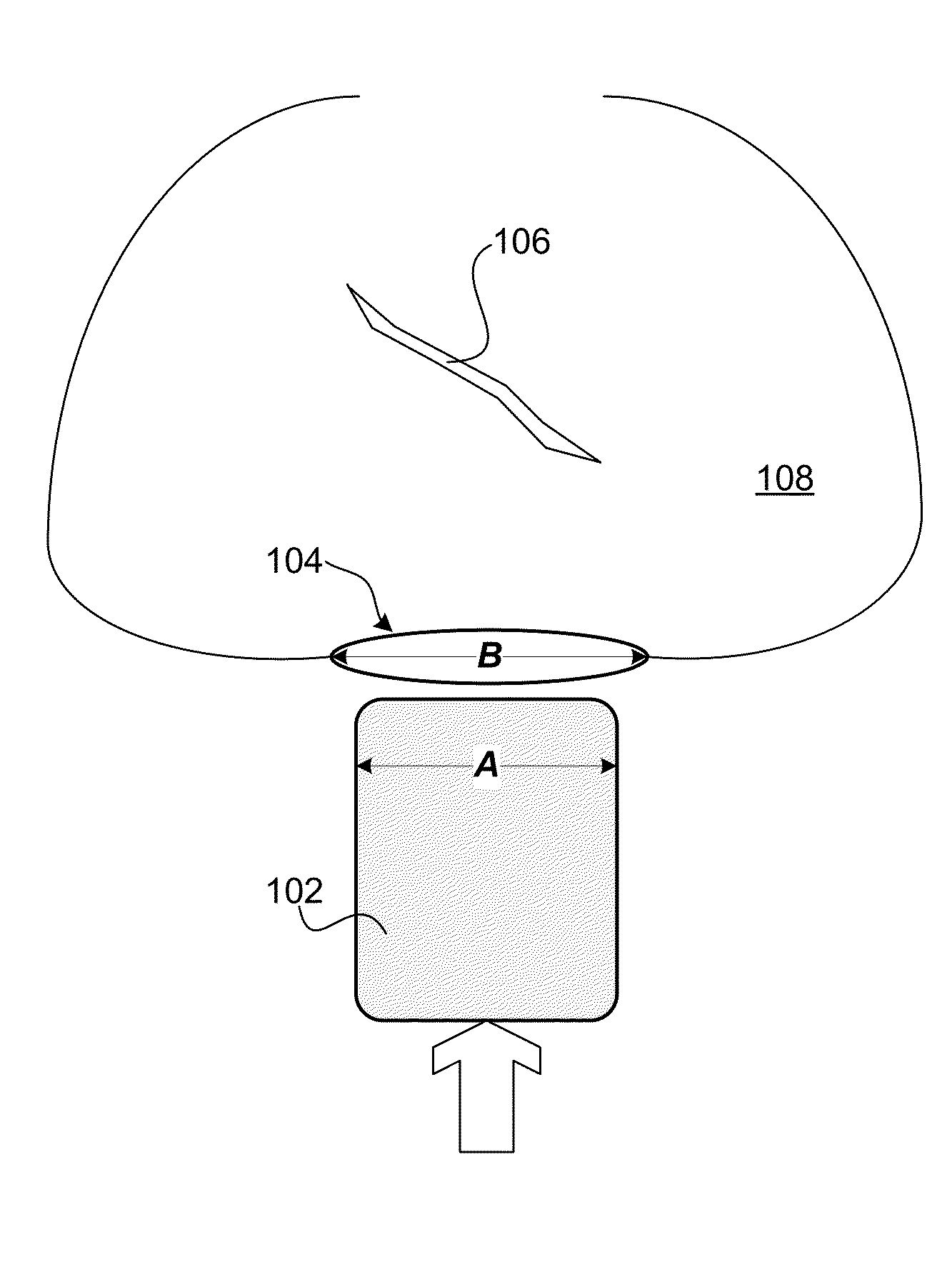
Figure 1 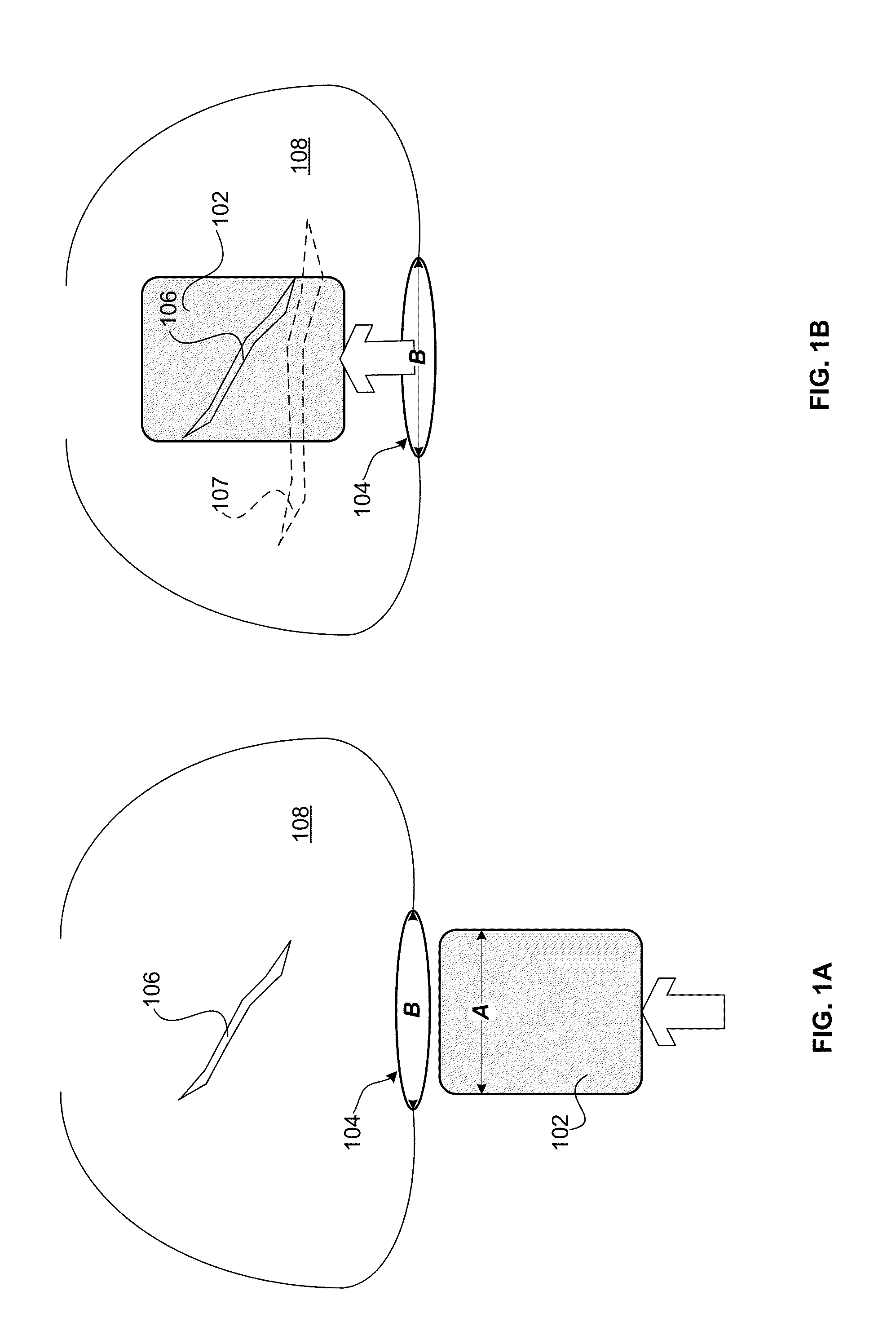
Figure 2 
Figure 3
Abstract
Description
BACKGROUND
[0001] a. Field of the Invention
[0002] The present invention generally relates to medical devices, and particularly to surgical implants.
[0003] b. Background of Invention
[0004] A vast number of surgical procedures require the application of one or more surgical incisions on the patient's body in order allow the medical specialist (e.g., surgeon) to access an area-of-interest. Moreover, in many instances, implant devices may be used to repair or replace an existing component of the body.
[0005] For example, in the field of ophthalmology, fracture and damage to the floor or wall(s) of the eye socket (i.e., orbit) as a result of trauma may necessitate the placement of an implant device over the fractured and damaged area.
[0006] However, it may be appreciated that generally, the length of the incision used to insert an implant may be proportional to the greatest physical dimension of the implant device needed to address the medical issue. For example, if an applied incision is too sm...
Examples
Embodiment Construction
[0025]According to the following described embodiments, expandable implant devices may be used in order to reduce surgical incision size (e.g., width) for the placement of implants within the body.
[0026]Referring to FIG. 1A, a surgical implant device 102 according to an exemplary embodiment is depicted. The surgical implant device 102 is inserted into an incision 104 created by a medical professional (e.g., surgeon), whereby the width, as defined by A, of the surgical implant device 102 may be substantially the same as the width, as defined by B, of the created incision 104. In some implementations, for example, the width A of the surgical implant device 102 may be less than the width B of the created incision 104.
[0027]Referring to FIG. 1B, the inserted surgical implant device 102 may be utilized to cover or support an injury, as depicted by 106. According to one non-limiting example, the injury 106 may include a fracture in the floor 108 of an orbital implant. As illustrated, the ...