
Method for controlling an interior lighting system in a vehicle and interior lighting system
Patent Information
- Authority / Receiving Office
- US · United States
- Current Assignee / Owner
- Publication Date
- 2015-05-28
- Estimated Expiration
- Not applicable · inactive patent
Smart Images
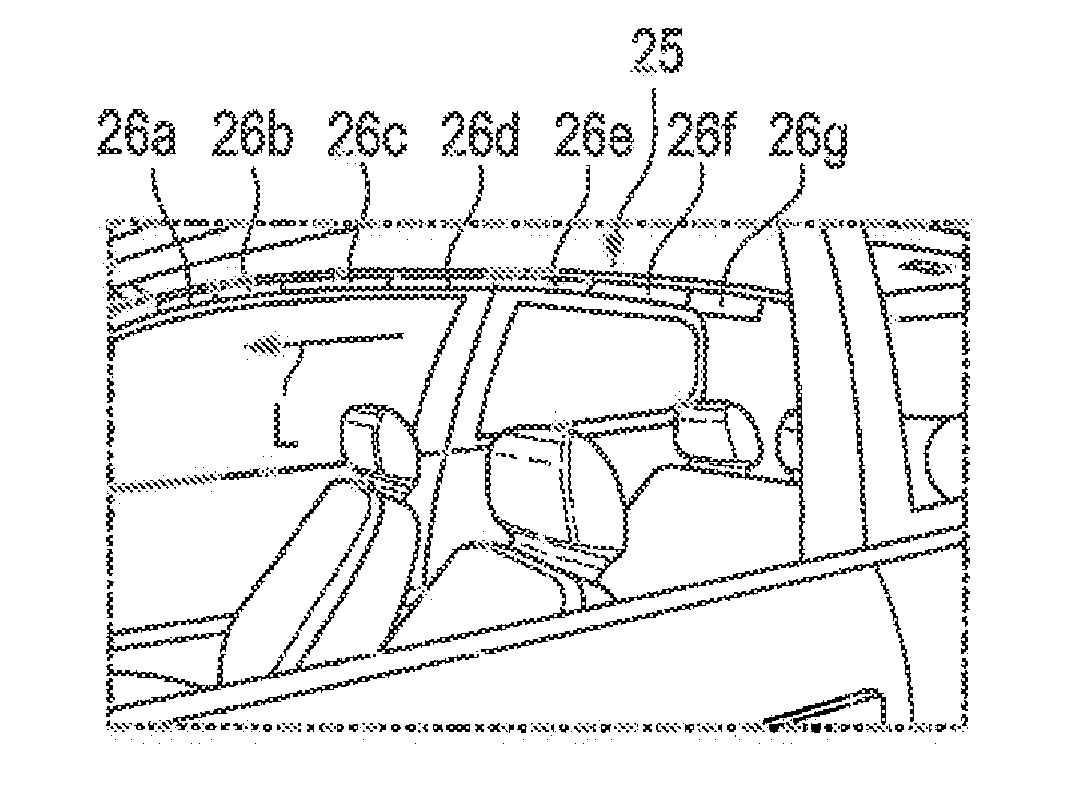
Figure 1 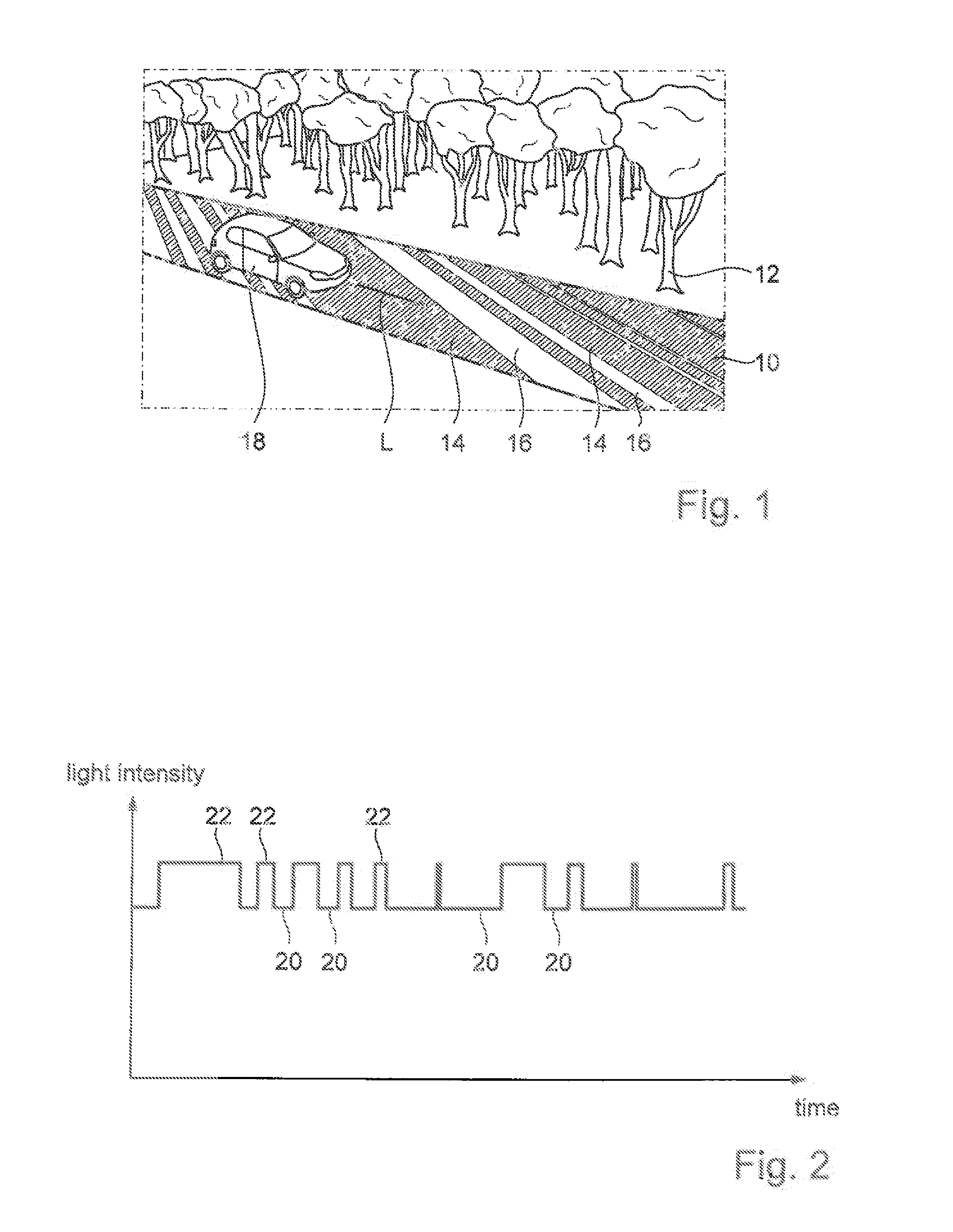
Figure 2 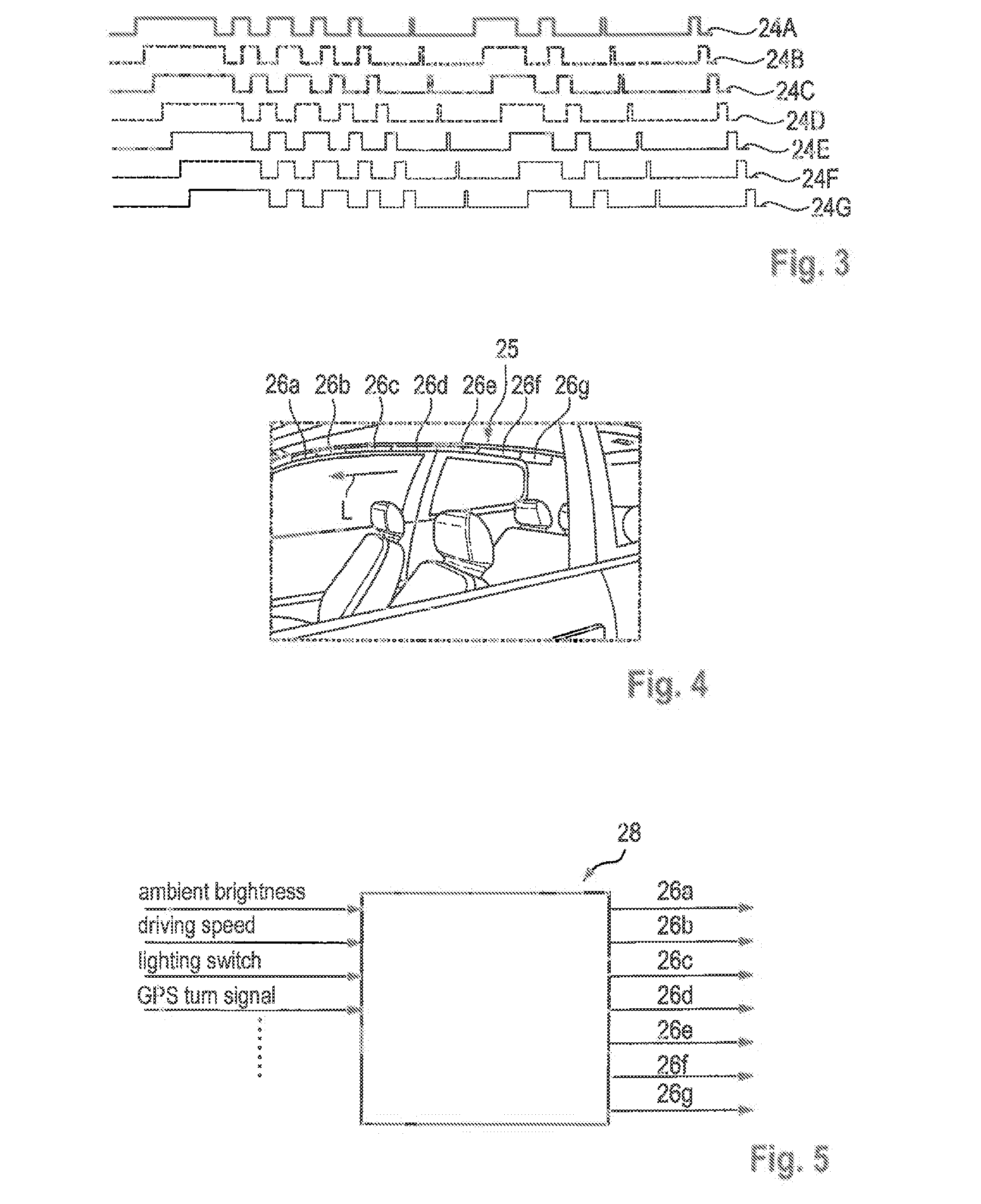
Figure 3
Abstract
Description
RELATED APPLICATIONS
[0001] This application corresponds to PCT / EP2013 / 064219, filed Jul. 5, 2013, which claims the benefit of German Application No. 10 2012 013 783.4, filed Jul. 11, 2012, the subject matter, of which are incorporated herein by reference in their entirety.BACKGROUND OF THE INVENTION
[0002] The present invention relates to a method of controlling an interior lighting according to the generic part of claim 1. The invention further relates to an interior lighting for a vehicle.
[0003] DE 10 2010 018 336 and DE 10 2011 014 262 A1 disclose vehicle interior lightings including a plurality of lamps which can generate a defined light pattern in the vehicle by the lamps being driven separately from each other.
[0004] Modern vehicles feature an ever better noise reduction and also better chassis, so that driving noises, for instance wind, rolling or engine noises, are effectively reduced in the vehicle interior. While this increases the driving comfort of the vehicle, it makes it mo...
Examples
Embodiment Construction
[0034]FIG. 1 schematically shows a road 10 which leads through a wooded area 12. The incidence of light creates on the road 10 areas 14 of low brightness or shadow and areas 18 with a direct incidence of light, i.e. of high brightness. A vehicle 18 that travels on the road 10 in a direction L of motion, passes through these dark and bright areas 14, 16.
[0035]The light pattern 24 illustrated in FIG. 2 is produced at a measuring point positioned at any desired point in the vehicle 18 when travelling on the road 10. When the measuring point passes through the areas 14 of low brightness, the light intensity at the measuring point is lower for this period of time (sections 20). When the measuring point passes through bright areas, the light intensify at the measuring point is correspondingly higher for this period of time (sections 22). The time duration of the sections 20, 22 is dependent on the width of the bright and, respectively, dark areas 14,16 of the road and on the speed of the ...