
Tau imaging probe
a technology of tau and probe, which is applied in the direction of biological material analysis, organic chemistry methods, drug compositions, etc., can solve the problems of inability to diagnose severity or progress of alzheimer's disease, affecting the detection accuracy of tau probes, etc., to achieve satisfactory sensitivity, high brain transition, and high safety
Patent Information
- Authority / Receiving Office
- US · United States
- Patent Type
- Applications(United States)
- Current Assignee / Owner
- Publication Date
- 2016-01-14
- Estimated Expiration
- Not applicable · inactive patent
Smart Images
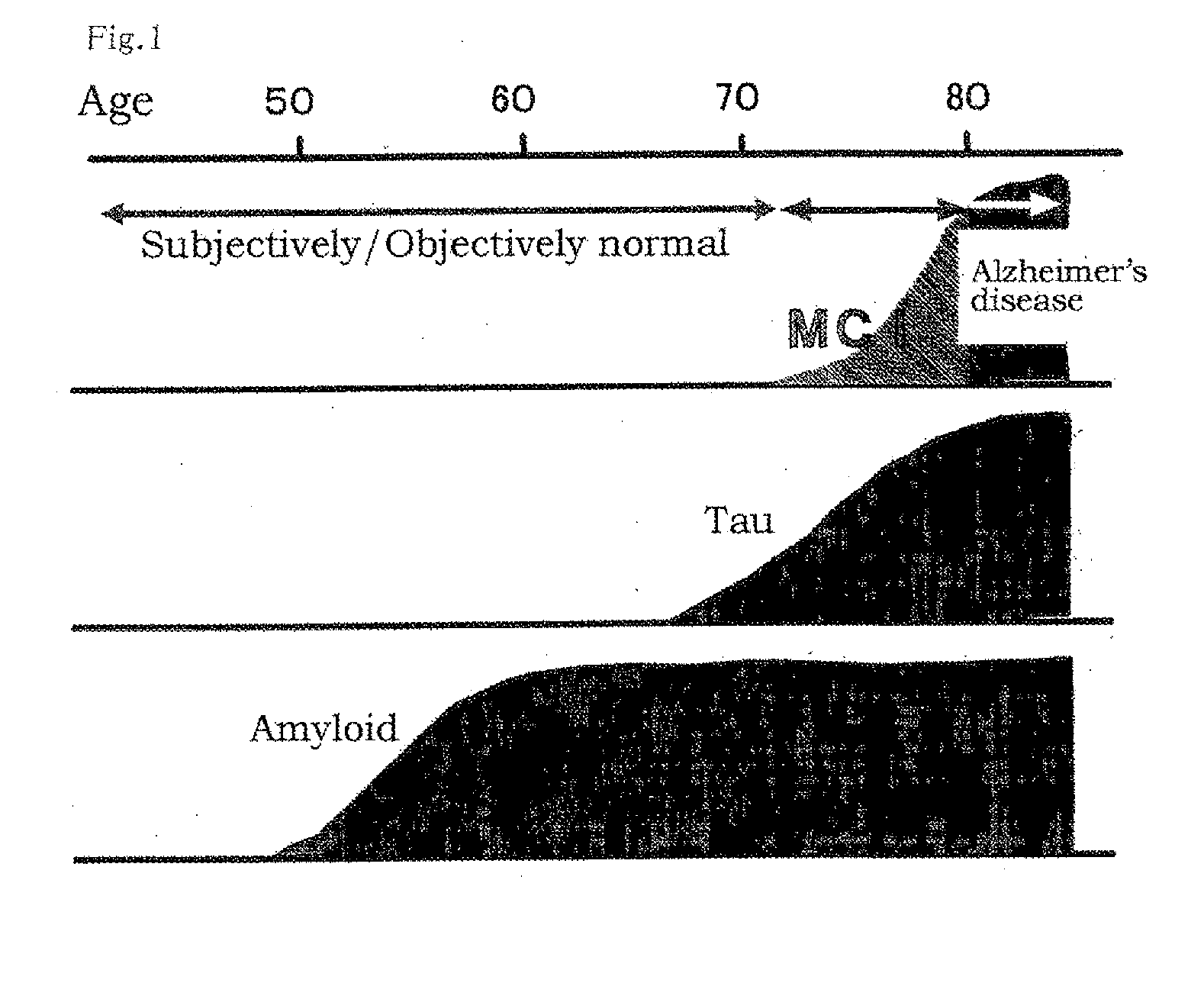
Figure 1 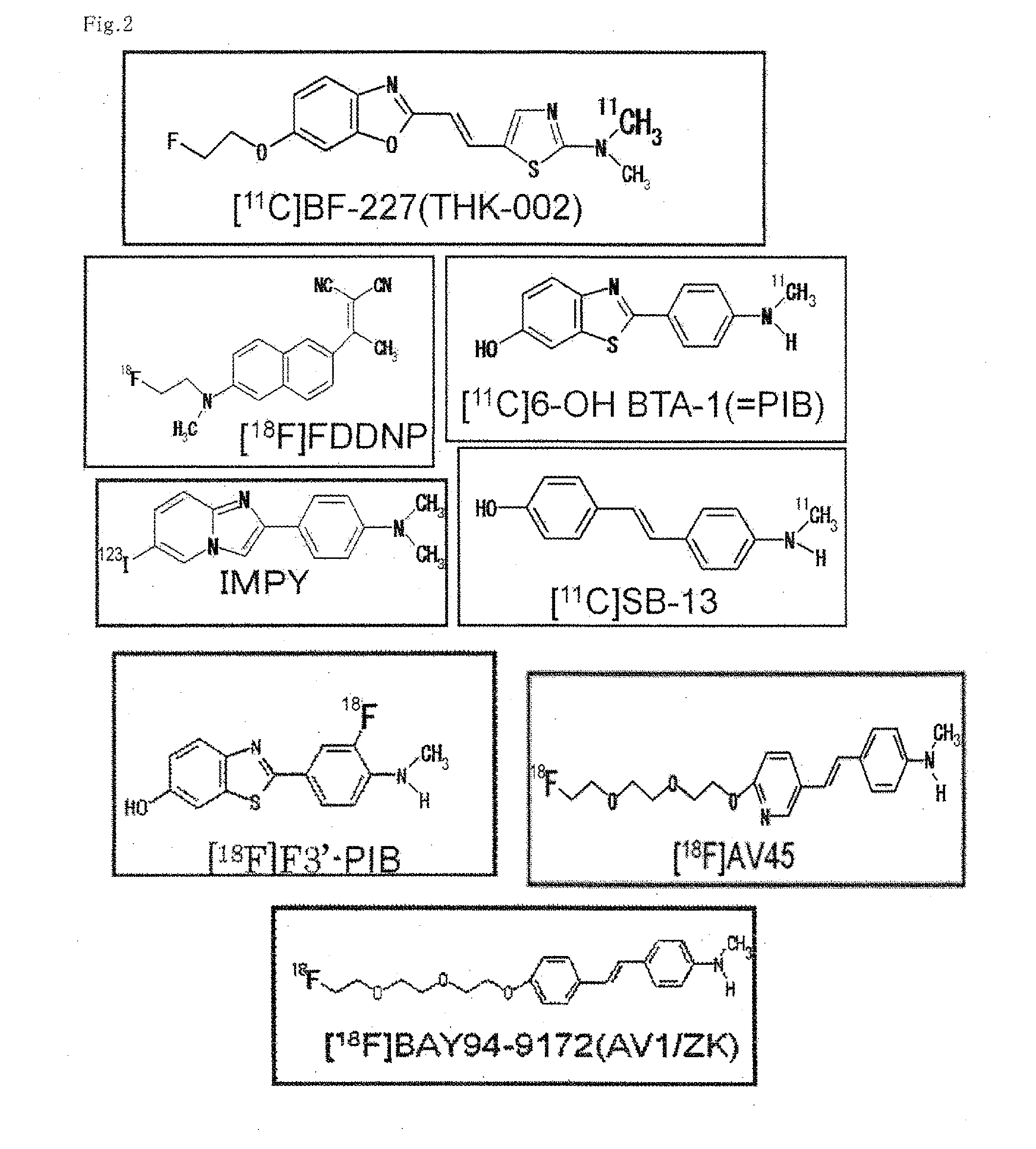
Figure 2 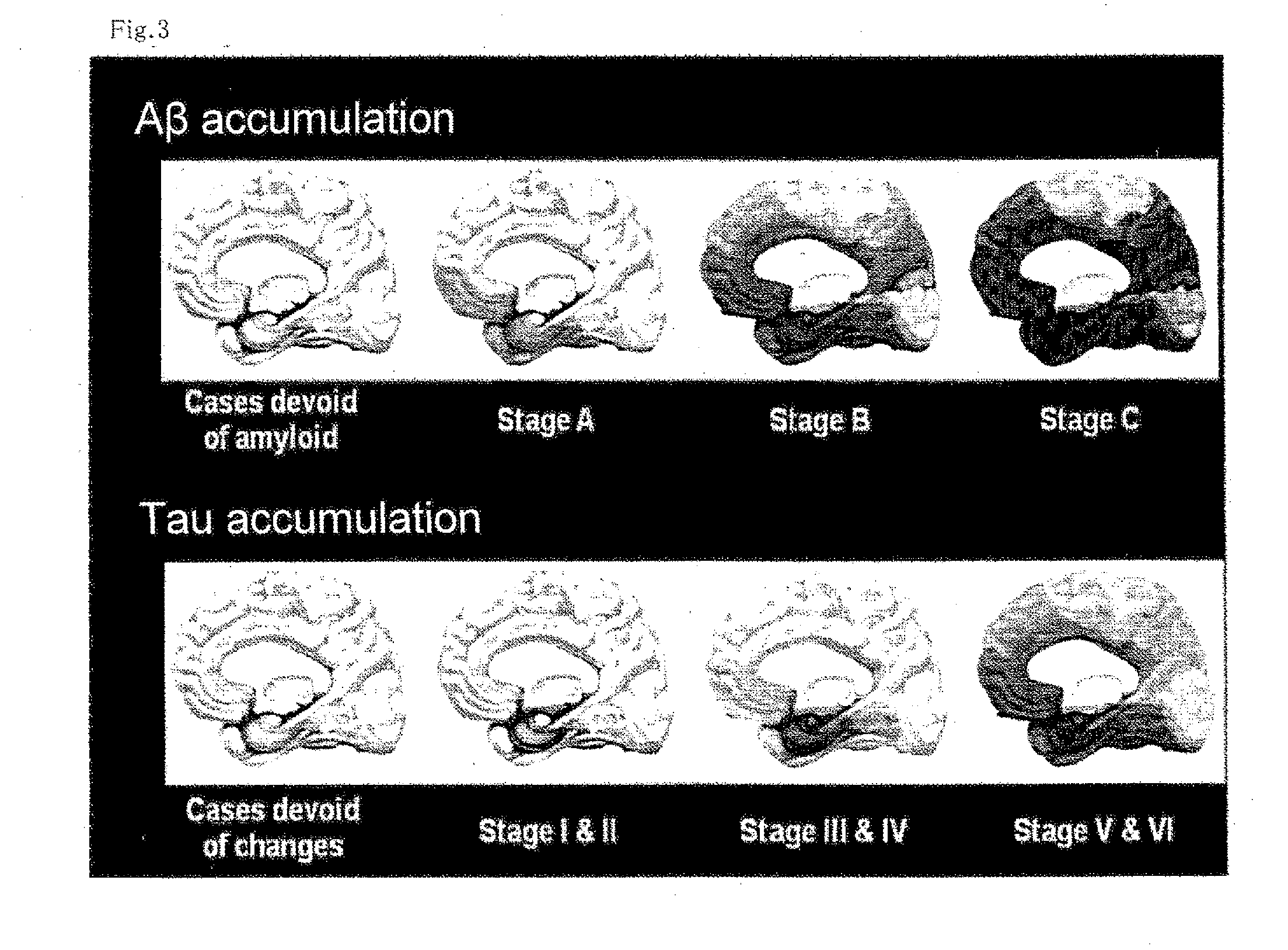
Figure 3
Abstract
Description
TECHNICAL FIELD
[0001] The present invention relates to a probe for imaging a β-sheet structure protein which can be used for the diagnosis of conformational diseases, particularly disease (tauopathy) having a cardinal symptom such as intracerebral accumulation of tau protein, for example, Alzheimer's disease.BACKGROUND ART
[0002] In Alzheimer's disease, it is known that the accumulation of senile plaque containing amyloid beta-protein (hereinafter referred collectively to as Aβ) as a main component and of neurofibrillary tangles containing hyperphosphorylated tau protein (hereinafter referred collectively to as tau) as a main component proceeds to the degree that it cannot be treated, when the people around the patient or the physician notice the specific clinical symptoms of the disease. In other words, if the current diagnosis of Alzheimer's disease is compared to that of cancer, it is detected only when it has reached the end stage.
[0003] Recently, it has been revealed that even in t...
Examples
example 1
Synthesis of the Compounds of the Present Invention
[0347]Silica gel BW300 manufactured by Fuji Silysia Chemical Ltd. was used in silica gel column chromatography of Examples. Chromatorex NH-DM1020 manufactured by Fuji Silysia Chemical Ltd. was used in basic silica gel column chromatography using an amino group-bonded type silica gel.
[0348]1H-NMR was measured using UNITY INOVA500 (500 MHz) manufactured by VARIAN, JNM-LA400 (400 MHz) manufactured by JEOL, Ltd. and Gemini 2000 (300 MHz) tetramethylsilane manufactured by VARIAN as standard substances, and all δ values were measured by ppm.
[0349]Mass spectrum was measured by atmospheric pressure chemical ionization (APCI) using LCQ-Advantage manufactured by ThermoQuest or SSQ-7000C manufactured by FinniganMAT.
[0350]Infrared spectra were measured using a Paragon1000 FT-IR manufactured by Perkin-Elmer, and B-545 manufactured by BUCHI was used for the measurement of a melting point.
[0351]Meanings of abbreviations in the measurement of NMR a...
example 2
Labeling Synthesis of [18F] THK-5035
[1286]18F− was synthesized by irradiating [18O] H2O having isotope purity of 95 or more with 12 MeV of proton beam accelerated by Cyclotron HM12 (manufactured by Sumitomo Heavy Industries, Ltd.). Subsequently, the solution thereof was passed through an anion-exchange resin (AG1-X8) thereby trapping 18F− on the resin, followed by elution with a 33 mM K2CO3 solution. After transferring this aqueous 18F−-containing K2CO3 solution (200 μL, 3.5 GBq) in a brown vial, Kryptofix 222 (16 mg) and acetonitrile (1.5 mL) were added and a He gas was sprayed while heating in an oil bath (110° C.), and then acetonitrile was completely removed while azeotropically distilling water. Furthermore, an operation of adding acetonitrile (1 mL) and removing acetonitrile in the same manner under heating conditions was repeated, thereby turning the state inside the vial into a substantially moisture-free state. A DMSO solution (0.7 mL) containing THK-5039 (4 mg), as a label...