
Hybrid alginate-silica beads and method for obtaining them
a technology of hybrid silica and alginate, which is applied in the field can solve the problems of poor mechanical stability of calcium alginate capsules, affecting reducing the strength of capsules from the surface to the core, so as to improve the mechanical resistance of hybrid silica-alginate beads of invention, the effect of improving the young modulus of beads
Patent Information
- Authority / Receiving Office
- US · United States
- Patent Type
- Applications(United States)
- Current Assignee / Owner
- Publication Date
- 2016-05-26
- Estimated Expiration
- Not applicable · inactive patent
Smart Images
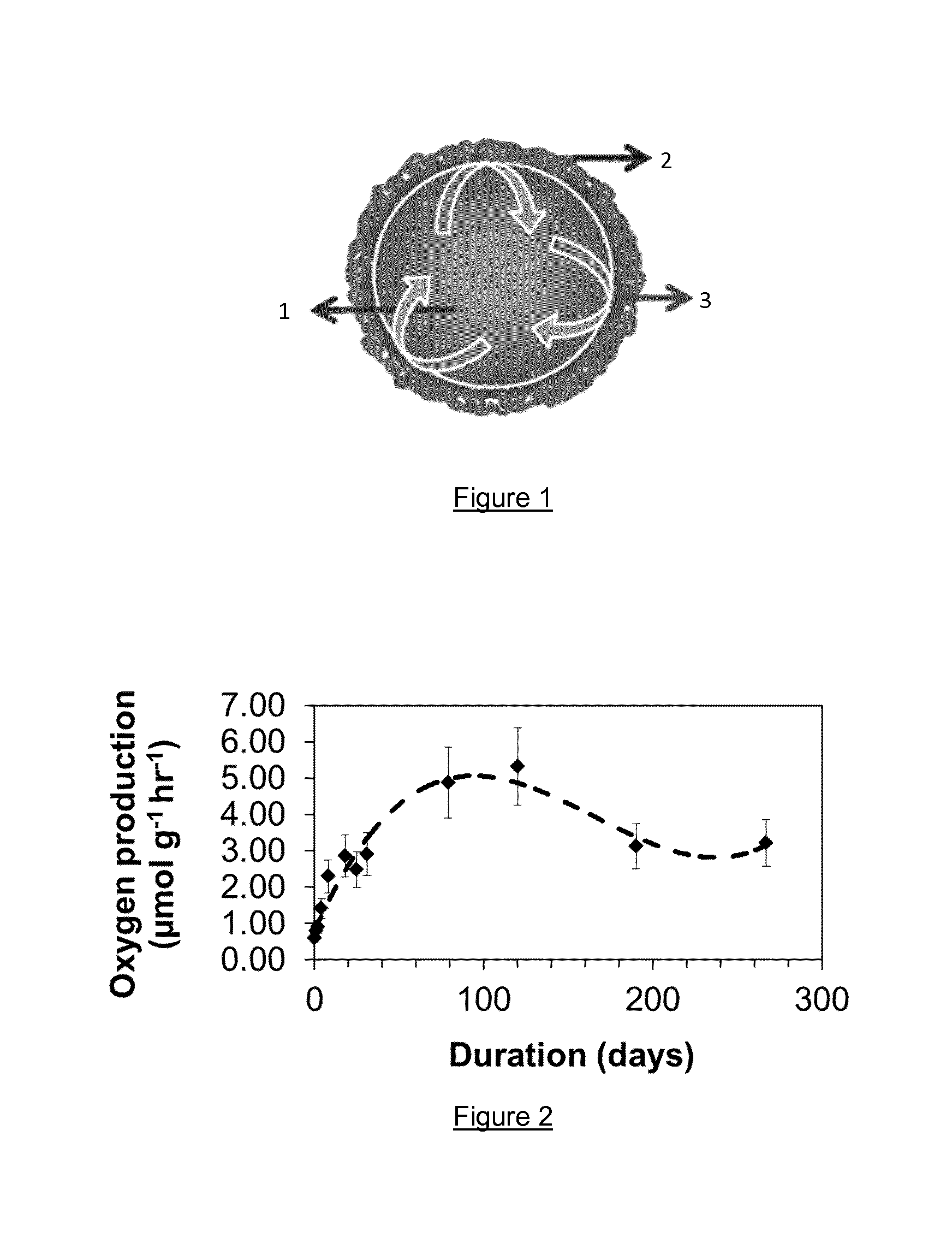
Figure 1 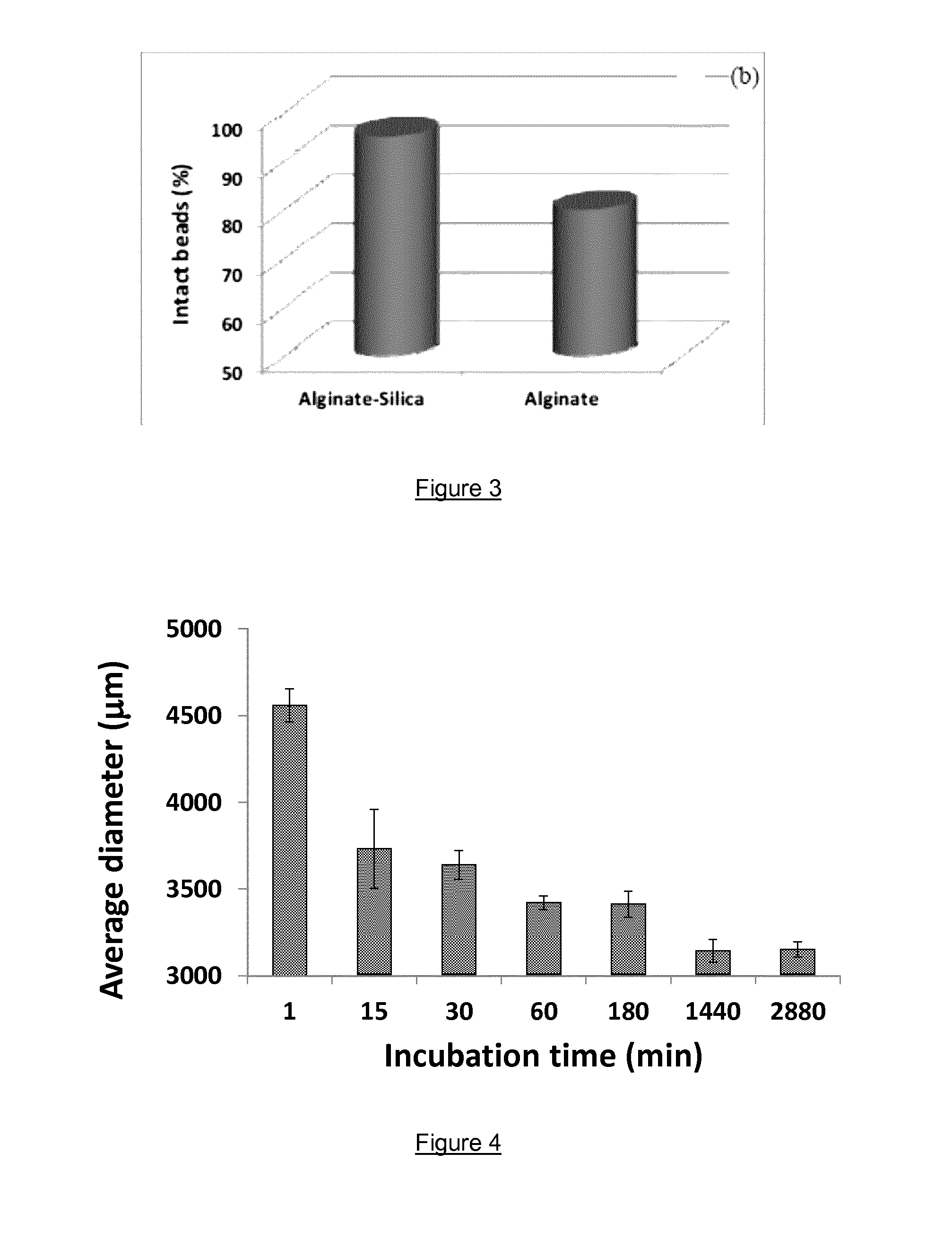
Figure 2 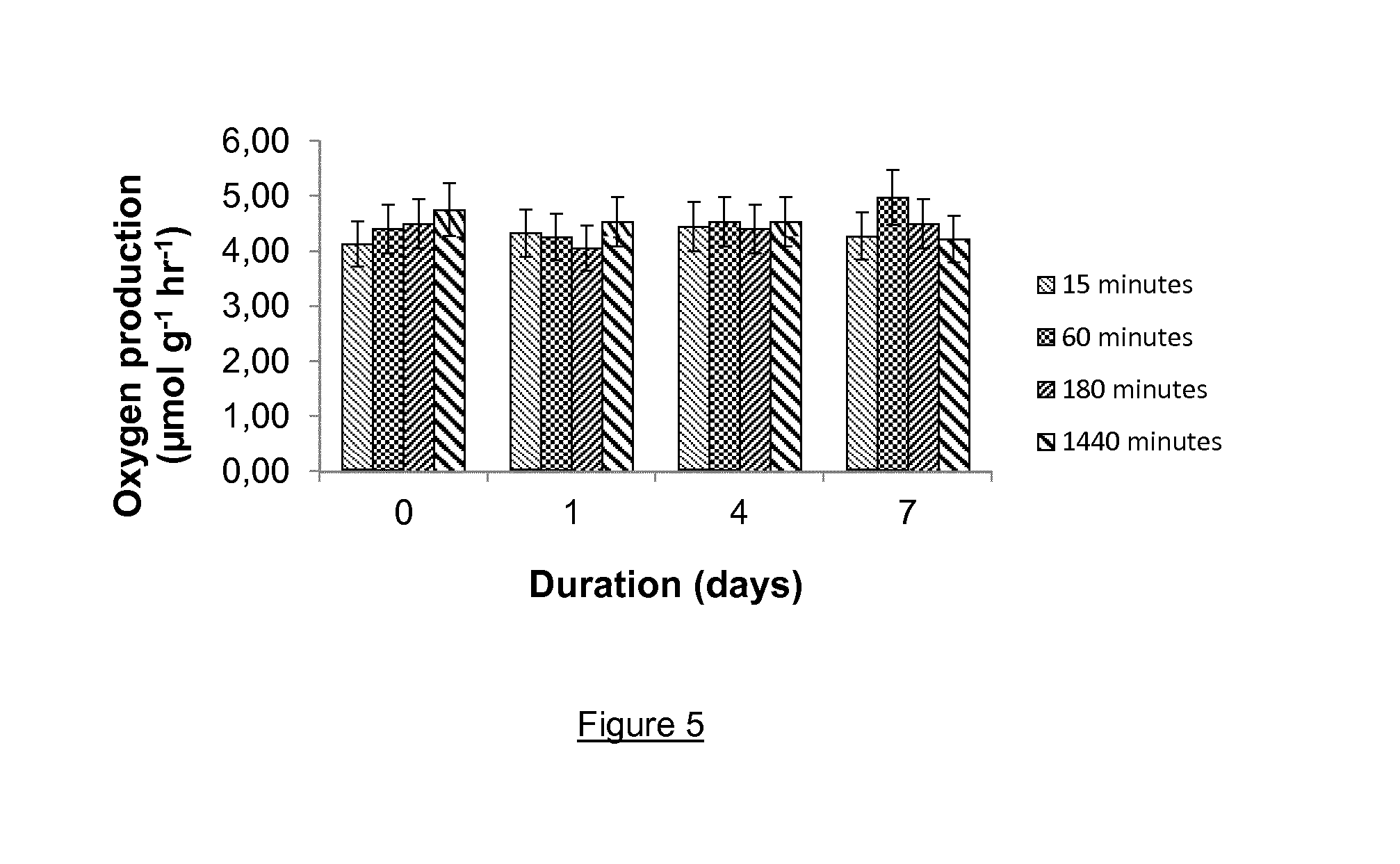
Figure 3
Abstract
Description
FIELD OF THE INVENTION
[0001] The present invention relates to hybrid alginate-silica beads and to a one-pot process for the preparation of these hybrid beads.
[0002] The present invention is also related to the use of the beads according to the invention. Beads of the invention are used for the entrapment of biologically active entities in a broad range of fields for example in bioreactors, biocatalysts, biosensors, chromatographic columns, etc. Particularly, the new beads according to the invention are used for the entrapment of enzymes, organelles such as thylakoids, vacuoles, chloroplasts, vesicles or for the entrapment of whole cells such as microalgae, bacteria, yeast, animal or plant cells. Such entrapments aim at producing high value metabolites, such as carotenoids, hormones, proteins, (processed) pro-drugs or a mixture thereof.STATE OF THE ART
[0003] Calcium alginate capsules can be easily synthesized by extruding a sodium alginate solution into an aqueous solution of calcium ch...
Examples
example 1
Photochemical Production of Oxygen by Entrapped Microalgae within Hybrid Alginate-Silica Beads
Microalgae Cultivation
[0054]The strain of Dunaliella tertiolecta (ATCC-30929) liquid stock cultures were maintained in flasks at ambient temperature under fluorescent strip lighting and transferred into fresh medium culture once a month. ATCC 30929 was grown in sterile flasks filled with JOHNSONS medium culture.
Hybrid Alginate-Silica Beads Entrapping Microalgae
[0055]The experimental procedure that was established to successfully synthesize hybrid alginate-silica beads through a one-pot process involves the preparation of a hybrid alginate-silica solution by mixing the polysilicic acid (H2SiO3) (5 mL, 0.1-2 M), adjusted at a pH between about 4 and about 6 with NaOH 0.1 M, with a solution of sodium alginate (5 mL, 0.5-5% wt.) and a living cell suspension of Dunaliella tertiolecta (ATCC-30929). Then, this mixture was dropped into an aqueous solution of polycation poly(diallyldimethylammonium) ...
example 2
Mechanical Resistance of Hybrid Alginate-Silica Beads as Compared to Alginate Capsules
[0059]The experiment was performed as provided in example 1 with or without living cells. A comparative stability study of alginate and hybrid alginate-silica beads was realized. For this purpose, the beads were transferred into biological medium culture after synthesis. To evaluate their mechanical resistance, the beads were placed under stirring conditions at about 250 rpm for between about 1 hour and about 10 hours, preferably for about 2 hours within the medium culture and the beads were removed and the cracked beads counted. As shown in FIG. 3 and Table 1 herein below, alginate-silica beads exhibit a higher number of intact beads than the alginate beads. By increasing the incubation time into the PDADMAC / CaCl2 solution, the mechanical resistance was also reinforced. The combination of silica with alginate thus reinforced the mechanical resistance of the hybrid beads.
TABLE 1Mechanical resistanc...
example 3
Study of the Effect of the Incubation Time on the Average Diameter of Hybrid Alginate-Silica Beads
[0060]The experiment was performed as provided in example 1. The incubation time into the PDADMAC / CaCl2 solution varied from 1 minute to 48 hours (2880 minutes). Additionally, a phenomenon of shrinkage of the beads was also observed over time, the latter can be explained by the polymerization process of silica within the PDADMAC / CaCl2 solution which is more efficient over time and thus leads to a smaller size bead. The kinetic of the beads' shrinkage was graphically reported in FIG. 4. It appeared that the shrinkage is well pronounced during the first hours to reach a stable size after 24 hours (1440 minutes).