
Pestivirus vaccines for congenital tremors
a technology of pestivirus and congenital tremor, which is applied in the field of pestivirus vaccine, can solve the problems of muscle tremor, no effective treatment of this condition, nervous symptoms, etc., and achieve the effects of reducing the incidence, exaggerating the shaking, and increasing mortality
Patent Information
- Authority / Receiving Office
- US · United States
- Current Assignee / Owner
- Publication Date
- 2017-03-02
Smart Images
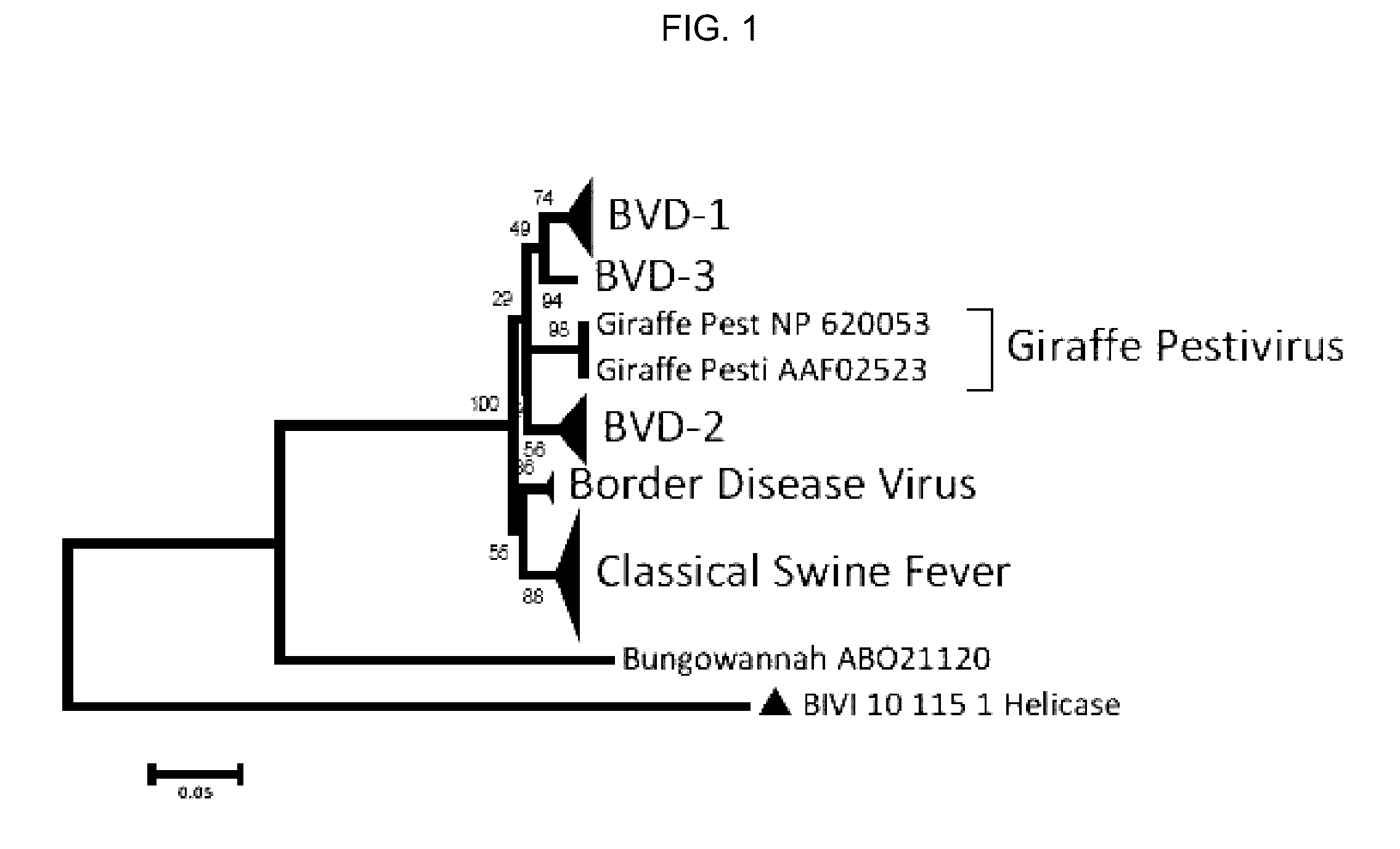
Figure 1 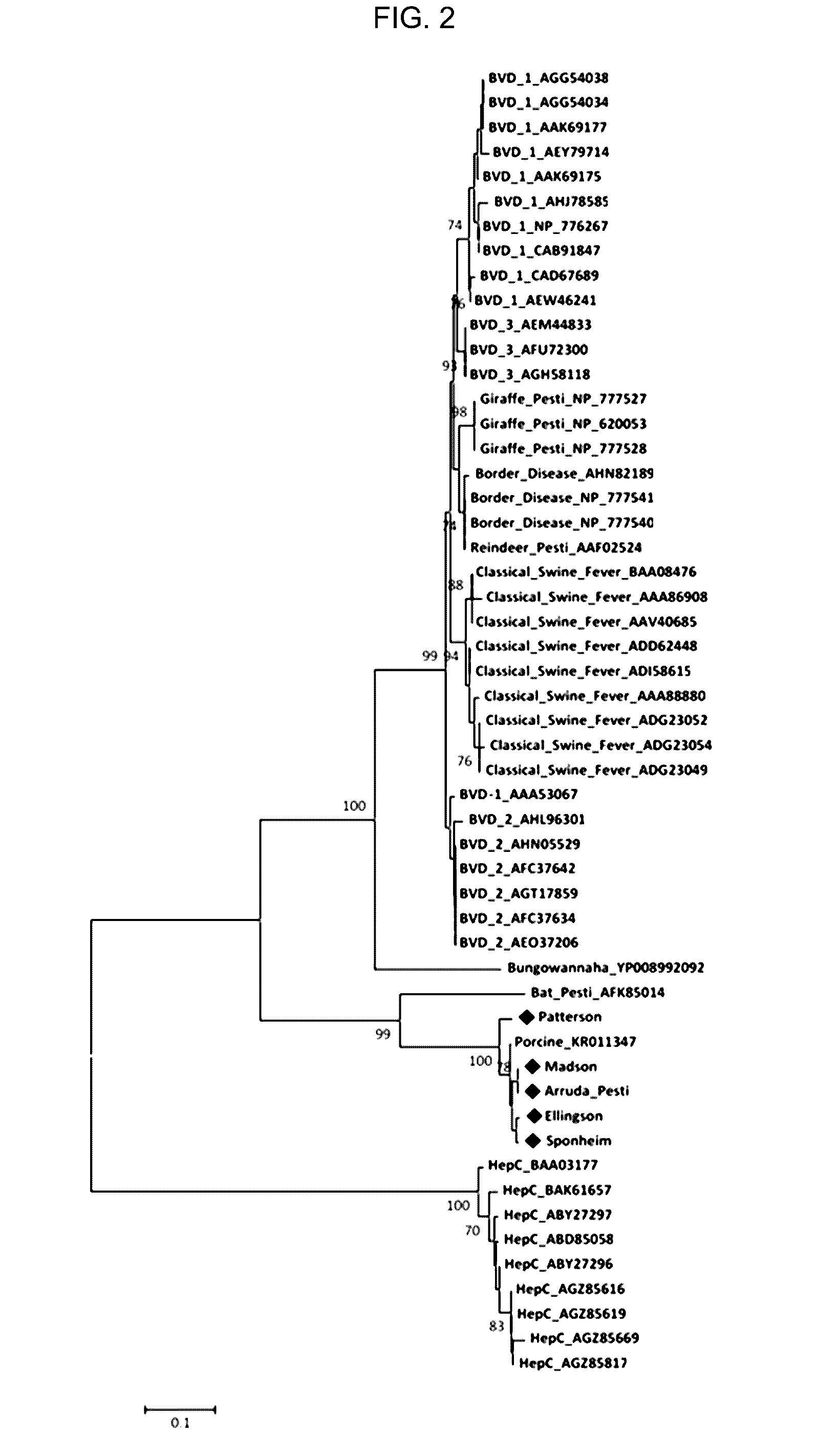
Figure 2 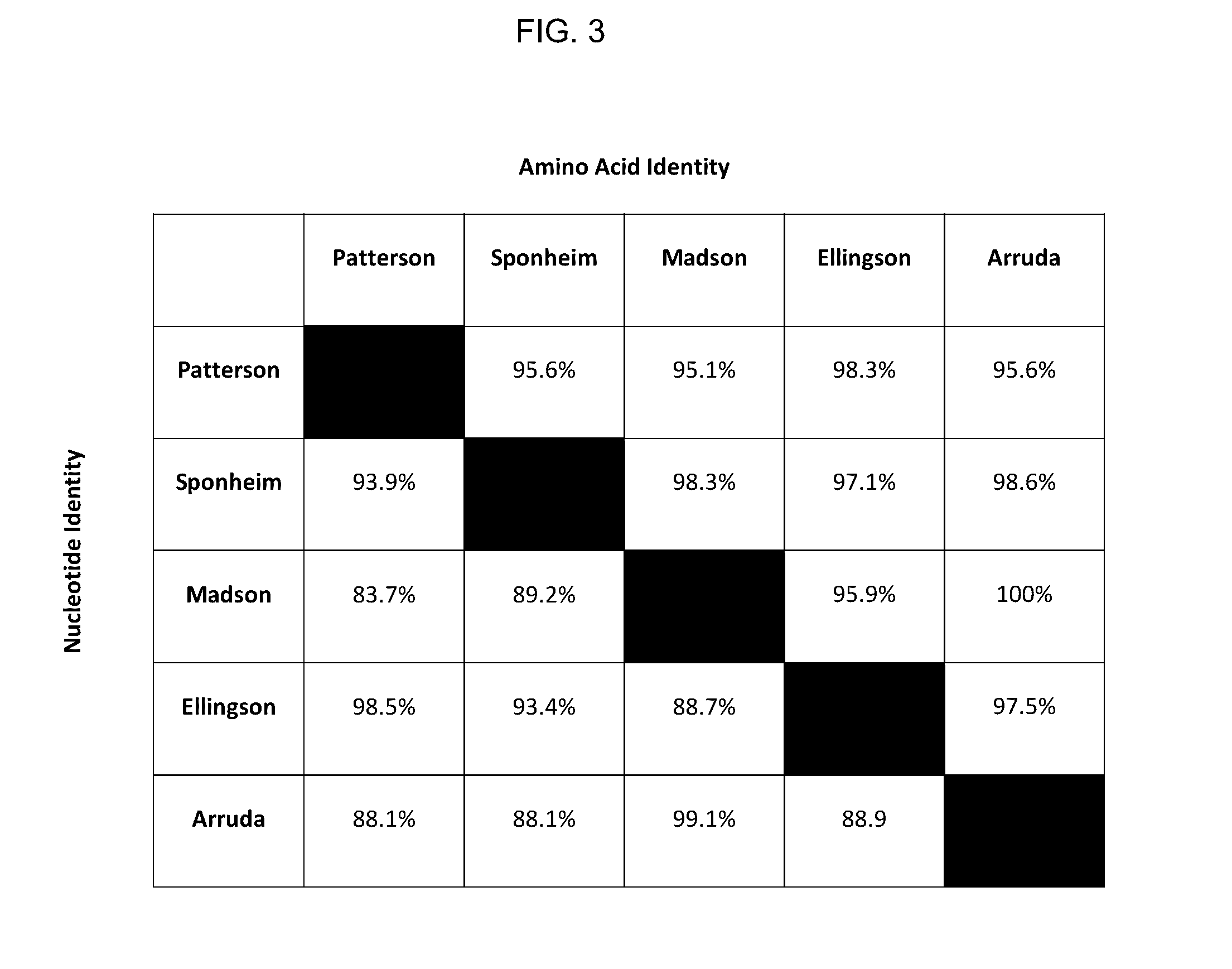
Figure 3
Abstract
Description
RELATED APPLICATION
[0001] The present application claims the benefit of U.S. Application No. 62 / 212,124, filed on Aug. 31, 2015, which is incorporated herein by reference in its entirety.BACKGROUND
[0002] A. Technical Field
[0003] The present invention relates to a pestivirus vaccine, which is capable of reducing clinical signs of congenital tremor (CT) or myoclonia congenita. The condition is informally known as shaking piglets, shaker piglets, or trembling piglets.
[0004] Pestivirus is a genus of viruses, in the family Flaviviridae. Viruses in the genus Pestivirus infect mammals, including members of the family Suidae (which includes various species of swine).
[0005] CT is a sporadic disease seen in newborn pigs. Usually more than one pig is affected in a litter. If the tremors are too great for the piglets to find a teat and suckle then mortality may be high. Mortality in an affected litter or in a herd outbreak could increase above the norm by 3-10%. The condition decreases as the affect...
Examples
example 1
[0174]The purpose of this study was to determine if clinical disease could be reproduced in cesarean-derived-colostrum deprived (CDCD) pigs using a tissue homogenate containing the novel pestivirus of the present invention. Specifically, the purpose is to reproduce viremia and tissue colonization (as detected by qRT-PCR) in CDCD piglets following challenge with serum containing a novel pestivirus.
[0175]Animal Care
[0176]The pigs were housed at the animal facilities at VRI at Cambridge, Iowa for the duration of the study. Pigs were fed a commercial ration (UltraCare Medicated, lot#4Jun16) that was appropriate for their size, age and condition according to acceptable animal husbandry practices for the region (antibiotics were included). Water was available ad libitum. Floor and feeder space met or exceeded requirements set forth in the Consortium “Guide for the Care and Use of Agricultural Animals in Agricultural Research and Teaching”, third edition, January 2010.
[0177]Any moribund a...
example 2
[0207]The objectives of this project were to 1) detect potential pathogen(s) in samples from piglets with congenital tremors and 2) develop an infection model to reproduce disease. Using next-generation sequencing, a divergent lineage pestivirus was detected in piglets with congenital tremors. The virus was originally most closely related to a bat pestivirus but is now more closely related to a recently published novel porcine pestivirus provisionally named atypical porcine pestivirus. A quantitative real-time PCR detected the virus in samples from neonatal piglets with congenital tremors from two separate farms, but not in samples from unaffected piglets from the same farm. To fulfill the second objective, pregnant sows were inoculated with either serum containing the pestivirus or PBS (control) by intravenous and intranasal routes simultaneously with direct inoculation of fetal amniotic vesicles by ultrasound-guided surgical technique. Inoculations were performed at either 45 or 6...
example 3
[0239]The objective of this study is to evaluate the efficacy of a pestivirus vaccine when administered pestivirus naive or seronegative dams.
[0240]Study Design
[0241]A total of 10 dams were used for this experiment. Dams were randomized into three groups. Group 1 animals (n=4) were vaccinated at D0 and D14 with a prototype pestivirus vaccine just prior or shortly after breeding. Group 2 animals (n=4) vaccinated with a placebo prototype vaccine preparation. Group 3 animals (n=2) remained unvaccinated (strict controls). The animals in each group were maintained in separate rooms. At approximately 42 days of gestation, dams in Group 1 and 2 were challenged with pestivirus by a route such as intravenous, intramuscular, intranasal, intravaginal or intrauterine inoculation. Following challenge, dams will be monitored daily for clinical signs throughout the study. Serum, fecal and nasal samples and rectal temperatures were collected twice weekly throughout gestation. At approximately 80 da...