
Endocrine disruptor field tester
Patent Information
- Authority / Receiving Office
- US · United States
- Current Assignee / Owner
- Publication Date
- 2017-03-30
- Estimated Expiration
- Not applicable · inactive patent
Smart Images
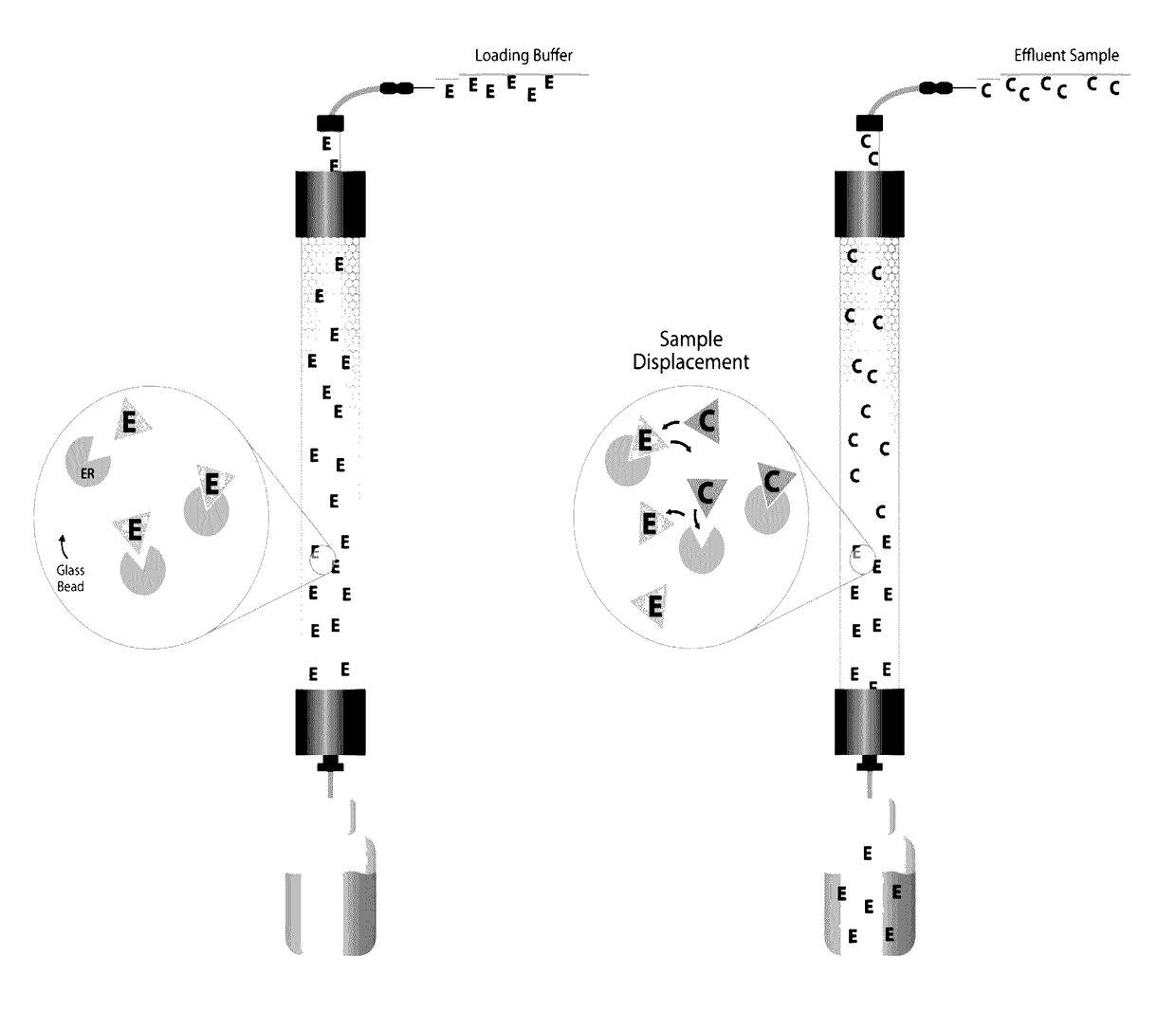
Figure 1 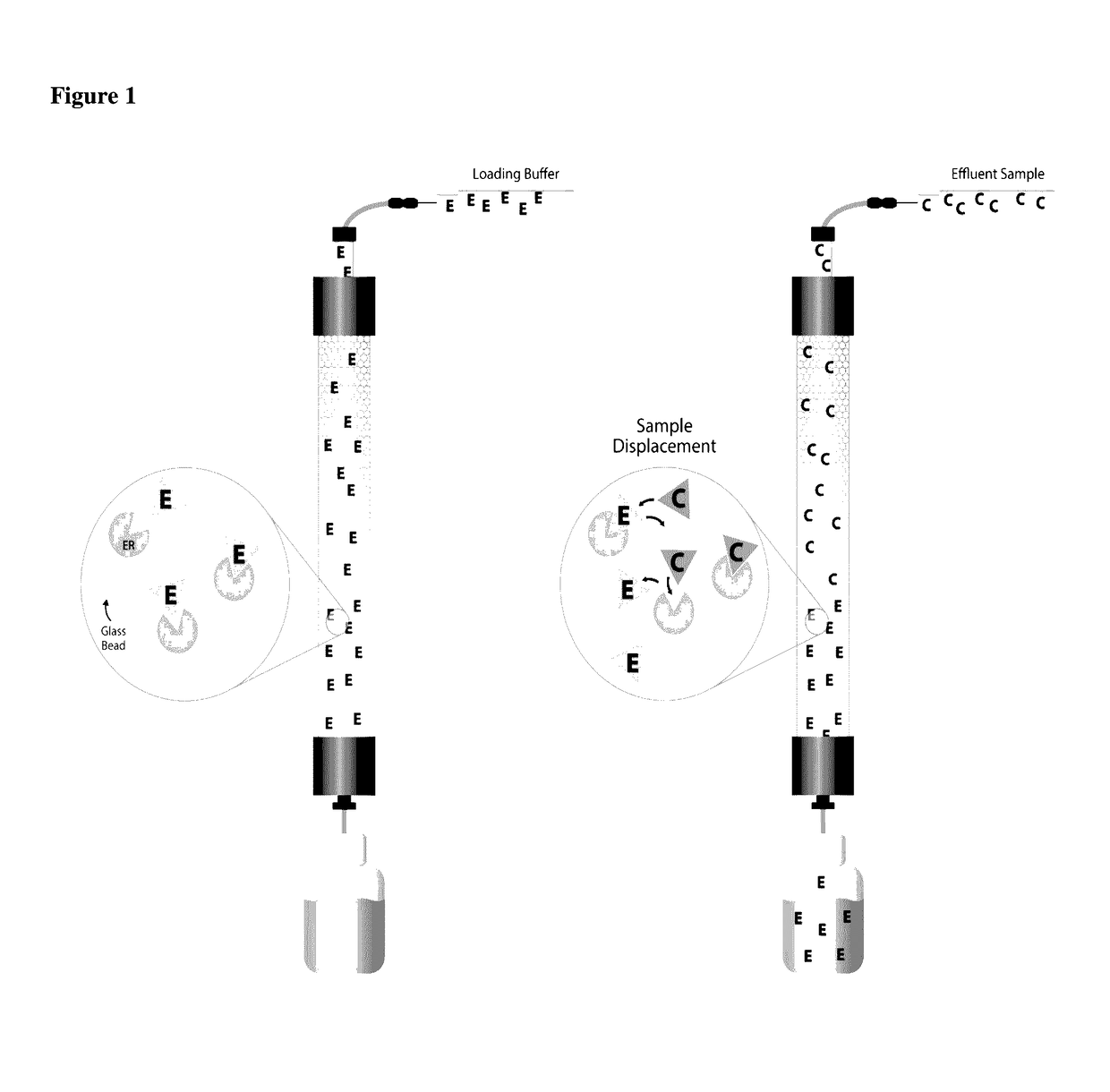
Figure 2
Abstract
Description
CROSS-REFERENCE TO RELATED APPLICATIONS
[0001] This application claims benefit of U.S. Provisional Application No. 62 / 232,553, filed Sep. 25, 2015, the contents of which is hereby incorporated in its entirety including all tables, figures and claims.FIELD OF THE DISCLOSURE
[0002] This disclosure pertains to methods and apparatuses for detecting low, medium, and high concentrations of endocrine disruptors in field samples or biological samples.BACKGROUND OF THE DISCLOSURE
[0003] A major concern for many manufacturing facilities in the United States and Europe is the monitoring of effluent water, soil, and air for endocrine active compounds or other chemical classes. The U.S. EPC endocrine disruptor program requires companies to screen their products and company waste streams for the presence of endocrine disruptors (each an “ED”). An ED is any chemical that mimics an endogenous substance by binding to a specific receptor.
[0004] Currently, there is not a simple field test to quantitatively d...
Examples
Embodiment Construction
[0007]Endocrine Disruptors is defined as any chemical that mimics a natural substance by binding to a specific receptor.
[0008]The term “hormone receptor” as used herein refers to a natural hormone receptor or synthetically produced materials that have substantially the same functionality of a natural hormone receptor, such as recombinant hormone receptors. Techniques for obtaining natural hormone receptors and synthesizing recombinant hormone receptors are well known. Such receptors are also commercially available.
[0009]The term “bound” means that the hormone receptor is physically or chemically attached to the carrier, such as by covalent, ionic or hydrogen bonding, so that negligible amounts of the hormone receptor are displaced from the carrier when a sample that is free of endocrine disruptor is passed through or over the carrier material. This term also refers to the binding of hormones or endocrine disruptors to the hormone receptors.
[0010]The carrier can be comprised of any s...